
Catalogue Search | MBRL


Are you sure you want to remove the book from the shelf?

{{itemTitle}}
10,273
result(s) for
"Building Services Engineering"
Sort by:

Building information modelling for building services engineering: benefits, barriers and conducive measures
PurposeMandating the use of building information modelling (BIM) in building projects has sprawled, but the uptake of BIM in building services engineering (BSE) remains sluggish. The purpose of this paper is to explore how to achieve wider adoption of BIM in BSE.Design/methodology/approachThrough an extensive literature review, the benefits of, barriers to and measures conducive to, using BIM for BSE were identified and classified. Built upon the review and a focus group meeting, a questionnaire was devised for an industry-wide survey in Hong Kong and the survey data were processed by statistical analyses.FindingsOn the ranking of the benefits, strong agreements existed between the BSE and non-BSE respondent groups; yet no significant agreement was found between the two groups on the rankings of the barriers or the conducive measures. The top conducive measure, according to the BSE group, is “Allow enough time in project programme for BIM model development”.Research limitations/implicationsThe data collection and analysis methods of this study may be used for similar BIM studies in other places.Practical implicationsThe priority of the conducive measures, which aid policy or decision makers in formulating how to get BIM effectively implemented in BSE, are useful information in the pursuit of a more productive and sustainable built environment.Originality/valueThis BIM study is specifically on BSE rather than the other disciplines (e.g. architecture, structural engineering) that have been widely studied.
Journal Article

Critical factors that influence the effectiveness of facility maintenance management practice in public university buildings in Ethiopia: an exploratory factor analysis
Facility maintenance management (FMM) is essential for ensuring long-term values and to sustain project goals throughout the life cycle delivery process. However, in underdeveloped nations such as Ethiopia, facility maintenance management is an immature and underutilised process that requires a holistic intervention for practical improvement. The main aim of this study was to identify and prioritise critical factors that affect the effectiveness of FMM, with a focus on public universities in Ethiopia. Initially, a total of thirty-three (33) crucial variables were identified with a systematic literature review and desk study. To collect primary data, a survey research design approach was utilised using questionnaires and informant interviews. A total of seventy-five (75) data sets were obtained from 180 online surveys for conducting exploratory factor analysis (EFA). The outcome of the study revealed thirteen (13) critical attributes grouped into four factors that affect the effectiveness of facility maintenance management practises. The final four-factor model includes F1, internal processes and organisation; F2, community culture, learning, and growth; F3, impacts of design and construction quality; and F4, facility maintenance approach and management. This study indicated that facility maintenance management practises in public universities in Ethiopia are immature and require extensive enhancement. The identified influencing factors highlight the need for a comprehensive intervention to promote improved facility maintenance management practises and applications in Ethiopia. Further research is needed to analyse a wider range of attributes and data using confirmatory factor analysis.
Journal Article

The Living Environment and Thermal Behaviours of Older South Australians: A Multi-Focus Group Study
Ageing brings about physiological changes that affect people’s thermal sensitivity and thermoregulation. The majority of older Australians prefer to age in place and modifications to the home environment are often required to accommodate the occupants as they age and possibly become frail. However, modifications to aid thermal comfort are not always considered. Using a qualitative approach this study aims to understand the thermal qualities of the existing living environment of older South Australians, their strategies for keeping cool in hot weather and warm in cold weather and to identify existing problems related to planning and house design, and the use of heating and cooling. Data were gathered via seven focus group sessions with 49 older people living in three climate zones in South Australia. The sessions yielded four main themes, namely ‘personal factors’, ‘feeling’, ‘knowing’ and ‘doing’. These themes can be used as a basis to develop information and guidelines for older people in dealing with hot and cold weather.
Journal Article

Building Services Design for Energy Efficient Buildings
The role and influence of building services engineers are undergoing rapid change and are pivotal to achieving low-carbon buildings. However, textbooks in the field have tended to remain fairly traditional with a detailed focus on the technicalities of heating, ventilation and air conditioning (HVAC) systems, often with little wider context. This book addresses that need by embracing a contemporary understanding of the urgent challenge to address climate change, together with practical approaches to energy efficiency and carbon mitigation for mechanical and electrical systems, in a concise manner.
The essential conceptual design issues for planning the principal building services systems that influence energy efficiency are examined in detail. These are HVAC and electrical systems. In addition, the following issues are addressed:
background issues on climate change, whole-life performance and design collaboration
generic strategies for energy-efficient, low-carbon design
health and wellbeing and post occupancy evaluation
building ventilation
air conditioning and HVAC system selection
thermal energy generation and distribution systems
low-energy approaches for thermal control
electrical systems, data collection, controls and monitoring
building thermal load assessment
building electric power load assessment
space planning and design integration with other disciplines.
In order to deliver buildings that help mitigate climate change impacts, a new perspective is required for building services engineers, from the initial conceptual design and throughout the design collaboration with other disciplines. This book provides a contemporary introduction and guide to this new approach, for students and practitioners alike.
eBook

The Handbook of Sustainable Refurbishment
The refurbishment of existing buildings is a crucial yet often neglected subject within sustainable architecture; attention is usually focused on new buildings. Many old buildings waste large amounts of energy and provide poor internal conditions for occupants through poor lighting, poor ventilation, solar penetration and glare, and poor control of heating and cooling. Demolition is an option but the refurbishment alternative is increasingly seen as more sustainable in terms of architectural value, materials use, neighbourhood disruption and waste disposal. In addition, the potential impact of low energy refurbishment is much greater than that for new build since there are many more buildings already in existence than will be built in the next 10 - 20 years, the period over which many CO2 emission targets apply.
The Handbook of Sustainable Refurbishment: Non-Domestic Buildings offers architects, engineers and a wide range of building professionals practical advice, illustrated by real examples. It moves from principles of sustainable refurbishment to specific design and engineering guidance for a variety of circumstances. It emphasises the need for an integrated approach by showing how refurbishment measures interact with one another and with the occupants, and how performance is ultimately influenced by this interaction.
eBook
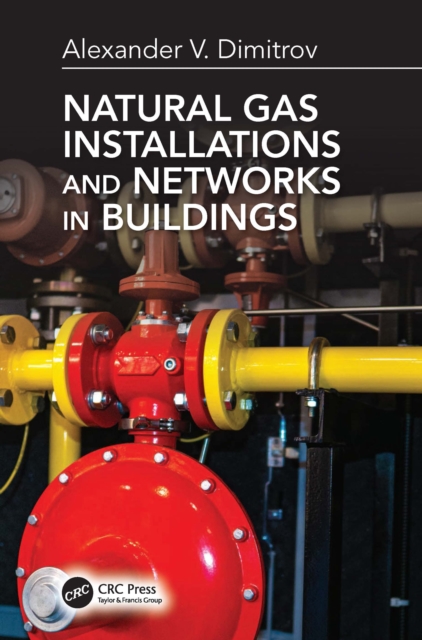
Natural Gas Installations and Networks in Buildings
This book covers theoretical foundations of the Natural Gas (NG) installations and networks as a part of building logistic system, illustrated with digital examples. It describes the NG oxidation phenomena and appropriate energy converting devices used in the building's energy centres and basic sizing principals of the related pipe networks. Further, it covers usage of NG devices including system for thermal comfort control, building ventilation, indoor air quality, visual comfort, food preparation and conservation, and hygiene maintenance system. A special attention is given to applications of the NG technological equipment, using gas-driven heat pumps, micro heat and power systems. Aimed at professionals and graduate students in the areas of HVAC, Plumbing, Architecture, Electricians, this book:
Presents complex, innovative and systematical approach to NG installations in buildings.
Reviews efficient and environmentally sustainable dementalization approach to building energy supply, using NGmHps v/s central energy supply systems.
Explains pre-designating calculations of the gas piping networks.
Illustrates structures, principals of operation and building project implementations of the modern GN energy converters and transformers as fuel cells (SOFC, MOFC, PEFC) and NG driven heat pumps.
Discusses calculation methods derived from professional case studies.
eBook
Transient Airflow in Building Drainage Systems
Giving you the first comprehensive presentation of the ground breaking research undertaken at Heriot Watt University, with Research Council and industrial funding, this book brings a new perspective to the design of building drainage and vent systems. It provides the building services community with clear and verifiable design methods that will be robust enough to meet challenges such as climate change and water conservation; population migration to the mega cities of the developing world, and the consequent pressures of user concentration; the rise of the prestige building and the introduction of new appliances and control strategies. These all combine to make traditional codified design guidance insufficient. Many assumptions in existing codes defining the entrained airflows within building drainage vent systems cannot be theoretically supported, so designers concerned with these systems need analysis and simulation capabilities which are at least as reliable as those enjoyed by other building services practitioners. The Method of Characteristics solution techniques which are well established in the pressure surge field are now used to provide solutions for drainage designers. The material is applied to a whole range of abstract scenarios then to a series of real world applications including the forensic modelling of the SARS virus spread within Amoy Gardens in 2003 and the refurbishment of the O2 Dome. Applications to specialised services, including underground station drainage and highly infectious disease treatment facilities are discussed and demonstrated, alongside the use of design and simulation techniques in support of product development. Aimed at both professional and academic users, this book serves both as a design aid and as a core text for specialist masters courses in public health and building services engineering.
eBook

Naturally Ventilated Buildings
While there are many historical examples of successful naturally ventilated buildings, standards for indoor climate have tended to emphasise active, mechanical airflow systems rather than passive natural systems. Despite its importance, knowledge about the performance of naturally ventilated buildings has remained comparatively sparse. With ten key research papers this book seeks to address this lack of information.
Foreword. Preface. The sense of beauty. From homogeneity to heterogeneity. Specifying environmental conditions for naturally ventilated buildings. The user's role in environmental control: some reflections on theory in practice. Environmental criteria for naturally ventilated buildings. Against the draft CEN standard: pr ENV 1752. An adaptive approach to thermal comfort criteria. Natural ventilation: prediction, measurement and design reality. Specifying environmental conditions for naturally ventilated buildings. Natural ventilation in a large mixed mode building. Illustration acknowledgements. Index.
eBook

Site Management of Building Services Contractors
Managing building services contractors can prove to be a minefield. The most successful jobs will always be those where building site managers have first built teams focused on tackling issues that might cause adversarial attitudes later on and jeopardize the project. The author shows how a simple common management approach can improve site managers' competency in overseeing building services contractors, sub traders and specialists, and maximize the effectiveness of time spent on building services.
eBook
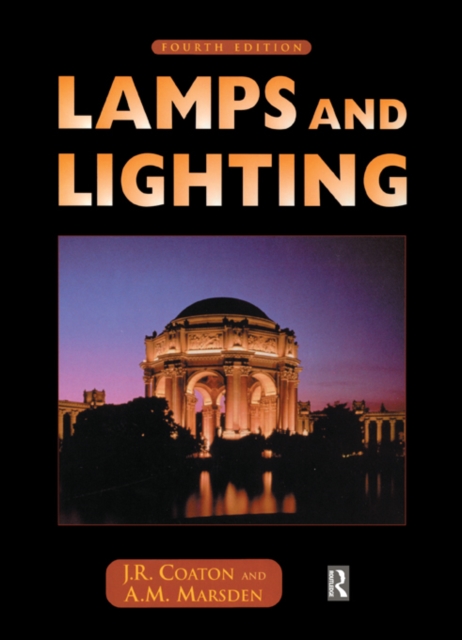
Lamps and Lighting
This book is a comprehensive guide to the theory and practice of lighting. Covering the physics of light production, light sources, circuits and a wide variety of lighting applications, it is both suitable as a detailed textbook and as thoroughly practical guide for practising lighting engineers. This fourth edition of Lamps and Lighting has been completely updated with new chapters on the latest lamp technology and applications. The editors ahve called upon a wide range of expertise and as a result many sections have been broadened to include both European and US practice.The book begins with a description of the fundamentals of light, vision, colour and measurement. Part II, the main section of the book, deals with lamps and control equipment and includes descriptions of all lamp types in use today. Part III on lighting covers both interior and exterior applications.
eBook