
Catalogue Search | MBRL


Are you sure you want to remove the book from the shelf?

{{itemTitle}}
404
result(s) for
"Building failures Prevention."
Sort by:

Professionalism for the built environment
In the aftermath of the Grenfell Tower tragedy, this new book provides thought provoking commentary on the nature of the relationship between society, the prevailing economic system and professionalism in the built environment. It is both an introduction to and an examination of professionalism and professional bodies in the sector, including a view of the future of professionalism and the organisations serving it. Simon Foxell outlines the history of professionalism in the sector, comparing and contrasting the development of the three major historic professions working in the construction industry: civil engineering, architecture and surveying. He examines how their systems have developed over time, where they are currently and some options for the future, whilst asking difficult questions about ethics, training, education, public trust and expectation from within and outside the industry. The book concludes with a six-point plan to help, if not ensure, that the professions remain an effective and essential part of both society and the economy; a part that allows the system to operate smoothly and easily, but also fairly and to the benefit of all. Essential reading for built environment professionals and students doing the professional studies elements of their training or in the process of applying for chartership or registration. The issues and lessons are applicable across all building professions-- Provided by publisher.
Book
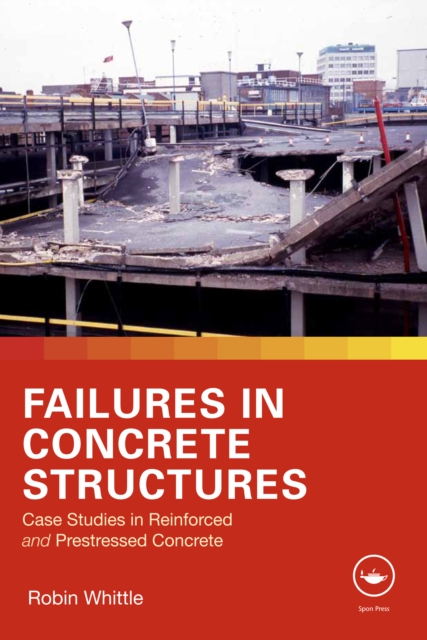
Failures in Concrete Structures
This selection of the author's firsthand experience with incidents with RC and prestressed structures helps readers avoid the same errors mistakes discovered at the design stage, or that led to failures or partial structure collapse. It focuses on misunderstanding of structures or codes of practice and specifics during construction.
eBook

Extreme Weather Hits Home
We know how to prepare our homes for each seasonal change, but do we know how to prepare for climate change? Violent weather events like floods, tornadoes, ice storms, and hurricanes only tell part of the story. Climate change is frequently more subtle, but its effects on our homes and properties can still be devastating. Nearly 50 percent of North America has a potential for structural damage from shifting moisture in expansive clay soils, a condition that is already costing billions of dollars each year. Humidity is projected to increase, trapping moisture in wall cavities and resulting in deterioration. As the climate changes and moisture levels adjust, there are a number of proactive steps that can be taken to prevent or lessen expensive repairs. Extreme Weather is the only book of its kind that shows how to protect your home or business from climate change by focusing on the following areas: * Risk and causal assessment, due to region and soil * Extreme weather's rapid and slow effects * Site, foundation, wall, and roof considerations and modifications * Insurance options * Anticipated changes for the United States, Canada, and Mexico Our homes are one of the most expensive investments we will ever make. They are also our refuge from the elements, and we must protect them so they can protect us. This book is a valuable resource for all property owners. John C. Banta is an indoor environmental consultant with twenty years of experience in building biology, building science, and indoor environmental quality.
eBook

Failure Rate Assessment for Onshore and Floating Offshore Wind Turbines
A detailed analysis is performed on a dataset of failure and maintenance records from various onshore wind farms located in different geographical areas for the safety, risk, reliability, availability, and maintainability characterization of wind turbines. Specifically, characteristics related to failures, including the criticality of failure modes, failure frequencies, failure rates, and lifetime distributions of components, are analyzed to support the failure identification and failure prevention of wind turbines. Additionally, characteristics of maintenance, including typical maintenance measures of failures, policies for spare components, delayed maintenance, as well as related times such as reaction time, travelling time, and mean time to repair, are provided to support the maintenance management of wind farms. Based on the operational data analysis results, a reliability influence factor-based failure data correction approach is presented to transfer the onshore data to floating offshore turbines by modeling the differences in failure occurrences based on experts’ judgment. A comprehensive comparison with existing studies validates the performance of the proposed approach.
Journal Article

Arresting failure propagation in buildings through collapse isolation
Several catastrophic building collapses
1
–
5
occur because of the propagation of local-initial failures
6
,
7
. Current design methods attempt to completely prevent collapse after initial failures by improving connectivity between building components. These measures ensure that the loads supported by the failed components are redistributed to the rest of the structural system
8
,
9
. However, increased connectivity can contribute to collapsing elements pulling down parts of a building that would otherwise be unaffected
10
. This risk is particularly important when large initial failures occur, as tends to be the case in the most disastrous collapses
6
. Here we present an original design approach to arrest collapse propagation after major initial failures. When a collapse initiates, the approach ensures that specific elements fail before the failure of the most critical components for global stability. The structural system thus separates into different parts and isolates collapse when its propagation would otherwise be inevitable. The effectiveness of the approach is proved through unique experimental tests on a purposely built full-scale building. We also demonstrate that large initial failures would lead to total collapse of the test building if increased connectivity was implemented as recommended by present guidelines. Our proposed approach enables incorporating a last line of defence for more resilient buildings.
A design approach arrests collapse propagation in buildings after major initial failures by ensuring that specific elements fail before the failure of the most important components for global stability.
Journal Article

Kidney failure: aims for the next 10 years and barriers to success
Although in some parts of the world acute and chronic kidney diseases are preventable or treatable disorders, in many other regions these diseases are left without any care. The nephrology community needs to commit itself to reduction of this divide between high-income and low-income regions. Moreover, new and exciting developments in fields such as pharmacology, genetic, or bioengineering, can give a boost, in the next decade, to a new era of diagnosis and treatment of kidney diseases, which should be made available to more patients.
Journal Article

Failure Detection and Prevention for Cyber-Physical Systems Using Ontology-Based Knowledge Base
Cyber-physical systems have emerged as a new engineering paradigm, which combine the cyber and physical world with comprehensive computational and analytical tools to solve complex tasks. In cyber-physical systems, components are developed to detect failures, prevent failures, or mitigate the failures of a system. Sensors gather real-time data as an input to the system for further processing. Therefore, the whole cyber-physical system depends on sensors to accomplish their tasks and the failure of one sensor may lead to the failure of the whole system. To address this issue, we present an approach that utilizes the Failure Modes, Effects, and Criticality Analysis, which is a prominent hazard analysis technique to increase the understanding of risk and failure prevention. In our approach, we transform the Failure Modes, Effects, and Criticality Analysis model into a UML(Unified Modeling Language) class diagram, and then a knowledge base is constructed based on the derived UML class diagram. Finally, the UML class diagram is used to build an ontology. The proposed approach employs a 5C architecture for smart industries for its systematic application. Lastly, we use a smart home case study to validate our approach.
Journal Article

User-Centric BIM-Based Framework for HVAC Root-Cause Detection
In the building operation phase, the Heating, Ventilation, and Air-Conditioning (HVAC) equipment are the main contributors to excessive energy consumption unless proper design and maintenance is carried out. Moreover, HVAC problems might have an impact on occupants’ discomfort in thermal comfort. Hence, the identification of the root cause of HVAC problems is imperative for facility managers to plan preventive and corrective maintenance actions. However, due to the complex interaction between various equipment and the lack of data integration among Facility Management (FM) systems, they fail to provide necessary information to identify the root cause of HVAC problems. Building Information Modelling (BIM) is a potential solution for maintenance activities to address the challenges of information reliability and interoperability. Therefore, this paper presents a novel conceptual model and user-centric framework to determine the causes of HVAC problems implemented in BIM for its visualization. CMMS and BMS data were integrated into BIM and utilized by the framework to analyze the root cause of HVAC problems. A case study in a university building was used to demonstrate the applicability of the approach. This framework assists the FM team to determine the most probable cause of an HVAC problem, reducing the time to detect equipment faults, and providing potential actions to solve them.
Journal Article

Understanding and Addressing Multi-faceted Failures in Building Structures
This technical note delves into a nuanced exploration of failures in building structures, encompassing diverse mechanisms such as fatigue, corrosion, design flaws, and settlement. Moving beyond conventional crack-centric analyses, the study unravels the intricate interplay of factors contributing to structural distress in buildings. The paper underscores the critical need for a holistic understanding of these mechanisms and the implementation of tailored prevention strategies for building structures. The key objectives involve an in-depth analysis of failure mechanisms within building structures, accompanied by real-world case studies that illuminate the complex challenges faced in building environments. The exploration extends to comprehensive prevention strategies, acknowledging the unique vulnerabilities of building structures. Discussions span material selection, stress reduction in design, proactive maintenance, and utilization of advanced materials, retrofitting techniques, environmental control measures, load redistribution strategies, and the significance of structural monitoring. Drawing insights from the presented case studies, the technical note emphasizes the tangible consequences of neglecting a spectrum of failure mechanisms in building structures. It advocates for a proactive approach to prevention, urging architects, engineers, and construction professionals to cultivate a culture that ensures the safety, durability, and resilience of buildings against the tests of time and adverse conditions.
Journal Article

Integrated seismic vulnerability assessment for heritage educational buildings in Annaba city: combining probabilistic hazard analysis and structural modeling
PurposeThe primary goal of this research is to evaluate the seismic performance of Asla Hocine Primary School, a heritage school building in Annaba, Algeria, to prevent additional damage during future earthquakes in the region. The study aims to guide decision-makers in strengthening weak parts or elements in the building, implementing preventive measures and ultimately reducing earthquake disaster risk by mitigating vulnerability.Design/methodology/approachThe research employs the 3Muri software to model the seismic behavior and structural failures of the school’s elements. An integrated multimodal pushover analysis is used to generate the non-linear capacity curve of the school to assess its seismic performance. The seismic demand is determined based on Algerian seismic regulations, with peak ground acceleration derived from a probabilistic seismic hazard analysis of Annaba city for return periods of 100, 200 and 500 years. The study develops three seismic scenarios to evaluate performance levels and expected damage probabilities.FindingsThe study reveals that the Asla Hocine Primary School faces a high risk of damage and potential collapse under the expected seismic hazard of the region. The analysis indicates variable resilience across different seismic return periods (100, 200 and 500 years), with the performance level degrading from life safety to collapse prevention and total collapse under increasing seismic intensity. This underscores the need for targeted structural analysis and potential retrofitting to enhance the building’s seismic robustness.Research limitations/implicationsThe paper encouraged to account for soil-structure interaction in similar studies, as it can significantly affect the overall seismic performance of buildings. Furthermore, conducting out-of-plane analysis when necessary can offer valuable insights into the structural behavior of specific components.Practical implicationsThe insights provided by this study contribute vital data toward conservation efforts and risk mitigation strategies for heritage structures in seismic zones. The findings are intended to guide decision-makers in implementing preventive measures and strengthening weak parts or elements in the studied school building, ultimately reducing earthquake disaster risk by mitigating vulnerability.Originality/valueThis research offers a comprehensive framework for assessing the seismic vulnerability of heritage schools using detailed modeling and analysis. It highlights the importance of considering return periods of seismic events in assessing a building’s seismic performance and provides a deeper understanding of the structural response to seismic stresses at both macrostructural and individual element levels. The study emphasizes the critical need for seismic risk assessment and targeted retrofitting to preserve cultural heritage assets and ensure their continued use.
Journal Article