
Catalogue Search | MBRL


Are you sure you want to remove the book from the shelf?

{{itemTitle}}
96,429
result(s) for
"Building sites Planning"
Sort by:


The Engineer's Manual of Construction Site Planning
This handbook addresses problems facing the engineer when preparing to build, both during the contract bidding phase and after a contract has been concluded.It offers clear guidelines for planning the resources and machinery on site, as well as the safe positioning of roads, cranes, storage and temporary buildings.
eBook
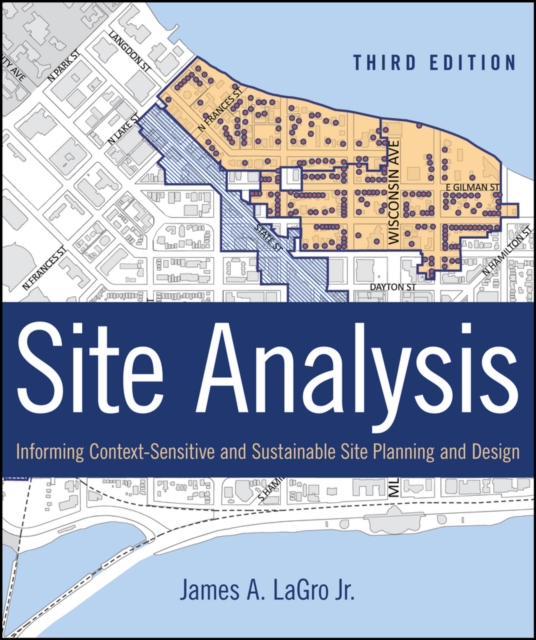
Site analysis : informing context-sensitive and sustainable site planning and design
The process-oriented guide to context-sensitive site selection, planning, and design
Sustainable design is responsive to context. And each site has a unique set of physical, biological, cultural, and legal attributes that presents different opportunities and constraints for alternative uses of the site. Site analysis systematically evaluates these on-site and off-site factors to inform the design of places—including neighborhoods and communities—that are attractive, walkable, and climate-resilient.
This Third Edition of Site Analysis is fully updated to cover the latest topics in low-impact, location-efficient design and development.
This complete, user-friendly guide:
* Blends theory andpractice from the fields of landscape architecture, urban planning, architecture, geography, and urban design
* Addresses important sustainability topics, including LEED-ND, Sustainable Sites, STAR community index, and climate adaptation
* Details the objectives and visualization methods used in each phase of the site planning and design process
* Explains the influence of codes, ordinances, and site plan approval processes on the design of the built environment
* Includes more than 200 illustrations and eight case studies of projects completed by leading planning and design firms
Site Analysis, Third Edition is the ideal guide for students taking courses in site analysis, site planning, and environmental design. New material includes review questions at the end of each chapter for students as well as early-career professionals preparing for the ARE, LARE, or AICP exams.
eBook

Innovation, strategy and risk in construction
\"Innovation, Strategy and Risk in Construction integrates insights from business and government leaders with contemporary research, to help construction firms of all sizes to use times of crisis to their own advantage and build greater adaptive capacity into their operations. Accessible and full of practical examples, the book argues that traditional business strategies which seek to systematise innovation and eliminate uncertainty need to be balanced with more flexible approaches which acknowledge and harness uncertainty. The missing key to innovation, it is argued, is to turn serendipity into capability. The author proposes a simple model which allows managers to tap into the increasing dynamic and interconnected nature of the construction industry. Innovation does not occur in isolation within individual firms, but through collaboration. Each stakeholder in the construction industry has a responsibility to drive innovation, and this book will be key reading for consultants, contractors, subcontractors, suppliers and clients, as well as policy makers and all serious students of construction management\"-- Provided by publisher.
Book
Landscape architecture documentation standards : principles, guidelines, and best practices
SUPERB EXECUTION RELIES UPON RIGOROUS PROJECT DOCUMENTATION A project will only be built as well as it is documented.This publication focuses on the key documentation needs of the landscape architectural design and construction documentation process.
eBook

Site Matters
This volume, through theoretical essays and empirically grounded pieces on Le Corbusier's designs, contemporary suburbs, and the planning agendas of the World Trade Center site, provides theory on the appreciation of site and context in architecture.
eBook


Mathematical Model Prototype to Optimise Engineering Management of the Construction Site
Modern construction technologies strongly affect the environment. Therefore, design and building construction should also follow the sustainable development principle. In this case, design and construction work based on the sustainable development principle should aim at creating a safe and healthy living environment, the economical use of natural resources, and the stimulation of economic development to create the welfare for humans and favourable natural conditions. The article proposes a mathematical algorithm as a comprehensive solution for engineering management of the planning construction site, from the calculation of the earthworks to the automated creation of the engineering geological cross-sections. The paper integrates engineering management, mathematical modelling, and BIM technology. The application of the building information model is undoubtedly one of the most advanced technologies used in the engineering management field, whose advantages have been shown by researchers. In the preliminary stage of construction and production management, decisions should be made regarding material and human resources, schedules, and estimates. The main purpose of this article is the optimisation of the excavation. Other issues important to the organisation and management of the construction are the planning of safe work on the construction site, depending on the soil type. Geotechnical sections allow ascertaining the need for additional fortifications and the depth of the fortifications for safe work. The paper describes the principal mathematical model developed by the authors to design a construction site using BIM technologies. It presents the main formulas of a mathematical algorithm aimed at selecting the objects used on the building site and the need for them. It also gives the main principles of engineering management and methods for selecting the mechanisms used on the construction site. Understandably, a specialist’s visit to the construction site will not be avoided, and it is difficult to present the entire current situation only with a review report or photographs. Using a photogrammetric model, the expert has the opportunity not only to visually evaluate the current condition but also to perform measurements (length, width, and volume) directly in the photogrammetric model. Important and new information about the construction site indicates all relevant obstacles, i.e., plants, surrounding constructions, and other objects.
Journal Article