
Catalogue Search | MBRL


Are you sure you want to remove the book from the shelf?

{{itemTitle}}
340,646
result(s) for
"Building sites."
Sort by:

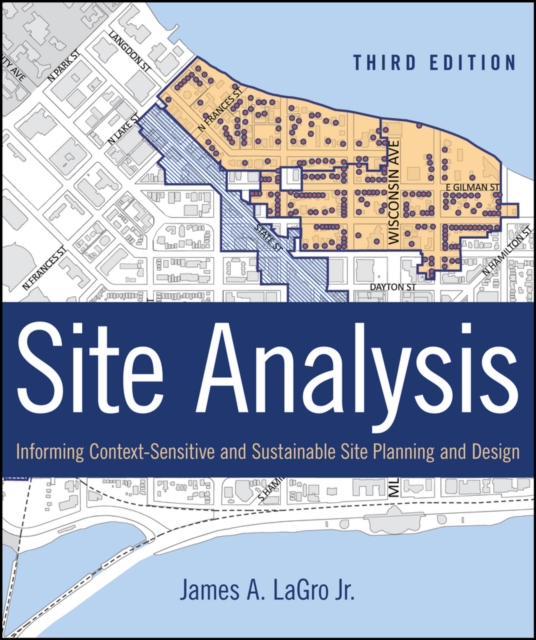
Site analysis : informing context-sensitive and sustainable site planning and design
The process-oriented guide to context-sensitive site selection, planning, and design Sustainable design is responsive to context. And each site has a unique set of physical, biological, cultural, and legal attributes that presents different opportunities and constraints for alternative uses of the site. Site analysis systematically evaluates these on-site and off-site factors to inform the design of places—including neighborhoods and communities—that are attractive, walkable, and climate-resilient. This Third Edition of Site Analysis is fully updated to cover the latest topics in low-impact, location-efficient design and development. This complete, user-friendly guide: * Blends theory andpractice from the fields of landscape architecture, urban planning, architecture, geography, and urban design * Addresses important sustainability topics, including LEED-ND, Sustainable Sites, STAR community index, and climate adaptation * Details the objectives and visualization methods used in each phase of the site planning and design process * Explains the influence of codes, ordinances, and site plan approval processes on the design of the built environment * Includes more than 200 illustrations and eight case studies of projects completed by leading planning and design firms Site Analysis, Third Edition is the ideal guide for students taking courses in site analysis, site planning, and environmental design. New material includes review questions at the end of each chapter for students as well as early-career professionals preparing for the ARE, LARE, or AICP exams.
eBook

Groundwater lowering in construction : a practical guide to dewatering
Many engineering construction projects entail excavations into water bearing substrates. The authors explain the drainage techniques required to lower groundwater sufficiently to allow projects to be undertaken with confidence.
Book

The Engineer's Manual of Construction Site Planning
This handbook addresses problems facing the engineer when preparing to build, both during the contract bidding phase and after a contract has been concluded.It offers clear guidelines for planning the resources and machinery on site, as well as the safe positioning of roads, cranes, storage and temporary buildings.
eBook


Mathematical Model Prototype to Optimise Engineering Management of the Construction Site
Modern construction technologies strongly affect the environment. Therefore, design and building construction should also follow the sustainable development principle. In this case, design and construction work based on the sustainable development principle should aim at creating a safe and healthy living environment, the economical use of natural resources, and the stimulation of economic development to create the welfare for humans and favourable natural conditions. The article proposes a mathematical algorithm as a comprehensive solution for engineering management of the planning construction site, from the calculation of the earthworks to the automated creation of the engineering geological cross-sections. The paper integrates engineering management, mathematical modelling, and BIM technology. The application of the building information model is undoubtedly one of the most advanced technologies used in the engineering management field, whose advantages have been shown by researchers. In the preliminary stage of construction and production management, decisions should be made regarding material and human resources, schedules, and estimates. The main purpose of this article is the optimisation of the excavation. Other issues important to the organisation and management of the construction are the planning of safe work on the construction site, depending on the soil type. Geotechnical sections allow ascertaining the need for additional fortifications and the depth of the fortifications for safe work. The paper describes the principal mathematical model developed by the authors to design a construction site using BIM technologies. It presents the main formulas of a mathematical algorithm aimed at selecting the objects used on the building site and the need for them. It also gives the main principles of engineering management and methods for selecting the mechanisms used on the construction site. Understandably, a specialist’s visit to the construction site will not be avoided, and it is difficult to present the entire current situation only with a review report or photographs. Using a photogrammetric model, the expert has the opportunity not only to visually evaluate the current condition but also to perform measurements (length, width, and volume) directly in the photogrammetric model. Important and new information about the construction site indicates all relevant obstacles, i.e., plants, surrounding constructions, and other objects.
Journal Article

Construction zone
\"Put on your hard hat and step inside Construction zone! Young readers are invited to come on a virtual tour of a building in progress, led by award-winning photographer Richard Sobol. It takes hundreds of workers, thousands of trucks and machines, and millions of nails and bolts to transform an idea on paper into an actual building in which people will live, play, shop, or work. Every single piece of the construction puzzle-- big and small-- must fit together flawlessly. With a clear, direct narrative and handy definitions of construction-related jobs, machines, and terms, Cheryl Willis Hudson distills this most complex of projects into language a young child can grasp. The building itself-- the Stata Center at the Massachusetts Institute of Technology, designed by Pritzker Prize-winning architect Frank O. Gehry-- is playful and colorful, sculpted to excite, delight, and surprise. Richard Sobol's vivid color photographs capture all the excitement of the busy construction site, while offering a close-up view of its breathtaking genius.
Book

Geophysical Survey as Part of Rescue Archaeological Excavation on Large Construction Projects—Case Study: Road I/16 Slaný–Velvary (Czech Republic)
Regions densely populated with archaeological monuments pose significant challenges for construction investors and archaeologists during the planning stages of major construction projects. Recognising the archaeological potential of these areas is crucial for planning effective rescue excavations, which have become a standard procedure in construction. This study explores the utility of non-invasive prospection techniques, including artefact field surveys, multispectral imaging, and magnetic surveys, in assessing the area chosen for the I/16 Slaný–Velvary road construction. We specifically focused on the contributions these methods make towards understanding the archaeological context of the proposed construction site. The findings from the magnetic survey were compared with the results of actual archaeological excavations. Through manual visual analysis and statistical spatial correlation, we assessed the effectiveness of the magnetic survey. The ability of magnetic survey to locate different types of archaeological objects proved to be dependent on various factors. The variability of the environmental setting, particularly pedological and geological conditions, is essential. However, the modern anthropogenic impact and the very nature of individual archaeological objects, especially their dimensions, also play an essential role.
Journal Article
Unpacking construction site safety
Unpacking Construction Site Safety provides a different perspective of safety in practice. • examines how useful the concept of safety actually is to the development of effective management interventions • providing new insights and information to the audience, and assist in a more informed development of new approaches in practice • aimed at safety and construction management practitioners as well as academics
eBook