
Catalogue Search | MBRL


Are you sure you want to remove the book from the shelf?

{{itemTitle}}
39
result(s) for
"Bulgaria Civilization"
Sort by:
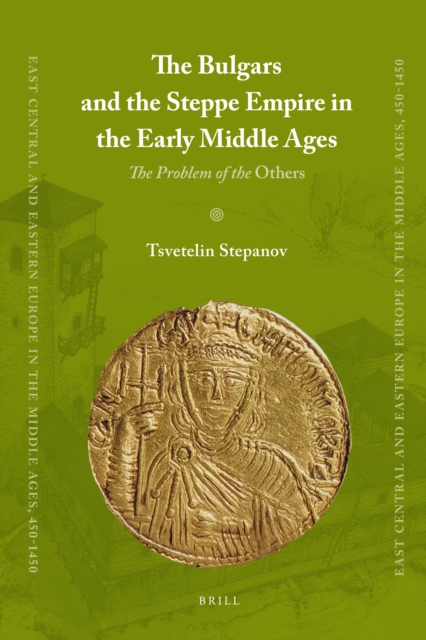
The Bulgars and the Steppe Empire in the Early Middle Ages
Representing the different images, 'names', and 'faces' of the 'Other' in the Eurasian Steppes during the period between the sixth and ninth/tenth centuries, this book broadens the scholars' views on nomads' life and mentalities.
eBook


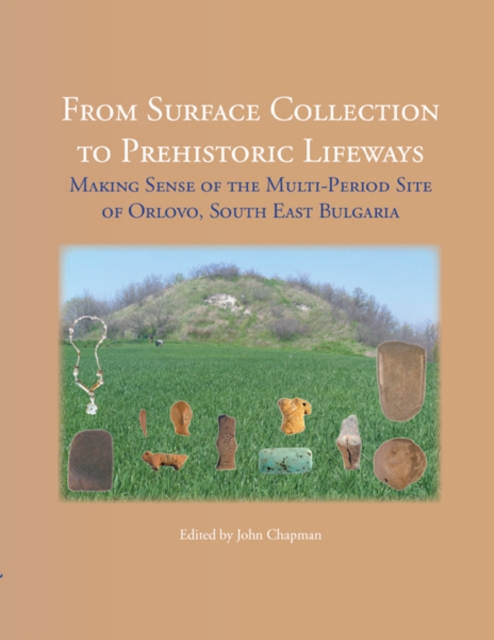
From Surface Collection to Prehistoric Lifeways
The communities who lived in the Balkans between 7000 and 4000 Cal. BC have now been the focus of intensive and increasingly inter-disciplinary research for the last forty years. Dwelling between the warm, dry Mediterranean zones of the Aegean and Anatolia and the cooler and snowier Central European heartlands, these communities created distinctive social formations that left enduring marks on today's landscapes. One of the key trends in these millennia concerned the high value attributed to the exotic, especially if that was represented by objects of striking colour and brilliance. Thus, the preference, wherever possible, for long-term sedentary lifeways was often in counterpoise with strategies for bringing distinctive objects from remote places back to the settlement for local 'domestication'. The prehistoric site of Orlovo has been investigated neither by excavation nor by systematic field walking but by repeated field visits, over many years, and the collection of objects exposed by the plough. The result is an extraordinarily rich and diverse collection of objects whose contexts are poorly known but whose diversity reminds us not so much of an excavated settlement as an excavated Chalcolithic cemetery. This collection has challenged us to develop an approach in which theory was integrated with methodology to propose as complete an interpretation of the site as could be done from an unstructured surface collection. The collection studied in this book is significant for the prehistory not only of South East Bulgaria but also for European prehistory as a whole and its study and publication therefore, sheds light on the worlds of the Neolithic and Chalcolithic communities of the Balkans through the prism of a single site.
eBook

Translation of Dobri Hristov’s “Metric and Rhythmic Fundamentals of Bulgarian Folk Music”
This translation is an excerpt from a study of meter in Bulgarian folk music by composer, educator, and researcher Dobri Hristov (1875–1941). First published in 1913, Hristov’s study influenced the notation and conception of Bulgarian meters with unequal beats and reflects the nationalistic motivation for collecting and theorizing musical folklore in southeastern Europe in the early twentieth century. The translated passage, from a 1925 revision of the text, includes an introduction describing the importance and challenges of studying Bulgarian rhythm, a presentation of Hristov’s metric theory, and discussion of several individual meters.PEER REVIEWER: Victoria Tzotzkova
Journal Article

When Cockroaches Replace Ants in Trophobiosis: A New Major Life-Trait Pattern of Hemiptera Planthoppers Behaviour Disclosed When Synthesizing Photographic Data
The mutualistic interspecific relationships of trophobiosis between trophobiont planthoppers (Hemiptera, Fulgoromorpha) providing food to the host called xenobiont, are reviewed. The degree of interspecific relationships between these symbionts varies from occasional or short time duration (a few hours to a few days) to longer ones, with trophobionts left free to escape (optobiotic type) by the xenobiont, or maintained enclosed in nests or ant shelters (cryptobiotic type). Of 267 collected cases, 126 are new illustrated observations. Occasional trophobiosis is documented in 13 families of planthoppers and appears to be quite general in Fulgoromorpha, although it is reported for the first time for Dictyopharidae, Eurybrachidae, and Nogodinidae. Xenobionts associated with planthoppers are reported from ants and other Hymenoptera, Lepidoptera, and Blattodea, but also from Mollusca and even small gekkonid vertebrates. Tettigometridae appear to be exclusively tended by ants, while Fulgoridae significantly more often by cockroaches (40%) than by ants (27%). Long-time trophobiosis occurs always with ants, cryptobiotic ones reported in Cixiidae, Delphacidae, Tettigometridae, Meenoplidae, Flatidae and Hypochthonellidae, while optobiotic ones remain restricted to tettigometrids. A particular focus on Tettigometridae attended by ants is provided with new etho-ecological observations of 92 currently described tettigometrids species, 32 different species (35%) are now known to be able to be ant-attended. In Bulgaria, where fourteen species occur, trophobiosis occurs with at least five species of them (36%). In tettigometrids, subsociality, sessility, and underground life appear to be key factors allowing more complex relationships with ants. However, the planthopper size and thus the amount of food (drops of honeydew) is probably also an important factor. This might explain many new observations in large-sized and often isolated fulgorids with cockroaches. Tapping of trophobiont forewings by cockroaches, moths, or of the bark subtrate by geckos has been observed, but antennal palpation behaviours by ants are the most commonly observed with tettigometrids, although not with larger planthoppers. In tettigometrids, specific tegumentary glands secretions (allomones) of the abdomen pleurites might also mediate their long-term mutualistic associations, even possibly completing honeydew kairomones actions mediating planthopper trophobiosis in general.
Journal Article

Principia of the legionary fortress in Novae: digital rendering as a tool for analysing Roman army religion and imperial propaganda
A 3D reconstruction of the principia at Novae (Bulgaria) allows modelling of the inscribed statues, altars and building stones as they used to look. By restoring the inscribed monuments to their original contexts, the model means that Roman military religiosity and its messages can be analysed in the legionary headquarters.
Journal Article
Genetic Diversity and Population Structure among Arabian Horse Genealogical Lineages in Bulgaria
The present research aimed to characterize the genetic diversity and relationships among extant Arabian horse sire lines in Bulgaria, using 15 equine microsatellite markers. The evaluation included 537 Arabian horses representing nine sire lines (SAKLAWI I, LATIF, SEANDERICH, IBRAHIM, SHABAB, DJEBEL MOUSA, KUHAILAN AFAS, BAIRACTAR, and SARHAN). The obtained results indicated that within these lines, the mean number of alleles ranged from 4.15 in SARHAN to 5.54 in SAKLAWI I and LATIF. The mean expected heterozygosity (He) ranged from 0.54 in the SEANDERICH line to 0.67 in SAKLAWI I. The inbreeding coefficient for the entire Arabian populations was rather low: FIS = −0.109, fluctuating from −0.204 in SHABAB to −0.041 in SAKLAWI I. The mean genetic differentiation, FST, was 0.096, demonstrating that nearly 90% of the total genetic variation was due to genetic differentiation within each population. STRUCTURE analysis indicated a genetic similarity between SHABAB and LATIF, between IBRAHIM and KUHAILAN AFAS, as well as between SAKLAWI I, SEANDERICH, and BAIRACTAR. This study of the genetic diversity of Arabian sire lines in Bulgaria can assist in developing a national strategy for the exclusion of non-purebred animals from breeding programs in order to preserve the genetic profile of the original Arabian lines.
Journal Article