
Catalogue Search | MBRL


Are you sure you want to remove the book from the shelf?

{{itemTitle}}
8
result(s) for
"Burkina Faso Politics and government 1987-"
Sort by:

Burkina Faso : a history of power, protest and revolution
\"In October 2014, huge protests across Burkina Faso succeeded in overthrowing the long-entrenched regime of their authoritarian ruler, Blasie Compaorâe. Defying all expectations, this popular movement went on to defeat an attempted coup by the old regime, making it possible for a transitional government to organize free and fair elections the following year. In doing so, the people of the previously obscure West African nation surprised the world, and their struggle stands as one of the few instances of a popular democratic uprising succeeding in postcolonial sub-Saharan Africa...\"--Back cover.
Book
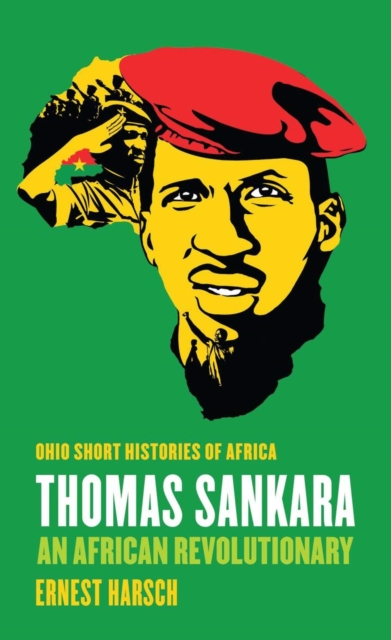
Thomas Sankara
Thomas Sankara, often called the African Che Guevara, was president of Burkina Faso, one of the poorest countries in Africa, until his assassination during the military coup that brought down his government. Although his tenure in office was relatively short, Sankara left an indelible mark on his country's history and development. An avowed Marxist, he outspokenly asserted his country's independence from France and other Western powers while at the same time seeking to build a genuine pan-African unity. Ernest Harsch traces Sankara's life from his student days to his recruitment into the military, early political awakening, and increasing dismay with his country's extreme poverty and political corruption. As he rose to higher leadership positions, he used those offices to mobilize people for change and to counter the influence of the old, corrupt elites. Sankara and his colleagues initiated economic and social policies that shifted away from dependence on foreign aid and toward a greater use of the country's own resources to build schools, health clinics, and public works. Although Sankara's sweeping vision and practical reforms won him admirers both in Burkina Faso and across Africa, a combination of domestic opposition groups and factions within his own government and the army finally led to his assassination in 1987. This is the first English-language book to tell the story of Sankara's life and struggles, drawing on the author's extensive firsthand research and reporting on Burkina Faso, including interviews with the late leader. Decades after his death, Sankara remains an inspiration to young people throughout Africa for his integrity, idealism, and dedication to independence and self-determination.
eBook

Les orphelins de Sankara
En 1986, six cents enfants orphelins et ruraux du Burkina-Faso sont envoyés à Cuba avec la mission d'apprendre un métier et revenir développer leur pays en pleine révolution. Mais après l'assassinat en 1987 du président burkinabé, Thomas Sankara, la liquidation de la Révolution par Blaise Compaoré et la fin de la Guerre Froide, comment revenir, se construire, exister ? Au récit de cette utopie de l'Afrique Rouge, aux souvenirs épiques de ces enfants, se mêlent les images d'archives tantôt rougies par le sable, la chaleur et le vent, tantôt délavées, s'effaçant presque, nous donnant ainsi à voir les réminiscences de leur jeunesse révolutionnaire. Version française et version anglaise. In 1986, six hundred orphans and rural children from Burkina Faso were sent to Cuba with the mission of learning a trade and returning to develop their country in the midst of a revolution. But after the assassination in 1987 of the president of Burkina Faso, Thomas Sankara, the liquidation of the Revolution by Blaise Compaoré and the end of the Cold War, how to return, build oneself, exist? To the story of this utopia of Red Africa, to the epic memories of these children, are mixed the archive images sometimes reddened by the sand, the heat and the wind, sometimes washed out, almost erasing themselves, thus giving us to see reminiscences of their revolutionary youth. French version.
Streaming Video

Political assassination. Fratricide in Burkina Faso : Thomas Sankara and French Africa
Burkina Faso, Africa, October 15, 1987. Automatic gunfire breaks the evening's silence and kills President Thomas Sankara. Would the assassins have been sent by his brothers in arms, Blaise Compaore, with whom he had launched the Marxist Revolution a few years before? His main argument was also one of the assassins: Sankara had lost all sense of reality and was leading the Revolution into chaos. It needed to be \"rectified\". But who really was behind his \"rectification\" and why? Dark forces from France, the former colonial power, envying neighbor states, wealthy business interests?
Streaming Video

Revolutions. Burkina Faso : a revolution rectified
In August 1983, Captain Thomas Sankara seizes power in the former French colony of Upper Volta. He is helped by a commando led by his friend Blaise Compaore. Contrary to precedent attempts, Sankara's coup d'etat has revolutionary objectives of Marxist inspiration: end the neocolonial hold of France on the county, favor the equality of opportunity and the education of the masses and launch an economic reform based in the rurality of the country. Dissidences appear, and four years after the beginning of the August Revolution, he is assassinated. While the inhabitants of Burkina-Faso continue to live with the memory of a failed revolution, the documentary reveals the price of the country's stability: no democratic change, no access to the wealth of the country, and no real independence from the former colonial power of France.
Streaming Video

Burkina special report: a revolution derailed
Factors which led to the death of Thomas Sankara, Oct. 1987.
Journal Article

Thomas Sankara und die burkinabische Revolution: Ein Staatschef und eine Politik neuen Typs
African heads of state and their governments must assume much of the responsibility for the innumerable failures in Black African post-colonial development. In August 1983, a group of four young officers took power in Burkina Faso. Their declared aim was a specifically development-oriented policy which would avoid their African predecessors' mistakes. Its principal objective was to drastically curtail the relatively preferential treatment of the urban population in favour of the rural areas. For its implementation, the government counted on the army and the loyalty of the four men who master-minded the new policy in the National Revolutionary Council, on a new system of Revolutionary Defence Committees as well as on the charisma of the head of state, Thomas Sankara. On account of the consistent implementation of the government's programme, initial remarkable results in the economic and social spheres as well as an unconventional foreign policy, Thomas Sankara appears to embody a new type of African head of state. /// Les erreurs graves commises par les chefs d'Etat et les gouvernements de l'Afrique Noire sont pour une grande part responsables des multiples échecs du développement post-colonial. Un groupe de quatre jeunes officiers se saisit du pouvoir en Burkina Faso, en août 1983; leur but était d'éviter les fautes de leurs prédécesseurs et de poursuivre une politique franchement orientée vers le développement. Une farouche réduction des privilèges relatifs accordés à la population urbaine en même temps qu'un soutien renforcé du développement en milieu rural constituaient les priorités de cette politique. Le gouvernement s'appuyait en cela sur l'armée et sur la loyauté des quatre initiateurs de la nouvelle politique au sein du Conseil National de la Révolution, mais aussi sur un système nouvellement instauré de Comités de Défense de la Révolution et sur le charisme du chef de l'Etat, Thomas Sankara. La poursuite assidue de cette nouvelle voie, des premiers résultats remarquables dans les secteurs aussi bien économique que social, une politique extérieure peu conventionnelle enfin, révèlent en Thomas Sankara un chef d'état africain d'un nouveau type.
Journal Article
