
Catalogue Search | MBRL


Are you sure you want to remove the book from the shelf?

{{itemTitle}}
2,210
result(s) for
"Business Humor."
Sort by:


The Aggretsuko guide to office life
\"Aggretsuko is all the RAGE. A 25-year-old red panda who's Sanrio's newest character and has her own Netflix show, Aggretsuko lives a stressful work life that's all too relatable. In this helpful handbook, Aggretsuko offers tips on how to deal with annual holiday parties, avoid colleagues after hours, circumvent oversharing coworkers, and most importantly--how to RAGE (preferably in heavy-metal karaoke sessions). A must-have for anyone who needs help staying sane from 9 to 5.\"--Provided by publisher.
Book

Learning in 3D
Praise for Learning in 3D \"Learning is the key to our future and powerful learning will result from immersive, interactive, and creative 3D designs. Tony O'Driscoll and Karl Kapp have written a disruptive book about a disruptive technology that we all need to explore. This is a must read!\" -Elliott Masie, chair, The LearningCONSORTIUM \"Karl Kapp and Tony O'Driscoll are, amazingly, both the best theorists and practitioners in using virtual worlds in every type of educational venue. Many will love their vision, but I am more hooked on their practicality and hand-holding.\"-Clark Aldrich, author, Learning Online with Games, Simulations, and Virtual Worlds: Strategies for Online Instruction \"Kapp and O'Driscoll nailed it. The right balance of case studies, theories and practical advice for any organization pursing the use of virtual worlds for learning. If you are interested in virtual worlds for learning and collaboration, this book is for you.\" -David A. Manning, managing partner, Performance Development Group \"The big contribution of Learning in 3D is that it provides research informed guidance and practical tips and techniques for using 3D virtual environments to achieve real business results...the case studies are outstanding.\" -Lisa Clune, president, Kaplan EduNeering \"As the world makes its way through a period of significant change, Learning in 3D couldn't come at a better time. Today, organizations and individuals are being challenged to make the most of learning collaboratively. This book stimulates our thinking on how to maximize the impact of technology, while providing a practical blueprint-with 'revolutionary' examples-of how to bring a new dimension to learning.\" -John Malitoris, regional managing director, Duke Corporate Education \"Tony O'Driscoll and Karl Kapp remind us that learning is the fourth dimension-and the one that really
counts in collaboration. A must-read for the future of learning in environments virtual and otherwise.\" -Cathy Davidson, Ruth F. DeVarney Professor of English at Duke University and co-director HASTAC/MacArthur Foundation Digital Media and Learning Competition.
eBook


Laugh and learn : 95 ways to use humor for more effective teaching and training
A stand-up comic used her day job teaching traffic school to launch a training career. The results are nothing to laugh at!.
eBook
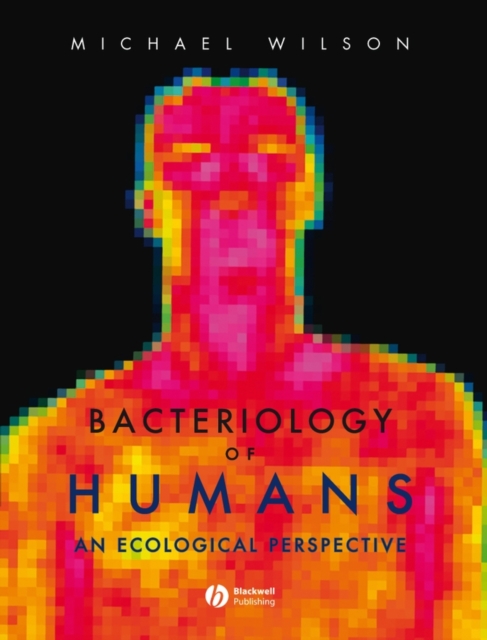
Bacteriology of humans
1st Prize, 'New Authored Books' category, Royal Society of Medicine and Society of Authors Medical Book Awards 2008
\"Overall, I am impressed by the up-to date information content and structure provided in Bacteriology of Humans. It is truly an ecological perspective helpful for undergraduate/graduate majors in microbiology and immunology. \" –American Society for Microbiology, June 2009
\" Wilson provides the reader with an up-to-date, comprehensive census of the indigenous microorganisms that inhabit the human body and in so doing contributes significantly to this rapidly advancing area of study. The narrative is clearly written; the index is excellent; there are numerous bibliographic citations. Each chapter is rich with tables, diagrams, color micrographs, and charts … Highly recommended.\" –Choice Reviews
\"This comprehensive, yet accessible text... is an excellent and informative reference book… it should be on the shelf of every major science and medical library. The content, organization, and presentation make this book a unique resource.\" –Doody's Book Reviews
Until recently, the indigenous microbiota of humans has been a relatively neglected area of microbiology with most attention being focused on those microbes that cause disease in humans, rather than on those that co-exist with us in the disease-free state. However, in the past decade research has shown that not only is the indigenous microbiota involved in protecting humans from exogenous pathogens but it is also involved in our development and nutrition. Consequently, interest has grown substantially among health professionals and scientists in analyzing and understanding these microbial (largely bacterial) communities.
This comprehensive, yet accessible text provides an up-to-date guide to the development, composition and distribution of indigenous microbial communities of humans. With the aid of abundant colour figures, diagrams, tables and maps, it establishes links between the physicochemical factors prevailing at an anatomical site and the types of microbes to be found there. The book includes an introduction to the human-microbe symbiosis as well as an in-depth look at the main systems and organs of the human body that have an indigenous microbiota. Each chapter includes a list of references for further study.
This is an excellent and informative reference book that is useful to anyone with an interest in microbiology, medical microbiology, microbial ecology, infectious diseases, immunology, human biology, medicine, dentistry, nursing, health sciences, biomedical sciences or pharmacy – it should be on the shelf of every major science and medical library.
Hallmark Features:
* Provides a comprehensive, yet accessible, reference book on the human microbiota
* Lavishly illustrated with colour figures, diagrams, tables and maps
* Each chapter provides a list of references to promote further study
* Each chapter contains links to key websites
* Offers an ecological approach that explains why certain organisms are associated with a particular anatomical site
eBook

Impact of anthropomorphic features of artificially intelligent service robots on consumer acceptance: moderating role of sense of humor
Purpose
This study aims to investigate the impact of both physical and personality-related anthropomorphic features of an artificial intelligence service robot on the cognitive and affective appraisals and acceptance of consumers during service delivery.
Design/methodology/approach
The proposed hypotheses that investigate the effects of service robots’ physical appearance on the emphasis consumers place on each evaluation criteria they use in determining their willingness to accept the use of service robots in service delivery and the moderating role of sense of humor are tested by conducting two studies using scenario-based experiments.
Findings
The results show that humanlike appearance leads to higher performance expectancy, mascot-like appearance generates higher positive emotions and machine-like appearance results in higher effort expectancy. The effects of humanlike and mascot-like appearances on consumer acceptance are moderated by the sense of humor of service robots. However, the sense of humor effect is attenuated with a machine-like appearance owing to the lack of anthropomorphism.
Practical implications
This study provides crucial insights for hospitality managers who plan to use service robots in service delivery. The findings highlight the key roles of appearance type and sense of humor of service robots in influencing the appraisals and acceptance of consumers regarding the use of service robots in service delivery.
Originality/value
This study focuses on comparing the effects of traditional and mascot-like appearances of service robots on consumer appraisals and identifies sense of humor as a cute anthropomorphized personality trait of service robots.
Journal Article

Employee Humor Can Shield Them from Abusive Supervision
Drawing upon conservation of resources theory, we develop and test a theoretical model that specifies how and when employee humor toward leaders affects leader abusive supervision. We propose that employee humor is negatively associated with leader abusive supervision via leader relational energy. Furthermore, the negative indirect relationship between employee humor and leader abusive supervision via leader relational energy is stronger for female leaders than for male leaders. An experiment and a multi-wave, multi-source field study provide substantial support for our hypotheses. Our findings contribute to the abusive supervision literature by identifying employee humor as a safe and effective bottom-up approach to prevent leader abusive supervision.
Journal Article

A meta-analysis of humor in advertising
This meta-analysis combines 369 correlations on the effects of humor in advertising and thus quantifies, updates, and expands previous literature reviews on the effects of humor in advertising. In line with previous reviews, the meta-analytic correlations demonstrate that humor in advertising significantly enhances A
AD
, attention, and positive affect. Contrary to the assumptions of previous reviews, there is no evidence that humor impacts positive or negative cognitions, and liking of the advertiser. The meta-analytic findings clarify some ambiguous prior conclusions: humor significantly reduces source credibility, enhances positive affect, A
BR
and purchase intention. The decline from lower order to higher order communication effects is particularly strong, with the effect size of the impact of humor on A
AD
being twice as large as the effect size for A
BR
. This impact of humor in advertising has been rather stable over the past decades. A moderator analysis reveals, however, that the findings of academic humor research are somewhat biased. As for the underlying theory, the positive and linear relationship between the funniness of the ad and brand attitudes supports an affective mechanism underlying the impact of humor in advertising.
Journal Article