
Catalogue Search | MBRL


Are you sure you want to remove the book from the shelf?

{{itemTitle}}
76,879
result(s) for
"Business and Economics : International Trade"
Sort by:

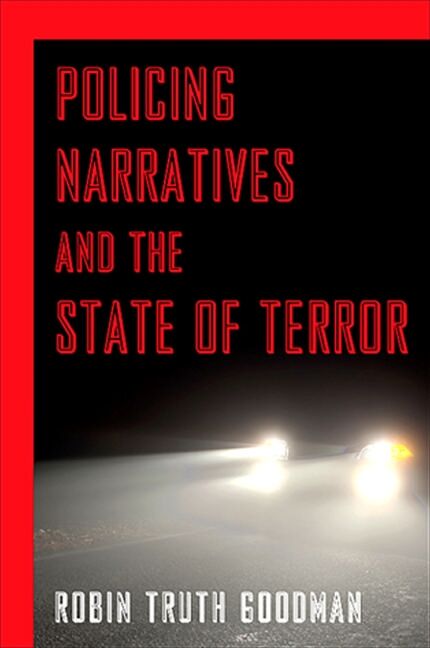
Policing Narratives and the State of Terror
Since the terrorist attacks of September 11, 2001, world politics have increasingly mirrored plots of detective novels, with high-profile criminal investigations that cross multiple borders and the internationalized law enforcement practices associated with the \"War on Terror.\" Policing Narratives and the State of Terror examines the relationship between domestic policing and international policy through an analysis of contemporary popular detective fiction, police procedurals, police autobiography, security reports, and chronicles of domestic spying. Robin Truth Goodman connects these accounts of policing to the changing shape of the contemporary nation-state, marked by the denationalization of labor; commercial and criminal laws that jump borders more quickly than civil law protections; and the replacement of legal precedent by unrepeatable, exceptional executive decisions. Working at the intersection of literature, international law, and globalized commerce, Goodman astutely pinpoints how policing has become an increasingly troublesome instrument of empire, particularly in terms of national sovereignty and the growing numbers of mercenary private security forces.
eBook

Seoul man : a memoir of cars, culture, crisis, and unexpected hilarity inside a Korean corporate titan
\"Heartbreaking and hilarious, Seoul Man is Frank Ahrens' story of the three years he spent in Korea as the highest ranking non-Korean executive at Hyundai, shedding light on a business culture very few Western journalists have been able to experience\"-- Provided by publisher.
Book

Globalizing Justice
Globalization is a far-reaching and multifaceted phenomenon whose effects on law are just beginning to be appreciated fully. Globalizing Justice examines the effects of globalization on law and court systems in the developed and developing worlds. How has the global spread of legal norms changed the relationship between international, supranational, and national courts? How are transnational and international legal norms transmitted and received? The contributors utilize a variety of approaches—historical, comparative, normative, and empirical—to expose the extensive effects of globalization in areas such as human rights, universal criminal jurisdiction, citizenship, and national sovereignty. This volume sheds light on the global spread of information and the cross-border migration of legal ideas across the world to further open up the discussion of globalization in the social sciences.
Donald W. Jackson is Herman Brown Professor of Political Science at Texas Christian University and the author of Even the Children of Strangers: Equality under the U.S. Constitution. Michael C. Tolley is Associate Professor of Political Science at Northeastern University and the coauthor (with Christopher J. Bosso and John H. Portz) of American Government: Conflict, Compromise, and Citizenship. Mary L. Volcansek is Professor of Political Science at Texas Christian University and the author of Constitutional Politics in Italy: The Constitutional Court.
eBook

Crude nation : how oil riches ruined Venezuela
\"Beneath Venezuelan soil lies an ocean of crude--the world's largest reserves--an oil patch that shaped the nature of the global energy business. Unfortunately, a dysfunctional anti-American, leftist government controls this vast resource and has used its wealth to foster voter support, ultimately wreaking economic havoc. Crude Nation reveals the ways in which this mismanagement has led to Venezuela's economic ruin and turned the country into a cautionary tale for the world. Raúl Gallegos, a former Caracas-based oil correspondent, paints a picture both vivid and analytical of the country's economic decline, the government's foolhardy economic policies, and the wrecked lives of Venezuelans. Without transparency, the Venezuelan government uses oil money to subsidize life for its citizens in myriad unsustainable ways, while regulating nearly every aspect of day-to-day existence in Venezuela. This has created a paradox in which citizens can fill up the tanks of their SUVs for less than one American dollar while simultaneously enduring nationwide shortages of staples such as milk, sugar, and toilet paper. Gallegos's insightful analysis shows how mismanagement has ruined Venezuela again and again over the past century and lays out how Venezuelans can begin to fix their country, a nation that can play an important role in the global energy industry\"-- Provided by publisher.
Book

Poverty as Subsistence
Poverty as Subsistence explores the \"propertizing\" land reform policy that the World Bank advocated throughout the transitioning countries of Eurasia, expecting poverty reduction to result from distributing property titles over agricultural land to local (rural) populations. China's early 1980s land reform offered support for this expectation, but while the spread of propertizing reform to post-communist Eurasia created numerous \"subsistence\" smallholders, it failed to stimulate entrepreneurship or market-based production among the rural poor. Varga argues that the World Bank advocated a simplified version of China's land reform that ignored a key element of successful reforms: the smallholders' immediate environment, the structure of actors and institutions determining whether smallholders survive and grow in their communities. With concrete insights from analysis of the land reform program throughout post-communist Eurasia and multisited fieldwork in Romania and Ukraine, this book details how and why land reform led to subsistence and the mechanisms underpinning informal commercialization.
eBook

The war below : lithium, copper, and the global battle to power our lives
Tough choices loom if the world wants to go green. The United States and other countries must decide where and how to procure the materials that make our renewable energy economy possible. To build electric vehicles, solar panels, cell phones, and millions of other devices means the world must dig more mines to extract lithium, copper, cobalt, rare earths, and nickel. But mines are deeply unpopular, even as they have a role to play in fighting climate change. These tensions have sparked a worldwide reckoning over the sourcing of these critical minerals, and no one understands the complexities of these issues better than Ernest Scheyder, whose exclusive access has allowed him to report from the front lines on the key players in this global battle to power our future.
Book

Shadow Negotiators
Shadow Negotiators is the first book to demonstrate that United Nations (UN) organizations have intervened to influence the discourse, agenda, and outcomes of international trade lawmaking at the World Trade Organization (WTO). While UN organizations lack a seat at the bargaining table at the WTO, Matias E. Margulis argues that these organizations have acted as \"shadow negotiators\" engaged in political actions intended to alter the trajectory and results of multilateral trade negotiations. He draws on analysis of one of the most contested issues in global trade politics, agricultural trade liberalization, to demonstrate interventions by four different UN organizations—the Food and Agriculture Organization (FAO), the World Food Programme (WFP), the Office of the High Commissioner for Human Rights (OHCHR), and the Special Rapporteur on the Right to Food (SRRTF). By identifying several novel intervention strategies used by UN actors to shape the rules of global trade, this book shows that UN organizations chose to intervene in trade lawmaking not out of competition with the WTO or ideological resistance to trade liberalization, but out of concerns that specific trade rules could have negative consequences for world food security—an outcome these organizations viewed as undermining their social purpose to reduce world hunger and protect the human right to food.
eBook

Firms in the International Economy
Despite their common roots, international economics (IE) and international business (IB) have developed into two distinct fields of study. Economists have directed their efforts at formalizing the workings of international trade and investment at the macroeconomic level; business scholars have relied more on data-driven conceptual narratives than mathematical tools. But the recent focus of IE literature on firm heterogeneity suggests that IE would benefit from IB analyses of the behavior and organization of the internationalizing firm. The contributions to this volume investigate ways that insights from IB can enrich IE research in firm heterogeneity.The contributors discuss firm-specific advantages in international trade and investment, considering the firm as the unit of analysis and managerial inputs as a variable in market entry decisions; analyze interactions between a firm and its external environment, including local corporate philanthropy and institutional settings; examine the boundaries of the firm and organizational choices such as the make-or-buy decision; and investigate technology transfer and innovation offshoring, discussing the role of subsidiaries, inventor employment, and other related topics. Although IE and IB look at international firms from different perspectives, these contributions make it clear that there is a potential for a productive exchange of insights and information between the two disciplines.ContributorsLaura Abramovsky, Carlo Altomonte, Sjoerd Beugelsdijk, Bruce Blonigen, Pamela Bombarda, Steven Brakman, Julia Darby, Rodolphe Desbordes, Filippo Di Mauro, María García-Vega, Harry Garretsen, Elena Huergo, Florian Mayneris, Quyen T. K. Nguyen, Verena Nowak, Cheyney O'Fallon, Gianmarco Ottaviano, Michael Pflüger, Filomena Pietrovito, Sandra Poncet, Alberto Franco Pozzolo, Alan M. Rugman, Armando Rungi, Stephan Russek, Davide Sala, Luca Salvatici, Christian Schwarz, Roger Smeets, Jens Suedekum, Hans van Ees, Vincent Vicard, Ian Wooton, Erdal Yalcin
eBook

Precarious Asia
Precarious Asia assesses the role of global and domestic factors in shaping precarious work and its outcomes in Japan, South Korea, and Indonesia as they represent a range of Asian political democracies and capitalist economies: Japan and South Korea are now developed and mature economies, while Indonesia remains a lower-middle income country. With their established backgrounds in Asian studies, comparative political economy, social stratification and inequality, and the sociology of work, the authors yield compelling insights into the extent and consequences of precarious work, examining the dynamics underlying its rise. By linking macrostructural policies to both the mesostructure of labor relations and the microstructure of outcomes experienced by individual workers, they reveal the interplay of forces that generate precarious work, and in doing so, synthesize historical and institutional analyses with the political economy of capitalism and class relations. This book reveals how precarious work ultimately contributes to increasingly high levels of inequality and condemns segments of the population to chronic poverty and many more to livelihood and income vulnerability.
eBook