
Catalogue Search | MBRL


Are you sure you want to remove the book from the shelf?

{{itemTitle}}
8
result(s) for
"Business and politics -- Colombia -- Case studies"
Sort by:


Cities, Business, and the Politics of Urban Violence in Latin America
This book analyzes and explains the ways in which major developing world cities respond to the challenge of urban violence. The study shows how the political projects that cities launch to confront urban violence are shaped by the interaction between urban political economies and patterns of armed territorial control. It introduces business as a pivotal actor in the politics of urban violence, and argues that how business is organized within cities and its linkages to local governments impacts whether or not business supports or subverts state efforts to stem and prevent urban violence. A focus on city mayors finds that the degree to which politicians rely upon clientelism to secure and maintain power influences whether they favor responses to violence that perpetuate or weaken local political exclusion. The book builds a new typology of patterns of armed territorial control within cities, and shows that each poses unique challenges and opportunities for confronting urban violence. The study develops sub-national comparative analyses of puzzling variation in the institutional outcomes of the politics of urban violence across Colombia's three principal cities—Medellin, Cali, and Bogota—and over time within each. The book's main findings contribute to research on violence, crime, citizen security, urban development, and comparative political economy. The analysis demonstrates that the politics of urban violence is a powerful new lens on the broader question of who governs in major developing world cities.
eBook

The Personalist Leadership Style of Fabio Vásquez: A Case Study on the Origins of the ELN
This article examines the personalist leadership style of Fabio Vásquez, a founding member of the Ejército de Liberación Nacional (ELN), the Colombian guerrilla group. Personalism, as a theoretical framework for understanding Latin American leaders, has primarily focused on traditional political practices, emphasizing the tensions and conflicts among formal institutions, political parties, and personalist politicians. While these studies provide valuable insights, they overlook leaders who operate outside conventional political structures who also rely on personalist strategies to attract and retain followers. This article seeks to bridge this gap by presenting a case study of Vásquez’s leadership style. In an era marked by the resurgence of populism and renewed interest in the effects of personalism on conventional politics, this article argues that examining personalist leadership within revolutionary insurgent groups that reject conventional party politics is necessary for a thorough understanding of the phenomenon. In particular, it offers a comprehensive overview of how Vásquez’s personalist strategies shaped the ELN’s early insurgency, ultimately revealing the strengths and vulnerabilities of such leadership within revolutionary movements.
Journal Article

Regulatory Chill and Domestic Law: Mining in the Santurbán Páramo
A persisting question about investment treaties is whether they lead to regulatory chill – the reluctance to regulate on environmental and social issues due to fear of investment claims. The literature on this topic has been predominantly focussed on how the state responds to international pressures, and little has been written about what happens within the state itself. This article aims to fill that gap by analysing the interplay of domestic laws and institutions in the context of potential investment claims, based on the case study of mining in the Santurbán páramo region in Colombia. The article shows that even though Colombia had created laws and institutions that internalized international investment law, it did not bring about regulatory chill in the case of Santurbán; this is due to the role of domestic constitutional law and the Constitutional Court. This case study also adds to the understanding of how the Liberal International Order is shifting from international to domestic governance, by showing how domestic laws and institutions can have diverging priorities when determining how the risk of investment claims is dealt with.
Journal Article

Center for the Study of the Presidency and Congress News Analysis: Trends in Latin America & Presidential Leadership
Over the past year and a half, the Center for the Study of the Presidency & Congress has analyzed how the regional narrative has changed in ways that demonstrate the importance of political reform and economic growth to regional stability and integration. In this report, the authors will describe what they have discovered during the roundtable sessions they have chaired during this project -- held in Washington DC; Miami, FL; Bogota, Colombia; and Panama City, Panama -- which draw on the expertise of many US and regional leaders from government, the private sector, and the business community. They will also briefly address the impact of US relations with the region and what the project found to be their impact on US domestic politics. Finally, they close with a glimpse of some of the positive trends moving forward that draw on the lessons of these case studies of both Latin American countries and the leadership of US presidents.
Journal Article

Commodity booms, coalitional politics and government intervention in credit markets
Scholars of the 'resource curse' increasingly agree that strong institutions can help countries avoid the pitfalls associated with abundant natural resource wealth. This paper argues that certain political coalitions can serve a similar function in the context of weak institutions. To explicate this argument, this paper examines how international commodity booms regularly create credit demand that surpasses available supply, often impelling exporters to seek government assistance with obtaining credit. Four case studies illustrate how coalitional politics dictated governmental responses to such demands. Where exporters were members of the ruling coalition (Chile and Argentina), their needs sparked credit sector reform and government help to access credit. Where exporters were excluded from political power (Colombia and Nigeria), government policy hindered their economic goals. These findings suggest that the resource curse may pivot on coalitional politics in important respects. The paper concludes by assessing this possibility with respect to strategies that are commonly proposed to help developing countries manage their natural resource wealth.
Journal Article
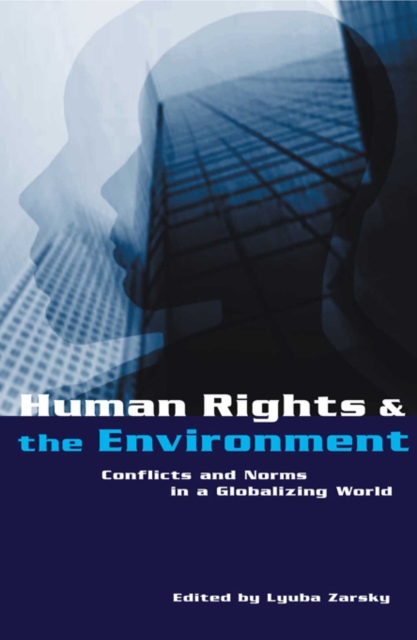
Human Rights and the Environment
The impact of environmental damage on human rights - civil, political or welfare and labour rights - is becoming ever-more widely appreciated and has direct bearing on the behaviour of companies and their norms of conduct. In this volume, contributors draw on the tools and insights of a range of disciplines, including law, anthropology, economics, geography and social science, to analyze the issues and show how new standards that protect rights and liberties can be established.
'A timely text... A well constructed and composed contribution to the negative forces present in the environmental / ethical debate.'
Progress in Development Studies
'This is a well constructed and composed contribution to the negative forces present in the environmental/ethical debate...provides a useful contribution to the debate about environment...this is a useful volume, and I would welcome it on my bookshelf.'
Alexander Lynch , Progress in Development Studies.
Preface * Introduction: Conflicts, Ethics and Globalization * Part I: Integrating Human Rights and Environmental Ethics The Rights of Indigenous Peoples in International Law * Global Reach: Human Rights and Environment in the Framework of Corporate Accountability * Part II: Conflicts Over Mineral and Oil Development - Mining in Suriname: Multinationals, the State and the Maroon Community of Nieuw Koffiekamp * Environment, Human Rights and Mining Conflicts in Ghana * Conflicts Over Transnational Oil and Gas Development off Sakhalin Island in the Russian Far East: A David and Goliath Tale * Part III: Conflicts Over Development Strategies - Environmental and Human Rights Impacts of Trade Liberalization: A Case Study in Batam Island, Indonesia * Global Norms, Local compliance and the Human Rights-Environment Nexus: A Case Study of the Nam Theun II Dam In Laos * The Darien Region Between Colombia and Panama: Gap or Seal * Environment, Development and Human rights in China: A Case Study of Foreign Waste Dumping * Part IV: Conflicts Over Land Rights in China: A Case Study of Foreign Waste Dumping * Part IV: Conflicts Over Land Rights - Environment and Land in Bushbuckridge, South Africa * Ecological Roots of Conflict in Eastern and Central Africa: Towards a Regional Ombudsman * Part V: Conclusion - Promoting Environmental Human Rights Through Innovations in Mediation * Index
Lyuba Zarsky is Co-Founder and Senior Associate of the Nautilus Institute for Security and Sustainable Development in Berkeley, California. She has been a consultant for the Asian Development Bank, the Organisation for Economic Co-operation and Development (OECD) and the United Nations Development Programme (UNDO), and has written widely on ethics and sustainability, especially in the Asia-Pacific region.
eBook

Globalization, Labor, and Violence in Colombia's Banana Zone
This article examines how globalization and violence have shaped workers' organizations in the Urabá banana zone in northern Colombia from the 1960s to the present. Early unions found allies in leftist political and guerilla organizations. The banana growers relied on the neoliberal state and rightist paramilitaries to unleash an extraordinary wave of violence to crush the leftist unions. They also wooed the right within the unions by pleading a set of common interests in reforming the global banana trade to the benefit of Colombian producers. By the 1990s, a newly right-dominated union in Urabá proved adept at labor-management collaboration in the interest of their joint regional stake in the industry, but it also promoted international labor unity aimed at pressuring banana transnationals to accept minimum labor standards.
Journal Article