
Catalogue Search | MBRL


Are you sure you want to remove the book from the shelf?

{{itemTitle}}
6
result(s) for
"Business and politics Southern States History 20th century."
Sort by:


Settler colonialism and land rights in South Africa : possession and dispossession on the Orange River
This local history of Griqua Philippolis (1824-1862) and Afrikaner Orania (1990-2013) gets at the crux of the ever-pertinent land question in South Africa. Identifying the many layers of dispossession definitive of the South African past, the book presents a provocative new argument about land rights and the residues of settler colonialism.
eBook

The 'Black Metropolis' Revisited
The conventional wisdom on the Black metropolis of the early 20th century holds that urban Black communities in the South lagged far behind their counterparts in the North in terms of providing opportunities for Blacks to enter occupations that were associated with Blacks' socioeconomic progress. Yet, analyses of census data in the present study offer mixed support for this wisdom. The odds of Black participation in art, show business, public service and professions were, as expected, lower in the urban South. Yet surprisingly, the odds of Black participation in most entrepreneurial ventures were approximately similar in the urban South and urban North. The results imply that the conventional wisdom should be modified to indicate that, at the beginning of the Great Migration, the benefits to Blacks of the large Black communities of northern cities were more cultural and political than economic.
Journal Article

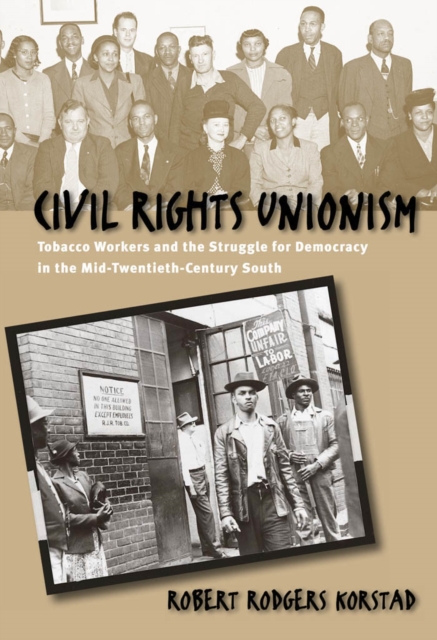
Civil rights unionism : tobacco workers and the struggle for democracy in the mid-twentieth-century South
Drawing on scores of interviews with black and white tobacco workers in Winston-Salem, North Carolina, Robert Korstad brings to life the forgotten heroes of Local 22 of the Food, Tobacco, Agricultural and Allied Workers of America-CIO. These workers confronted a system of racial capitalism that consigned African Americans to the basest jobs in the industry, perpetuated low wages for all southerners, and shored up white supremacy. Galvanized by the emergence of the CIO, African Americans took the lead in a campaign that saw a strong labor movement and the reenfranchisement of the southern poor as keys to reforming the South and a reformed South as central to the survival and expansion of the New Deal. In the window of opportunity opened by World War II, they blurred the boundaries between home and work as they linked civil rights and labor rights in a bid for justice at work and in the public sphere. But civil rights unionism foundered in the maelstrom of the Cold War. Its defeat undermined later efforts by civil rights activists to raise issues of economic equality to the moral high ground occupied by the fight against legalized segregation and, Korstad contends, constrains the prospects for justice and democracy today.
eBook

Southernizing the American Working Class: Post-war Episodes of Regional and Class Transformation
The industrial and political reconstruction of the South and the regional resdistribution of economic functions constitute one of the great changes in 20th century political economy. The implications have been enormous for the American working class.
Journal Article