
Catalogue Search | MBRL


Are you sure you want to remove the book from the shelf?

{{itemTitle}}
72
result(s) for
"Business cycles -- United States -- Congresses"
Sort by:
Productivity and Cyclicality in Semiconductors
Hosted by Harvard University's Kennedy School of Government, this symposium brought together leading technologists and economists to review technical challenges facing the semiconductor industry, the industry's business cycle, the interconnections between the two, and the implications of growth in semiconductors for the economy as a whole. This volume includes a summary of the symposium proceedings and three major research papers. Topics reviewed encompass the industry technology roadmap, challenges to be overcome to maintain the trajectory of Moore's Law, the drivers of the continued growth in productivity in the U.S. economy, and economic models for gaining a better understanding of this leading U.S. industry.
eBook
Business Cycles, Indicators, and Forecasting
The inability of forecasters to predict accurately the 1990-1991 recession emphasizes the need for better ways for charting the course of the economy. In this volume, leading economists examine forecasting techniques developed over the past ten years, compare their performance to traditional econometric models, and discuss new methods for forecasting and time series analysis.
eBook
Business cycles, indicators, and forecasting
The inability of forecasters to predict accurately the 1990-1991 recession emphasizes the need for better ways for charting the course of the economy. In this volume, leading economists examine forecasting techniques developed over the past ten years, compare their performance to traditional econometric models, and discuss new methods for forecasting and time series analysis.
eBook

Lobbying America
Lobbying Americatells the story of the political mobilization of American business in the 1970s and 1980s. Benjamin Waterhouse traces the rise and ultimate fragmentation of a broad-based effort to unify the business community and promote a fiscally conservative, antiregulatory, and market-oriented policy agenda to Congress and the country at large. Arguing that business's political involvement was historically distinctive during this period, Waterhouse illustrates the changing power and goals of America's top corporate leaders.
Examining the rise of the Business Roundtable and the revitalization of older business associations such as the National Association of Manufacturers and the U.S. Chamber of Commerce, Waterhouse takes readers inside the mind-set of the powerful CEOs who responded to the crises of inflation, recession, and declining industrial productivity by organizing an effective and disciplined lobbying force. By the mid-1970s, that coalition transformed the economic power of the capitalist class into a broad-reaching political movement with real policy consequences. Ironically, the cohesion that characterized organized business failed to survive the ascent of conservative politics during the 1980s, and many of the coalition's top goals on regulatory and fiscal policies remained unfulfilled. The industrial CEOs who fancied themselves the \"voice of business\" found themselves one voice among many vying for influence in an increasingly turbulent and unsettled economic landscape.
Complicating assumptions that wealthy business leaders naturally get their way in Washington,Lobbying Americashows how economic and political powers interact in the American democratic system.
eBook
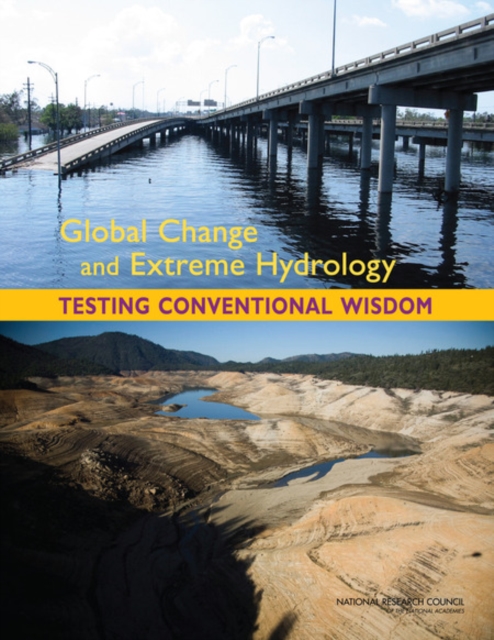
Global Change and Extreme Hydrology
Climate theory dictates that core elements of the climate system, including precipitation, evapotranspiration, and reservoirs of atmospheric and soil moisture, should change as the climate warms, both in their means and extremes. A major challenge that faces the climate and hydrologic science communities is understanding the nature of these ongoing changes in climate and hydrology and the apparent anomalies that exist in reconciling their extreme manifestations.
The National Research Council (NRC) Committee on Hydrologic Science (COHS) held a workshop on January 5-6, 2010, that examined how climate warming translates into hydrologic extremes like floods and droughts. The workshop brought together three groups of experts. The first two groups consisted of atmospheric scientists and hydrologists focused on the scientific underpinnings and empirical evidence linking climate variability to hydrologic extremes. The third group consisted of water managers and decision-makers charged with the design and operation of water systems that in the future must be made resilient in light of a changing climate and an environment of hydrologic extremes.
Global Change and Extreme Hydrology summarizes the proceedings of this workshop. This report presents an overview of the current state of the science in terms of climate change and extreme hydrologic events. It examines the \"conventional wisdom\" that climate change will \"accelerate\" the hydrologic cycle, fuel more evaporation, and generate more precipitation, based on an increased capacity of a warmer atmosphere to hold more water vapor. The report also includes descriptions of the changes in frequency and severity of extremes, the ability (or inability) to model these changes, and the problem of communicating the best science to water resources practitioners in useful forums.
eBook

Assessing the Impact of Severe Economic Recession on the Elderly
The economic crisis that began in 2008 has had a significant impact on the well-being of certain segments of the population and its disruptive effects can be expected to last well into the future. The National Institute on Aging (NIA), which is concerned with this issue as it affects the older population in the United States, asked the National Research Council to review existing and ongoing research and to delineate the nature and dimensions of potential scientific inquiry in this area.
The Committee on Population thus established the Steering Committee on the Challenges of Assessing the Impact of Severe Economic Recession the Elderly to convene a meeting of experts to discuss these issues. The primary purpose of the workshop was to help NIA gain insight into the kinds of questions that it should be asking, the research that it should be supporting, and the data that it should be collecting. Attendees included invited experts in the fields of economics, sociology, and epidemiology; staff from NIA and the Social Security Administration (SSA); and staff from the National Academies.
This report highlights the major issues that were raised in the workshop presentations and discussion.
eBook
Research Methods to Assess Dietary Intake and Program Participation in Child Day Care
More than 16 million children in the United States live in food-insecure households where they are unable to obtain enough food to meet their needs. At the same time, a growing number of children are overweight or obese. Because of these challenges, improving child nutrition has emerged as one of the nation's most urgent public health needs. The Child and Adult Care Food Program (CACFP), a U.S. Department of Agriculture (USDA) food program, served about 3.3 million children in 2011, as well as more than 124,000 adults who require daily supervision or assistance. Since many children rely on CACFP for the majority of their daily food, the quality of foods provided has the potential to greatly improve the health of the children's diets.
The USDA asked the IOM to review and recommend improvements, as necessary, to the CACFP meal requirements in order to keep them aligned with other federally funded food assistance programs and with the Dietary Guidelines for Americans. The 2011 IOM report, Child and Adult Care Food Program Aligning Dietary Guidance for All, reviewed the program in detail and provided recommendations for improvement.
In February 2012, at the request of the USDA, the IOM conducted an additional workshop to examine research methods and approaches that could be used to design and conduct a nationally representative study assessing children's dietary intake and participation rates in child care facilities, including CACFP-sponsored child care centers and homes. Research Methods to Assess Dietary Intake and Program Participation in Child Day Care: Application to the Child and Adult Care Food Program Workshop Summary is the report that summarizes the workshop.
eBook

Protecting Whistleblower Protections in the Dodd–Frank Act
In 2008, the United States fell into its worst economic recession in over seventy years. In response, Congress enacted the near-comprehensive Dodd–Frank Wall Street Reform and Consumer Protection Act. Section 922 of Dodd–Frank, in particular, includes specific provisions designed to incentivize and protect corporate whistleblowers. These provisions demonstrated Congress's belief that a comprehensive and robust whistleblower protection scheme was essential to preventing many of the abuses that caused the financial crisis. Unfortunately, this section's inconsistent language has produced conflicting decisions within the federal judiciary. In accordance with the Securities and Exchange Commission (\"SEC\")'s own reading of Section 922, several district courts have held that individuals engaging in \"whistleblower activities\" are entitled to Dodd–Frank's antiretaliation protections, irrespective of whether these individuals report directly to the SEC or report through internal channels in their own companies. In contrast, the U.S. Court of Appeals for the Fifth Circuit has limited Dodd–Frank's whistleblowing protections to individuals who report directly to the SEC. This Note contends that remedial legislation like Dodd–Frank should be broadly interpreted to further its purpose, that a broad interpretation of Section 922 is consistent with the text, structure, and legislative history of Dodd–Frank, and that courts unable to resolve the apparent conflict in this section should defer to the SEC's administrative expertise and interpretation.
Journal Article

Cycles in American National Electoral Politics, 1854–2006: Statistical Evidence and an Explanatory Model
Are there cycles in American politics? In particular, does the proportion of the Democratic/Republican vote share for president and/or seat share in Congress rise and fall over extended periods of time? If so, are the cycles regular, and what are the cycling periods? Moreover, if there are regular cycles, can we construct an integrated model—such as a negative feedback loop—that identifies political forces that could generate the observed patterns? First, we use spectral analysis to test for the presence and length of cycles, and show that regular cycles do, in fact, exist—with periods that conform to those predicted by the Schlesingers—for swings between liberalism and conservatism—but with durations much shorter than those most commonly claimed by Burnham and others in characterizing American political realignments. Second, we offer a voter–party interaction model that depends on the tensions between parties' policy and office motivations and between voters' tendency to sustain incumbents while reacting against extreme policies. We find a plausible fit between the regular cycling that this model projects and the time series of two-party politics in America over the past century and a half.
Journal Article
Issues in the Economics of Aging
This companion volume to The Economics of Aging (1989) examines the economic consequences of an increasingly older population, focusing on the housing and living arrangements of the elderly, as well as their labor force participation and retirement.
eBook