
Catalogue Search | MBRL


Are you sure you want to remove the book from the shelf?

{{itemTitle}}
27,754
result(s) for
"Business logistics Management."
Sort by:
Fundamentals of supply chain management : twelve drivers of competitive advantage
Author of the bestselling text Supply Chain Management, John T. Mentzer′s companion book Fundamentals of Supply Chain Management: Twelve Drivers of Competitive Advantage has been developed as a supplemental text for any course dealing with strategy and supply chains. Written in an entertaining, accessible style, Mentzer identifies twelve drivers of competitive advantage as clear strategic points managers can use in their companies. Research from more than 400 books, articles, and papers, as well as interviews with over fifty executives in major global companies, inform these twelve drivers. The roles of all of the traditional business functions--marketing, sales, logistics, information systems, finance, customer services, and management--in supply chain management are also addressed.
eBook

Enabling horizontal collaboration through continuous relational learning
Now that supply chain operations are facing new challenges due to the necessity of reducing costs and CO2 emissions, companies are increasingly leveraging cooperation from companies from other supply chains as a source of competitive advantage. Horizontal Collaboration has been proved an efficient tool for cutting logistic costs up to 49%. Zaragoza Logistics Center, member of the MIT-Scale Network, is publishing this book with the aim of building upon a framework of inter-organizational learning for horizontal collaboration on logistic operations. The outcome of this study is designed to help understand the relationship dynamics and managerial insights of horizontal collaboration for sustainable and profitable cooperation in freight distribution. The proposed collaborative practices are based on senior manager experiences from different industries: home appliances, automotive, retail, and food and beverage. Additionally, collaborative evidence from various successful pilot cases relevant to the distribution operations of the four industries are described, in order to illustrate the framework presented. This book fills a gap in the literature market and its insights encourages the readers to reflect on their own operational circumstances and challenges. Additionally, the book can be used as supplementary reading for master degree courses on supply chain collaboration, as well as courses in executive management.--Publisher's website.
Book

The power of resilience : how the best companies manage the unexpected
This work focuses on deep-tier risks, corporate social responsibility risks, cybersecurity risks, global raw material risks, long-term disruptions, business continuity planning, risk and disruption detection, and the potential for systemic disruptions.
eBook

Global logistics for dummies
Global Logistics for Dummies is an operational-level reference and overview for those manufacturers, businesses, product distributors, providers of logistics services, humanitarian and disaster relief responders and logisticians on both ends of a global chain who are considering entry in or have recently embarked on entering the global logistics chain/market. Easy to follow and packed with tons of helpful information, it serves as a springboard to larger texts for more detailed information.
Book
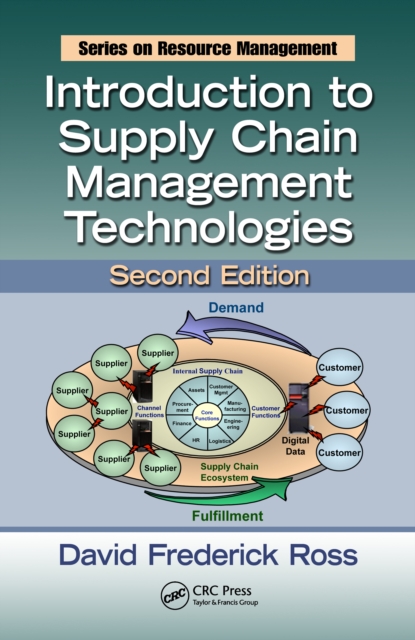
Introduction to Supply Chain Management Technologies
The second edition of this popular resource reflects new technology in supply chain management (SCM). Providing a comprehensive review of business computing, it features new chapters on the fundamentals of computing and their enabling power as well as the basics of contemporary ERP/supply chain business solutions. This book remains a critical resource on the enabling power of today's technologies and their impact on SCM. Focusing on the impact of the Internet on strategic elements of SCM, the author highlights integrative software tools that allow for new levels of collaboration, flexibility, and performance.
eBook

Implementing Lean Six Sigma throughout the Supply Chain
From start to finish, this book follows a comprehensive case study of a team as they implement a Lean Six Sigma project. This in-depth case study considers the data and explains how the team drew their conclusions. The accompanying downloadable resources include the data covered in the case study so readers can perform their own analyses.
eBook
Logistics and supply chain management
\"Logistics and Supply Chain Management\" is a comprehensive new text that explains the fundamentals of the subject so that the student understands the 'game rules' goals and objectives when designing, planning and controlling efficient and effective logistics systems in supply chains. It also includes coverage of information technology, the impact of manufacturing and product structures on logistics and supply chain systems, and the environment. Designed specifically with the student in mind, this book is the perfect companion for introductory courses in logistics and supply chain management. The key features are: the book contains many mini cases to illustrate current practice and key concepts defined and described in the book; discussion tasks have been included to help facilitate effective learning and provide reinforcement; a comprehensive glossary has been included at the end of the book; key terms are defined at the end of each chapter; where appropriate, quantitative examples and exercises have been included to help students understand planning and control concepts and analysis tools; and, full solutions are provided in appendix.
Book
Logistics Clusters
Why is Memphis home to hundreds of motor carrier terminals and distribution centers? Why does the tiny island-nation of Singapore handle a fifth of the world's maritime containers and half the world's annual supply of crude oil? Which jobs can replace lost manufacturing jobs in advanced economies?Some of the answers to these questions are rooted in the phenomenon of logistics clusters--geographically concentrated sets of logistics-related business activities. In this book, supply chain management expert Yossi Sheffi explains why Memphis, Singapore, Chicago, Rotterdam, Los Angeles, and scores of other locations have been successful in developing such clusters while others have not. Sheffi outlines the characteristic \"positive feedback loop\" of logistics clusters development and what differentiates them from other industrial clusters; how logistics clusters \"add value\" by generating other industrial activities; why firms should locate their distribution and value-added activities in logistics clusters; and the proper role of government support, in the form of investment, regulation, and trade policy. Sheffi also argues for the most important advantage offered by logistics clusters in today's recession-plagued economy: jobs, many of them open to low-skilled workers, that are concentrated locally and not \"offshorable.\" These logistics clusters offer what is rare in today's economy: authentic success stories. For this reason, numerous regional and central governments as well as scores of real estate developers are investing in the development of such clusters.View a trailer for the book at: http://techtv.mit.edu/videos/22284-logistics-clusters-yossi-sheffi
eBook