
Catalogue Search | MBRL


Are you sure you want to remove the book from the shelf?

{{itemTitle}}
5
result(s) for
"Byzantine Empire -- Court and courtiers -- History"
Sort by:

Court ceremonies and rituals of power in Byzantium and the medieval Mediterranean : comparative perspectives
Comparative approaches to political rituals and ceremonies in Byzantium and other court cultures of the Mediterranean basin form the subject of this collective volume, which examines related topics from the viewpoint of transformation, succession, appropriation, and representation in art and literature.
eBook

Lateiner Am Kaiserhof in Konstantinopel
Das 12.Jahrhundert war wie kaum eine andere Zeitspanne von äußerst intensiven Kontakten und gegenseitigem Austausch zwischen Byzanz und der lateinischen Welt in politischer, ökonomischer, kultureller und religiöser Hinsicht gekennzeichnet.
eBook
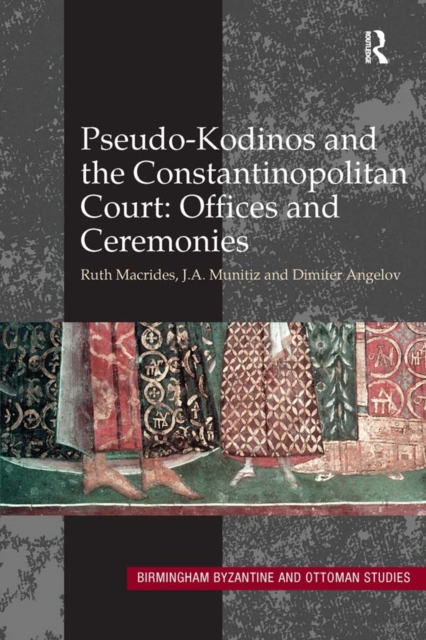
Pseudo-Kodinos and the Constantinopolitan Court: Offices and Ceremonies
The work known as Pseudo-Kodinos, the fourteenth-century text which is one of two surviving ceremonial books from the Byzantine empire, is presented here for the first time in English translation. With facing page Greek text and the first in-depth analysis in the form of commentary and individual studies on the hierarchy, the ceremonies, court attire, the Blachernai palace, lighting, music, gestures and postures, this volume makes an important new contribution to the study of the Byzantine court, and to the history and culture of Byzantium more broadly. The unique traits of this ceremony book include the combination of hierarchical lists of court officials with protocols of ceremonies; a detailed description of the clothing used at court, in particular, hats and staffs; an account of the functions of the court title holders, a description of the ceremonies of the year which take place both inside the palace and outside; the service of the megas domestikos in the army, protocols for the coronation of the emperor, the promotions of despot, sebastokrator and caesar, of the patriarch; a description of the mourning attire of the emperor; protocol for the reception of a foreign bride in Constantinople all these are analysed here. Developments in ceremonial since the tenth-century Book of Ceremonies are discussed, as is the space in which ceremonial was performed, along with a new interpretation of the ’other palace’, the Blachernai. The text reveals the anonymous authors’ interest in the past, in the origins of practices and items of clothing, but it is argued that Pseudo-Kodinos presents descriptions of actual practice at the Byzantine court, rather than prescriptions.
Ruth Macrides is Reader in Byzantine Studies in the Centre for Byzantine, Ottoman and Modern Greek Studies, University of Birmingham, UK; J.A. Munitiz, SJ, is Honorary Senior Research Fellow in Byzantine, Ottoman and Modern Greek Studies, Institute of Archaeology and Antiquity, University of Birmingham, UK; Dimiter Angelov is Professor of Byzantine History in the Centre for Byzantine, Ottoman and Modern Greek Studies, University of Birmingham, UK.
eBook

Gaining and Losing Imperial Favour in Late Antiquity
The volume Gaining and Losing Imperial Favour in Late Antiquity studies fundamental dynamics of the political culture of the Later Roman Empire (4th and 5th centuries A.D.) by examining how people rose in and fell from the emperor's favour.
eBook
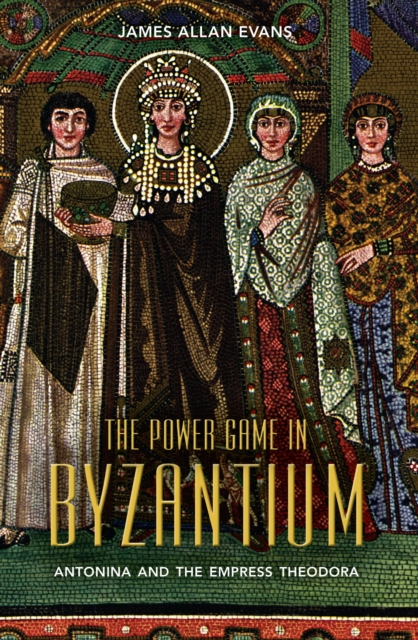
Power Game in Byzantium
This title presents an original portrayal of Justinian's reign, its politics and theological disputes, focusing on the lives of two extraordinary women who wielded power and influence. A fascinating exploration of the corridors of power in Byzantium of the time of Justinian (527-565), the book reveals how Empress Theodora and Antonina, both alumnae of the theatre, were remarkable examples of social mobility, moving into positions of power and influence, becoming wives of key figures. Theodora had three aims: to protect those Christians who would not accept the Chalcedonian Creed; to advance the careers of her family and friends; and to defend the poor and assist the defenceless and, in particular, women - a mission which she claimed publicly. Finally, there was the allure of power, and though the exercise of power cannot be qualified as an 'aim', there can be no doubt that Theodora loved authority: she made and unmade marriage contracts, and appointed men to office, or destroyed them if they got in her way. Antonina was both friend and agent, and equally ruthless. She managed her husband, Belisarius, and advanced his career, though she was unfaithful to the marriage bed, and would outlive the main players of the age of Justinian.
eBook