
Catalogue Search | MBRL


Are you sure you want to remove the book from the shelf?

{{itemTitle}}
8,614
result(s) for
"Byzantine civilization"
Sort by:


Rome and Byzantium in the Visigothic Kingdom
This volume interrogates the assumption that Visigothic practices and institutions were mere imitations of the Byzantine empire. Contributors rethink these practices not as uncritical and derivative adoptions of Byzantine customs, but as dynamic processes in dialogue with not only the Byzantine empire but also with the contemporary Iberian context, as well as the Roman past. The goal of the volume is to approach Visigothic customs not as an uncritical adoption and imitatio of contemporary Roman models (an 'acculturation' model), but as unique interpretations of a common pool of symbols, practices, and institutions that formed the legacy of Rome. The contributors argue that it is necessary to reconsider the idea of imitatio imperii as a process that involved specific actors taking strategic decisions in historically contingent circumstances.
eBook
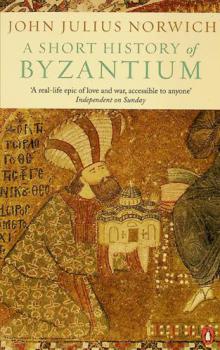
A short history of Byzantium
Constantine the Great moved the seat of Roman power to Constantinople in AD 330 and for eleven brutal, bloody centuries, the Byzantine Empire became a beacon of grand magnificence and depraved decadence. In this book, the author provides the definitive introduction to the savage, scintillating world of Byzantium.
Book

A Companion to Byzantine Italy
This book offers a collection of essays on Byzantine Italy which provides a fresh synthesis of current research as well as new insights on various aspects of its local societies from the 6th to the 11th century.
eBook

The new Roman empire : a history of Byzantium
\"This is the first comprehensive, single-author history of the eastern Roman empire (or Byzantium) to appear in over a generation. It begins with the foundation of Constantinople in 324 AD and ends with the fall of the empire to the Ottoman Turks in the fifteenth century, covering political and military history as well as all major changes in religion, society, demography, and economy. In recent decades, the study of Byzantium has been revolutionized by new approaches and sophisticated models for how its society and state operated. The book's core is an accessible and lively narrative of events, free of jargon, which incorporates new findings, explains recent models, and presents well-known historical characters and events in new light. Two overarching themes shape the narrative. First, by projecting accountability the Roman state persuaded its subjects that it was working in their interests and thereby forestalled separatist movements. To do so, it had to restrain the tendency of elites to extract ever more resources from the labor-force. Second, the effort to sustain a common identity, both Roman and Christian, was subject to powerful forces of internal division and put under severe strain by western Europeans in the later Middle Ages. The book explains in detail the alternating periods of success and failure in the long history of this polity. It foregrounds the dynamics of Christian identity, asking why it tended to fracture along lines of doctrine, practice, and ultimately over Union with the Catholic West\"-- Provided by publisher.
Book

A Companion to the Byzantine Culture of War, ca. 300-1204
The Byzantine Culture of War offers a critical approach to the study of military organisation and warfare as fundamental aspects of the East Roman society and culture in Late Antiquity and the Middle Ages.
eBook


SEVERO DE MÁLAGA, UN OBISPO DE LA HISPANIA BIZANTINA
Isidore of Seville's De uiris illustribus provides the only known information about this person, but despite the documentary scarcity, one may reconstruct the main milestones of Severus's biography through other indirect sources. [...]his literary production -both the works that have survived and those disappeared- will be examined along with his possible building activity. Seuerus, Malacitanae sedis antistes, collega et socius Liciniani episcopi, edidit libellum unum aduersus Vincentium, Caesaraugustanae urbis episcopum, qui ex catholico in arrianam prauitatem fuerat deuolutus. Esta (im)precisión de Isidoro nos ofrece un marco cronológico -bastante laxo- para el momento en que se produjo el floruit de Severo, el cual no tiene por qué coincidir exactamente con toda la duración de su episcopado; en realidad, tampoco nos deja precisar la fecha de su nacimiento ni la de su muerte.
Journal Article

Peasants and Economic Agency in Late Antiquity and the Early Middle Ages: A
This paper examines agrarian relations in both the core territories of the Byzantine Empire in Anatolia and Asia Minor from the sixth to eighth centuries and also those in the empire's westernmost provinces. It argues that around the western Mediterranean, both within and beyond imperial territory, the period witnessed a greater degree of continuity in the form and extent of peasant exploitation than is sometimes supposed. In so far as peasant exploitation diminished, a crucial role may have been played by labour shortages associated with the so-called «Justinianic Plague», which would have allowed peasants to negotiate better terms for themselves, and caused military and political disruption (as emphasised by Wickham).
Journal Article