
Catalogue Search | MBRL


Are you sure you want to remove the book from the shelf?

{{itemTitle}}
1,362
result(s) for
"Côte d"
Sort by:

What Rebels Want
How easy is it for rebel groups to purchase weapons and ammunition in the middle of a war? How quickly can commodities such as diamonds and cocoa be converted into cash to buy war supplies? And why does answering these questions matter for understanding civil wars? InWhat Rebels Want, Jennifer M. Hazen challenges the commonly held view that rebel groups can get what they want, when they want it, and when they most need it. Hazen's assessments of resource availability in the wars in Sierra Leone, Liberia, and Côte d'Ivoire lead to a better understanding of rebel group capacity and options for war and war termination.
Resources entail more than just cash; they include various other economic, military, and political goods, including natural resources, arms and ammunition, safe haven, and diplomatic support. However, rebel groups rarely enjoy continuous access to resources throughout a conflict. Understanding fluctuations in fortune is central to identifying the options available to rebel groups and the reasons why a rebel group chooses to pursue war or peace. The stronger the group's capacity, the more options it possesses with respect to fighting a war. The chances for successful negotiations and the implementation of a peace agreement increase as the options of the rebel group narrow. Sustainable negotiated solutions are most likely, Hazen finds, when a rebel group views negotiations not as one of the solutions for obtaining what it wants, but as the only solution.
eBook
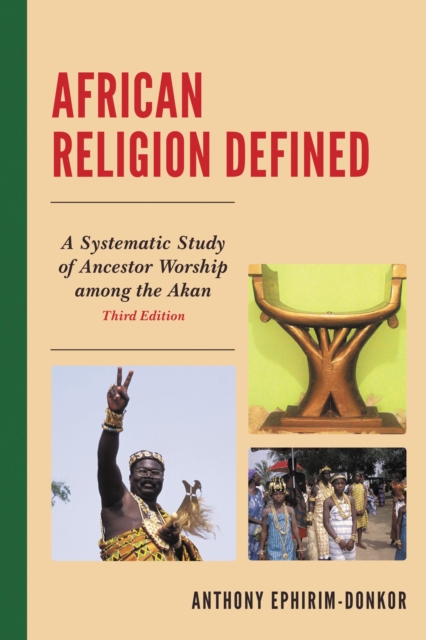
African Religion Defined
This edition updates the scholarship on ancestor worship—with the addition of three new chapters. Beginning with Akan theology and ending with sacrifices, the study examines Akan conception of God, the abosom (gods and goddesses) relative to creation, centrality of the ancestors' stool as the ultimate religious symbol housing the soul of the Akan, and organized annual propitiatory festivities carried out among the Akan in honor of the ancestors (Nananom Nsamanfo) and abosom. The book, therefore, serves as an invaluable resource for those interested in the phenomenon of African religion, because it provides real insight into ancestor worship in ways that are meaningful, practical, systematic, and as a way of life by an Akan Traditional ruler (?dikro) and a professor of Africana studies.
eBook
Cote d'Ivoire Women in Culture, Business & Travel
Women often occupy different roles in a foreign culture. Avoid offensive assumptions and behavior by understanding the position of women in Ivoirian society: their legal rights; access to education and health care; workforce participation; and their dating, marriage, and family life.
eBook

Cote d'Ivoire Media, Internet & Telecommunications Complete Profile
Get all three comprehensive reports bundled into one for a complete media and communications profile of Cote d'Ivoire. An excellent source of practical information, this profile offers an extensive dialing guide with city codes, a listing of ISPs and Internet cafes, profiles of the major media outlets (with contact info!) and more.
eBook
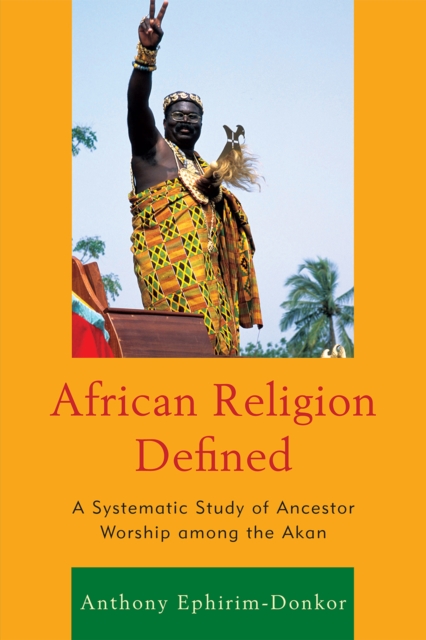
African religion defined
African religion is ancestor worship; that is, funeral preparations, burial of the dead with ceremony and pomp, belief in eternal existence of souls of the dead as ancestors, periodic remembrance of ancestors, and belief that they influence the affairs of their living descendants. Whether called Akw?sidai, Homowo, Voodoo, Nyant?r (Aboakyir), CandomblZ, or Santeria in Africa or the African Diaspora, ancestor worship centers on the ancestors and deities. This makes it a tenably viable religion, because living descendants are genetically linked to their ancestors. The author, a traditional king and professor, studies the Akan in Ghana to demonstrate that ancestor worship is as pragmatic, systematic, theological, teleological, soteriological — with a highly trained clerical body and elders as mediators — and symbolic as any other religion in the world. Ancestor worship follows prescribed rites and rituals, formulas, precepts for ritual efficacy, and festivities of honor with music and dances to provoke ancestors and deities into joining in the celebration.
eBook

Côte d'Ivoire
In recent years, the IMF has released a growing number of reports and other documents covering economic and financial developments and trends in member countries. Each report, prepared by a staff team after discussions with government officials, is published at the option of the member country.
eBook

Cote d'Ivoire Society & Culture Complete Report
Need to know it all? Our all-inclusive culture report for Cote d'Ivoire will get up to speed on all aspects of culture in Cote d'Ivoire, including lifecycle, religion, women, superstitions & folklore, sports, holidays & festivals, and etiquette.
eBook

Cote d 'Ivoire
All end-June performance criteria and indicative targets under the ECF arrangement were met, and all structural benchmarks were completed, albeit with minor delays. However, there was a nonobservance of the continuous performance criterion on the ceiling on new nonconcessional external debt in July with the issuance of the US750 million Eurobond (exceeding the US500 million program ceiling)
Book

Modeling Macro-Critical Energy Sectors in Low-Income Countries: A General Framework and an Application to Côte d'Ivoire
This paper proposes a general framework for monitoring macro-critical energy sectors in low-income countries, defined as consisting of the three subsectors of crude oil and natural gas production, refinery, and electricity production. It aims to derive consistent information on physical and financial flows in the sector, including on interlinkages between the subsectors. It then applies this framework to Côte d'Ivoire. While being an important source of growth, the Ivoirien energy sector is found to have important shortcomings, in particular as regards transparency, efficiency and contribution to fiscal revenue. Among the key problems are partially intransparent production sharing arrangements for hydrocarbon production, price distortions for natural gas, administered prices for refined petroleum products, underfunding and lack of investment in the electricity sector, and inefficient government subsidies in the latter two subsectors.
eBook