
Catalogue Search | MBRL


Are you sure you want to remove the book from the shelf?

{{itemTitle}}
740
result(s) for
"CARTOGRAPHIE"
Sort by:
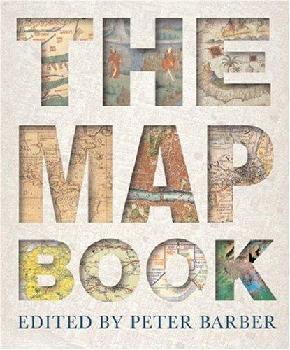
The map book
A lavishly illustrated introduction to the history of maps, which have been at the forefront of altering our perceptions of the world and our place within it.
Book

The genome of Nectria haematococca: contribution of supernumerary chromosomes to gene expansion
The ascomycetous fungus Nectria haematococca, (asexual name Fusarium solani), is a member of a group of >50 species known as the \"Fusarium solani species complex\". Members of this complex have diverse biological properties including the ability to cause disease on >100 genera of plants and opportunistic infections in humans. The current research analyzed the most extensively studied member of this complex, N. haematococca mating population VI (MPVI). Several genes controlling the ability of individual isolates of this species to colonize specific habitats are located on supernumerary chromosomes. Optical mapping revealed that the sequenced isolate has 17 chromosomes ranging from 530 kb to 6.52 Mb and that the physical size of the genome, 54.43 Mb, and the number of predicted genes, 15,707, are among the largest reported for ascomycetes. Two classes of genes have contributed to gene expansion: specific genes that are not found in other fungi including its closest sequenced relative, Fusarium graminearum; and genes that commonly occur as single copies in other fungi but are present as multiple copies in N. haematococca MPVI. Some of these additional genes appear to have resulted from gene duplication events, while others may have been acquired through horizontal gene transfer. The supernumerary nature of three chromosomes, 14, 15, and 17, was confirmed by their absence in pulsed field gel electrophoresis experiments of some isolates and by demonstrating that these isolates lacked chromosome-specific sequences found on the ends of these chromosomes. These supernumerary chromosomes contain more repeat sequences, are enriched in unique and duplicated genes, and have a lower G+C content in comparison to the other chromosomes. Although the origin(s) of the extra genes and the supernumerary chromosomes is not known, the gene expansion and its large genome size are consistent with this species' diverse range of habitats. Furthermore, the presence of unique genes on supernumerary chromosomes might account for individual isolates having different environmental niches
Journal Article


State and evolution of the African rainforests between 1990 and 2010
This paper presents a map of Africa's rainforests for 2005. Derived from moderate resolution imaging spectroradiometer data at a spatial resolution of 250 m and with an overall accuracy of 84%, this map provides new levels of spatial and thematic detail. The map is accompanied by measurements of deforestation between 1990, 2000 and 2010 for West Africa, Central Africa and Madagascar derived from a systematic sample of Landsat images—imagery from equivalent platforms is used to fill gaps in the Landsat record. Net deforestation is estimated at 0.28% yr−1 for the period 1990–2000 and 0.14% yr−1 for the period 2000–2010. West Africa and Madagascar exhibit a much higher deforestation rate than the Congo Basin, for example, three times higher for West Africa and nine times higher for Madagascar. Analysis of variance over the Congo Basin is then used to show that expanding agriculture and increasing fuelwood demands are key drivers of deforestation in the region, whereas well-controlled timber exploitation programmes have little or no direct influence on forest-cover reduction at present. Rural and urban population concentrations and fluxes are also identified as strong underlying causes of deforestation in this study.
Publication

The shape of things : how mapmakers picture our world
\"Discover history's first mapmakers across cultures and civilizations in this gorgeously illustrated nonfiction story about cartography.\"-- Book jacket flap.
CHILDBOOK

A fast and cost-effective approach to develop and map EST-SSR markers: oak as a case study
Background
Expressed Sequence Tags (ESTs) are a source of simple sequence repeats (SSRs) that can be used to develop molecular markers for genetic studies. The availability of ESTs for
Quercus robur
and
Quercus petraea
provided a unique opportunity to develop microsatellite markers to accelerate research aimed at studying adaptation of these long-lived species to their environment. As a first step toward the construction of a SSR-based linkage map of oak for quantitative trait locus (QTL) mapping, we describe the mining and survey of EST-SSRs as well as a fast and cost-effective approach (bin mapping) to assign these markers to an approximate map position. We also compared the level of polymorphism between genomic and EST-derived SSRs and address the transferability of EST-SSRs in
Castanea sativa
(chestnut).
Results
A catalogue of 103,000 Sanger ESTs was assembled into 28,024 unigenes from which 18.6% presented one or more SSR motifs. More than 42% of these SSRs corresponded to trinucleotides. Primer pairs were designed for 748 putative unigenes. Overall 37.7% (283) were found to amplify a single polymorphic locus in a reference full-sib pedigree of
Quercus robur
. The usefulness of these loci for establishing a genetic map was assessed using a bin mapping approach. Bin maps were constructed for the male and female parental tree for which framework linkage maps based on AFLP markers were available. The bin set consisting of 14 highly informative offspring selected based on the number and position of crossover sites. The female and male maps comprised 44 and 37 bins, with an average bin length of 16.5 cM and 20.99 cM, respectively. A total of 256 EST-SSRs were assigned to bins and their map position was further validated by linkage mapping. EST-SSRs were found to be less polymorphic than genomic SSRs, but their transferability rate to chestnut, a phylogenetically related species to oak, was higher.
Conclusion
We have generated a bin map for oak comprising 256 EST-SSRs. This resource constitutes a first step toward the establishment of a gene-based map for this genus that will facilitate the dissection of QTLs affecting complex traits of ecological importance.
Journal Article

Mapping the world : stories of geography
Looks at the history of cartography, from the first crude drawings to the satellite imagery of today.
Book

Une cartographie des espaces dans le roman Viendra le temps du feu de Wendy Delorme
This article analyses, in Wendy Delorme’s novel Viendra le temps du feu (2021), by means of cultural theories of space – geocriticism, ecocriticism, ecopoetics, ecofeminism, posthumanism – the literary mappings of repression and dissidence across the city, the body, and nature, in order to reveal how Delorme’s rebellious voices sketch, within the fractures of the present, the contours of another way of inhabiting the world.
Journal Article


Deep Maps and Spatial Narratives
Deep maps are finely detailed, multimedia depictions of a place and the people, buildings, objects, flora, and fauna that exist within it and which are inseparable from the activities of everyday life. These depictions may encompass the beliefs, desires, hopes, and fears of residents and help show what ties one place to another. A deep map is a way to engage evidence within its spatio-temporal context and to provide a platform for a spatially-embedded argument. The essays in this book investigate deep mapping and the spatial narratives that stem from it. The authors come from a variety of disciplines: history, religious studies, geography and geographic information science, and computer science. Each applies the concepts of space, time, and place to problems central to an understanding of society and culture, employing deep maps to reveal the confluence of actions and evidence and to trace paths of intellectual exploration by making use of a new creative space that is visual, structurally open, multi-media, and multi-layered.
eBook