
Catalogue Search | MBRL


Are you sure you want to remove the book from the shelf?

{{itemTitle}}
1,857
result(s) for
"CHAMPIGNON"
Sort by:

The genome of Nectria haematococca: contribution of supernumerary chromosomes to gene expansion
The ascomycetous fungus Nectria haematococca, (asexual name Fusarium solani), is a member of a group of >50 species known as the \"Fusarium solani species complex\". Members of this complex have diverse biological properties including the ability to cause disease on >100 genera of plants and opportunistic infections in humans. The current research analyzed the most extensively studied member of this complex, N. haematococca mating population VI (MPVI). Several genes controlling the ability of individual isolates of this species to colonize specific habitats are located on supernumerary chromosomes. Optical mapping revealed that the sequenced isolate has 17 chromosomes ranging from 530 kb to 6.52 Mb and that the physical size of the genome, 54.43 Mb, and the number of predicted genes, 15,707, are among the largest reported for ascomycetes. Two classes of genes have contributed to gene expansion: specific genes that are not found in other fungi including its closest sequenced relative, Fusarium graminearum; and genes that commonly occur as single copies in other fungi but are present as multiple copies in N. haematococca MPVI. Some of these additional genes appear to have resulted from gene duplication events, while others may have been acquired through horizontal gene transfer. The supernumerary nature of three chromosomes, 14, 15, and 17, was confirmed by their absence in pulsed field gel electrophoresis experiments of some isolates and by demonstrating that these isolates lacked chromosome-specific sequences found on the ends of these chromosomes. These supernumerary chromosomes contain more repeat sequences, are enriched in unique and duplicated genes, and have a lower G+C content in comparison to the other chromosomes. Although the origin(s) of the extra genes and the supernumerary chromosomes is not known, the gene expansion and its large genome size are consistent with this species' diverse range of habitats. Furthermore, the presence of unique genes on supernumerary chromosomes might account for individual isolates having different environmental niches
Journal Article
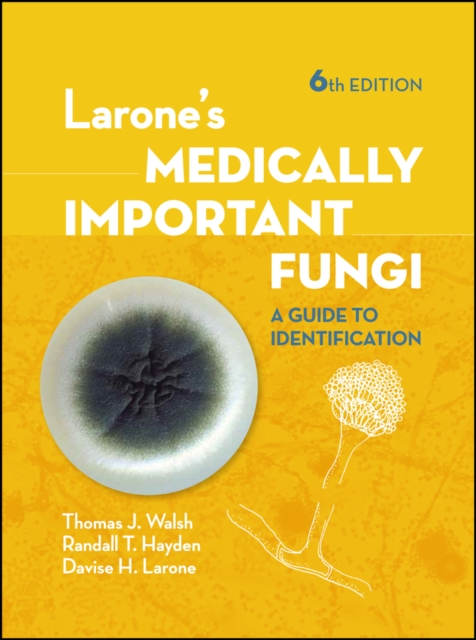
Larone's Medically Important Fungi
The definitive guide for identifying fungi from clinical specimens
Medically Important Fungi will expand your knowledge and support your work by:
* Providing detailed descriptions of the major mycoses as viewed in patients' specimens by direct microscopic examination of stained slides
* Offering a logical step-by-step process for identification of cultured organisms, utilizing detailed descriptions, images, pointers on organisms' similarities and distinctions, and selected references for further information
* Covering nearly 150 of the fungi most commonly encountered in the clinical mycology laboratory
* Presenting details on each organism's pathogenicity, growth characteristics, relevant biochemical reactions, and microscopic morphology, illustrated with photomicrographs, Dr. Larone's unique and elegant drawings, and color photos of colony morphology and various test results
* Explaining the current changes in fungal taxonomy and nomenclature that are due to information acquired through molecular taxonomic studies of evolutionary fungal relationships
* Providing basic information on molecular diagnostic methods, e.g., PCR amplification, nucleic acid sequencing, MALDI-TOF mass spectrometry, and other commercial platforms
* Including an extensive section of easy-to-follow lab protocols, a comprehensive list of media and stain procedures, guidance on collection and preparation of patient specimens, and an illustrated glossary
With Larone's Medically Important Fungi: A Guide to Identification, both novices and experienced professionals in clinical microbiology laboratories can continue to confidently identify commonly encountered fungi. If you are looking for online access to the latest clinical microbiology content, please visit www.wiley.com/learn/clinmicronow.
eBook

Biodiversite et evolution du monde fongique
No detailed description available for Biodiversite et evolution du monde fongique .
eBook
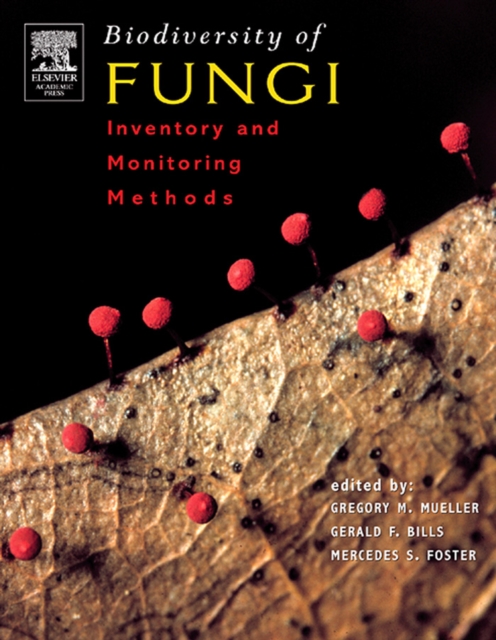
Biodiversity of fungi : inventory and monitoring methods
Biodiversity of Fungi is essential for anyone collecting and/or monitoring any fungi. Fascinating and beautiful, fungi are vital components of nearly all ecosystems and impact human health and our economy in a myriad of ways. Standardized methods for documenting diversity and distribution have been lacking. A wealth of information, especially regrading sampling protocols, compiled by an international team of fungal biologists, make Biodiversity of Fungi an incredible and fundamental resource for the study of organismal biodiversity. Chapters cover everything from what is a fungus, to maintaining and organizing a permanent study collection with associated databases; from protocols for sampling slime molds to insect associated fungi; from fungi growing on and in animals and plants to mushrooms and truffles. The chapters are arranged both ecologically and by sampling method rather than by taxonomic group for ease of use. The information presented here is intended for everyone interested in fungi, anyone who needs tools to study them in nature including naturalists, land managers, ecologists, mycologists, and even citizen scientists and sophiscated amateurs. Covers all groups of fungi - from molds to mushrooms, even slime moldsDescribes sampling protocols for many groups of fungiArranged by sampling method and ecology to coincide with users needsBeautifully illustrated to document the range of fungi treated and techniques discussed Natural history data are provided for each group of fungi to enable users to modify suggested protocols to meet their needs
eBook

The Oldest Art
SEE PDF] “Nature alone is antique, and the oldest art a mushroom” is an enduring quote from Scottish historian and writer Thomas Carlyle. Historian and curator William B. Ashworth notes that Millot “was the senior illustrator at the Museum of Natural History in Paris, at the end of the 19th century and the beginning of the 20th. Fungi function as a leavening agent for breads; enable fermentation of cheeses and olives; and convert sugars from grains and fruits into beer, cider, and wine.
Journal Article

Isolation, Characterization, and Biocompatibility of Bisporitin, a Ribotoxin-like Protein from White Button Mushroom (Agaricus bisporus)
White button mushroom (Agaricus bisporus (J.E. Lange) Imbach) is one of the widely consumed edible mushrooms. Indeed, A. bisporus fruiting bodies are a rich source of nutrients and bioactive molecules. In addition, several enzymes with biotechnological applications are found in A. bisporus (e.g., enzymes for lignocellulose degradation). Here, a novel ribotoxin-like protein (RL-P) from the edible mushroom A. bisporus was purified and characterized. This RL-P, named bisporitin, is a monomeric protein (17-kDa) exhibiting specific ribonucleolytic activity by releasing the α-fragment (hallmark of RL-Ps) when incubated with rabbit ribosomes. In addition, bisporitin shows magnesium-dependent endonuclease activity and displays a similar far-UV CD spectrum as ageritin, the prototype of RL-Ps, isolated from Cyclocybe aegerita fruiting bodies. Interestingly, bisporitin is the first member of RL-Ps to have noticeably lower thermal stability (Tm = 48.59 ± 0.98 °C) compared to RL-Ps isolated in other mushrooms (Tm > 70 °C). Finally, this protein is only partially hydrolyzed in an in vitro digestive system and does not produce adverse growing effects on eukaryotic cell lines. This evidence paves the way for future investigations on possible bioactivities of this RL-P in the digestive system.
Journal Article

Total, Soluble, and Insoluble Dietary Fibre Contents of Wild Growing Edible Mushrooms
Mushrooms have been long valued as tasty and nutritional foods for human beings and assumed to contain beneficial fibres, so the objective of this study was to analyse 20 species of wild growing edible mushrooms for their total dietary fibre (TDF), insoluble dietary fibre (IDF), and soluble dietary fibre (SDF) contents. The TDF, IDF, and SDF contents ranged between 24-37, 12-21, and 2-4 g/100 g dry weight, respectively. The SDF as % of TDF was low in Phellinus florida (5.5%) and Phellinus rimosus (5.8%), and high in Sparassis crispa, Lentinus squarrulosus, and Lactarius sanguifluus (12.5%). Interestingly, the majority of the mushrooms had 10-11% of TDF as SDF. The TDF was high in Pleurotus djamor (37%) Cantharellus cibarius, Cantharellus clavatus, and Phellinus florida (36%), and low in Lactarius sanguifluus (24%). Also, the majority of mushrooms had average 31.6% TDF and 2.85% SDF. These results indicate that mushrooms such as Sparassis crispa, Lentinus squarrulosus, Lentinus delicious, and Cantharellus clavatus are rich sources of TDF and SDF.
Journal Article

Ecological conditions affecting mycotoxin production in cereals: a review
Spoilage fungi are ubiquitous contaminants of cereals, pre- and post-harvest. These fungi can produce a wide range of secondary metabolites under ecological conditions which are conducive for growth. However, some of these secondary metabolites are toxic and have a significant impact if they enter the production and animal food chains. Prevention of mycotoxin contamination of feed and food raw materials is now considered more important than subsequent cure. The key ecological determinants pre- and post-harvest are water availability and temperature (climate). Accurate information is therefore needed on the impact of an association between these key factors, and it is necessary to understand which are marginal and which critical for germination and toxin production. There have only been a few studies where attempts have been made to integrate the available information on these factors in relation to different raw materials for feed and food processing, especially cereals. This review will examine the available information on the main climatic factors, i.e., water availability and temperature affecting mycotoxin production such as, aflatoxins, ochratoxins, fumonisins, zearalenone, deoxynivalenol and citrinin. This information is crucial for accurately focusing and monitoring key critical control points in the feed and food chain to optimise prevention strategies.
Journal Article

Mycoremediation of Flotation Tailings with Agaricus bisporus
Due to their enzymatic and bioaccumulation faculties the use of macromycetes for the decontamination of polluted matrices seems reasonable for bioremediation. For this reason, the aim of our study was to evaluate the mycoremediation ability of Agaricus bisporus cultivated on compost mixed with flotation tailings in different quantities (1, 5, 10, 15, and 20% addition). The biomass of the fruit bodies and the content of 51 major and trace elements were determined. Cultivation of A. bisporus in compost moderately polluted with flotation tailings yielded significantly lower (the first flush) and higher (the second flush) biomass of fruit bodies, compared with the control treatment. The presence of toxic trace elements did not cause any visible adverse symptoms for A. bisporus. Increasing the addition of flotation tailings to the compost induced an elevated level of most determined elements. A significant increase in rare earth elements (both flushes) and platinum group elements (first flush only) was observed. The opposite situation was recorded for major essential elements, except for Na and Mg in A. bisporus from the second flush under the most enriched compost (20%). Nevertheless, calculated bioaccumulation factor values showed a selective accumulation capacity—limited for toxic elements (except for Ag, As, and Cd) and the effective accumulation of B, Cu, K, and Se. The obtained results confirmed that A. bisporus can be used for practical application in mycoremediation in the industry although this must be preceded by larger-scale tests. This application seems to be the most favorable for media contaminated with selected elements, whose absorption by fruiting bodies is the most efficient.
Journal Article

Edible and medicinal mushrooms
Comprehensive and timely, Edible and Medicinal Mushrooms: Technology and Applications provides the most up to date information on the various edible mushrooms on the market. Compiling knowledge on their production, application and nutritional effects, chapters are dedicated to the cultivation of major species such as Agaricus bisporus, Pleurotus ostreatus, Agaricus subrufescens, Lentinula edodes, Ganoderma lucidum and others. With contributions from top researchers from around the world, topics covered include: • Biodiversity and biotechnological applications • Cultivation technologies • Control of pests and diseases • Current market overview • Bioactive mechanisms of mushrooms • Medicinal and nutritional properties Extensively illustrated with over 200 images, this is the perfect resource for researchers and professionals in the mushroom industry, food scientists and nutritionists, as well as academics and students of biology, agronomy, nutrition and medicine.
eBook