
Catalogue Search | MBRL


Are you sure you want to remove the book from the shelf?

{{itemTitle}}
18,910
result(s) for
"CLIMATE CHANGE MITIGATION"
Sort by:

Cities responding to climate change : Copenhagen, Stockholm and Tokyo
This book explores the climate policy approaches established by various city governments. It details the strategies, plans and initiatives that have so far been designed to both mitigate and adapt to the impacts of global warming. In doing so, it considers the implications of the actions taken by leading cities and its effects on underlying theoretical assumptions relating to policy development and management processes in achieving climate policy outcomes. The book establishes an analytical framework that critically examines the application of performance management by city governments in their policy responses to climate change. It draws its focus on the city governments of Copenhagen, Stockholm and Tokyo to bring together and discuss the concepts, strategies and practices that have since been introduced to respond to the climate challenges faced.0.
Book

Integrated life-cycle assessment of electricity-supply scenarios confirms global environmental benefit of low-carbon technologies
Decarbonization of electricity generation can support climate-change mitigation and presents an opportunity to address pollution resulting from fossil-fuel combustion. Generally, renewable technologies require higher initial investments in infrastructure than fossil-based power systems. To assess the tradeoffs of increased up-front emissions and reduced operational emissions, we present, to our knowledge, the first global, integrated life-cycle assessment (LCA) of long-term, wide-scale implementation of electricity generation from renewable sources (i.e., photovoltaic and solar thermal, wind, and hydropower) and of carbon dioxide capture and storage for fossil power generation. We compare emissions causing particulate matter exposure, freshwater ecotoxicity, freshwater eutrophication, and climate change for the climate-change-mitigation (BLUE Map) and business-as-usual (Baseline) scenarios of the International Energy Agency up to 2050. We use a vintage stock model to conduct an LCA of newly installed capacity year-by-year for each region, thus accounting for changes in the energy mix used to manufacture future power plants. Under the Baseline scenario, emissions of air and water pollutants more than double whereas the low-carbon technologies introduced in the BLUE Map scenario allow a doubling of electricity supply while stabilizing or even reducing pollution. Material requirements per unit generation for low-carbon technologies can be higher than for conventional fossil generation: 11–40 times more copper for photovoltaic systems and 6–14 times more iron for wind power plants. However, only two years of current global copper and one year of iron production will suffice to build a low-carbon energy system capable of supplying the world's electricity needs in 2050.
Significance Life-cycle assessments commonly used to analyze the environmental costs and benefits of climate-mitigation options are usually static in nature and address individual power plants. Our paper presents, to our knowledge, the first life-cycle assessment of the large-scale implementation of climate-mitigation technologies, addressing the feedback of the electricity system onto itself and using scenario-consistent assumptions of technical improvements in key energy and material production technologies.
Journal Article

Status of climate change adaptation in Asia and the Pacific
\"This volume provides an overview of the climate change adaptation objectives set, actions taken, and challenges faced by several countries in the Asia-Pacific region. The majority of the populations in this region struggle to make a living from subsistence agriculture, and livelihoods are highly dependent on natural ecosystem services which are likely to be severely affected by climate change. Cases discussed in this book highlight successes made by governments towards achieving adaptation objectives, and efforts required to overcome challenges. While significant economic advances have been made, the pace of growth has been slow to impact the lives of a majority of the people who live below the poverty line. The chapters highlight adaptation actions for protecting people and their livelihoods in priority sectors, maintaining food and water security, supporting socio-economic stability including poverty reduction, and climate risk management. This book also maximizes readers' insights into the knowledge gaps and limitations of stated adaptation goals, and the bottlenecks that hinder implementation in different regions\"--Page 4 of cover.
Book

Extraterritoriality and Climate Change Jurisdiction
This book builds on the scholarship of the law of state jurisdiction, engaging with fundamental questions about states’ legislative competence to respond to climate change. Considering general theory, the author advocates for a systemic analytical framework for the contested issue of ‘extraterritoriality’ in international law. Exploring the crystallisation of ‘climate change jurisdiction’, the book provides a comprehensive exploration of the jurisdictional bases and limitations for unilateral climate protection measures. In doing so, crosscutting issues of world trade law, international civil aviation law, the law of the sea, and importantly, the customary international law of state jurisdiction are considered. Amidst the myriad of developing norms, a novel ‘considerate design’ tool is introduced to assist policymakers in finding a better balance between regulatory autonomy, development needs and the protection of common concerns. Volume 83 in the series Studies in International Law
eBook


Earth for All
Earth For All is an antidote to despair. Combining the global economy, population, inequality, food, and energy in a state-of-the art computer model, a leading group of scientists and economists present a plan of five system-shifting steps to achieve prosperity for all within planetary limits in a single generation.
eBook
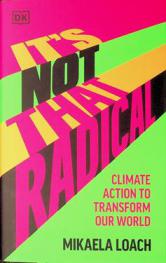
It's not that radical : climate action to transform our world
\"For too long, representations of climate action in the mainstream media have been white-washed, green-washed and diluted to be made compatible with capitalism. We are living in an economic system which pursues profit above all else; harmful, oppressive systems that heavily contribute to the climate crisis, and environmental consequences that have been toned down to the masses. Tackling the climate crisis requires us to visit the roots of poverty, capitalist exploitation, police brutality and legal injustice. Climate justice offers the real possibility of huge leaps towards racial equality and collective liberation as it aims to dismantle the very foundations of these issues. In this book, Mikaela Loach offers a fresh and radical perspective for real climate action that could drastically change the world as we know it for the benefit of us all. Written with candour and hope, It's Not That Radical will galvanise readers to take action, offering an accessible and transformative appraisal of our circumstances to help mobilise a majority for the future of our planet\"--Publisher's description.
Book

Climate Intervention
The signals are everywhere that our planet is experiencing significant climate change. It is clear that we need to reduce the emissions of carbon dioxide and other greenhouse gases from our atmosphere if we want to avoid greatly increased risk of damage from climate change. Aggressively pursuing a program of emissions abatement or mitigation will show results over a timescale of many decades. How do we actively remove carbon dioxide from the atmosphere to make a bigger difference more quickly?
As one of a two-book report, this volume of Climate Intervention discusses CDR, the carbon dioxide removal of greenhouse gas emissions from the atmosphere and sequestration of it in perpetuity. Climate Intervention: Carbon Dioxide Removal and Reliable Sequestration introduces possible CDR approaches and then discusses them in depth. Land management practices, such as low-till agriculture, reforestation and afforestation, ocean iron fertilization, and land-and-ocean-based accelerated weathering, could amplify the rates of processes that are already occurring as part of the natural carbon cycle. Other CDR approaches, such as bioenergy with carbon capture and sequestration, direct air capture and sequestration, and traditional carbon capture and sequestration, seek to capture CO2 from the atmosphere and dispose of it by pumping it underground at high pressure. This book looks at the pros and cons of these options and estimates possible rates of removal and total amounts that might be removed via these methods.
With whatever portfolio of technologies the transition is achieved, eliminating the carbon dioxide emissions from the global energy and transportation systems will pose an enormous technical, economic, and social challenge that will likely take decades of concerted effort to achieve. Climate Intervention: Carbon Dioxide Removal and Reliable Sequestration will help to better understand the potential cost and performance of CDR strategies to inform debate and decision making as we work to stabilize and reduce atmospheric concentrations of carbon dioxide.
eBook
A guide to a healthier planet 3 : scientific insights and actionable steps to help resolve climate, pollution and biodiversity issues
This successor volume builds upon the previous books with additional chapters meant to inspire readers to take action towards a healthier planet. It focuses on closing the gap between scientific insights on pressing environmental issues that do not often reach the general public, and putting that scientific knowledge in the hands of everyday people who can use these insights to take action against climate change, pollution, and biodiversity loss. The goal of this work is to share fascinating facts about nature and sustainability to inspire taking action toward a healthier planet, and to provide ideas on how we can take action to solve environmental issues in an informed and easy-to-understand way.
BOOK

Climate change in rural Pakistan: evidence and experiences from a people-centered perspective
Pakistan is home to a wide range of geographical landscapes, each of which faces different climate change impacts and challenges. This article presents findings from a National Geographic Society funded project, which employed a people-centered, narratives-based approach to study climate impacts and adaptation strategies of people in 19 rural study sites in four provinces of Pakistan (N = 108). The study looked at six climate-related stressors—changes in weather patterns, floods, Glacial Lake Outburst Floods, drought, heat waves, and sea-level rise—in the coastal areas of Sindh, the desert of Thar, the plains of Punjab, and the mountains of Hunza, Gilgit, and Chitral. Speaking to people at these frontlines of climate change revealed much about climate suffering and trauma. Not only is the suffering induced by losses and damages to property and livelihood, but climate impacts also take a heavy toll on people’s psycho-social wellbeing, particularly when they are displaced from their homes. The findings further demonstrate that people try to adapt in various ways, for instance by altering their agricultural practices, but they face severe barriers to effective adaptation action. Understanding people’s perceptions of climate change and incorporating their recommendations in adaptation planning can help policy-makers develop a more participatory, inclusive, and holistic climate resilience framework for the future.
Journal Article