
Catalogue Search | MBRL


Are you sure you want to remove the book from the shelf?

{{itemTitle}}
20,388
result(s) for
"COLLEGE ENTRANCE"
Sort by:
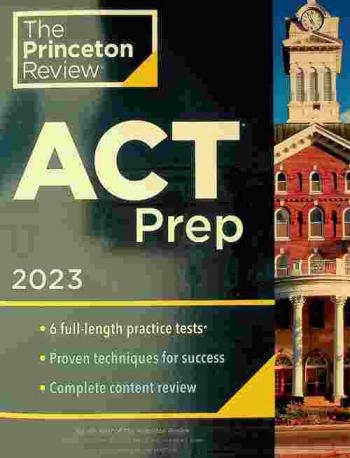
ACT prep
A guide to preparing for the ACT with complete content review and 6 full-length practice tests.

Causal Effects of Single-Sex Schools on College Entrance Exams and College Attendance: Random Assignment in Seoul High Schools
Despite the voluminous literature on the potentials of single-sex schools, there is no consensus on the effects of single-sex schools because of student selection of school types. We exploit a unique feature of schooling in Seoul—the random assignment of students into single-sex versus coeducational high schools—to assess causal effects of single-sex schools on college entrance exam scores and college attendance. Our validation of the random assignment shows comparable socioeconomic backgrounds and prior academic achievement of students attending single-sex schools and coeducational schools, which increases the credibility of our causal estimates of single-sex school effects. The three-level hierarchical model shows that attending all-boys schools or all-girls schools, rather than coeducational schools, is significantly associated with higher average scores on Korean and English test scores. Applying the school district fixed-effects models, we find that single-sex schools produce a higher percentage of graduates who attended four-year colleges and a lower percentage of graduates who attended two-year junior colleges than do coeducational schools. The positive effects of single-sex schools remain substantial, even after we take into account various school-level variables, such as teacher quality, the student-teacher ratio, the proportion of students receiving lunch support, and whether the schools are public or private.
Journal Article

SAT premium study guide 2023
\"ALL NEW Barron's SAT Premium Study Guide includes everything you need to be prepared for exam day with comprehensive review and practice that reflects the most recent SAT! This edition also incudes the most up-to-date information on the new digital exam\"-- Amazon.com.

Comparing Practical Items in High-Stake Exams in Different Science Subjects: in View of the Diversity of Scientific Methods
This paper aimed to investigate how the diversity of scientific methods is represented in practical items of college entrance examinations from three science subjects in China. The study was conducted based on the theoretical framework derived from Brandon’s Matrix consisting of four types of scientific methods. National Papers for comprehensive science examination in 2022 were selected as the analysis targets. The results revealed that the imbalanced representation of scientific methods existed in college entrance science examinations. The percentage of non-manipulative parameter measurement (NPM) was relatively high, while manipulative hypothesis testing (MHT) was presented in a limited capacity, indicating the practical items in China are less experimental. Furthermore, the distribution of the four types of scientific methods in practical items varied across the three science subjects. At the end of this paper, the implications of the findings and the suggestions for the further studies were discussed.
Journal Article

ACT science prep
\"Boost your ACT science score with this brand new all-in-one guide, filled with complete content review of the Science section, targeted advice from experts, and 4 full-length practice tests for ACT Science\"- Provided by publisher.
Evaluating the fairness of a high-stakes college entrance exam in Kuwait
The use of college entrance exams for facilitating admission decisions become controversial, and the central argument is around the fairness of test scores. The Kuwait University English Aptitude Test (KUEAT) is a high-stakes test, but very few studies have examined the psychometric quality of the scores for this national-level assessment. This study illustrates how measurement approaches can be used to examine the fairness issues in educational testing. Through a modern view of fairness, we assess the internal and external bias of KUEAT scores using differential item functioning analysis and differential prediction analysis, respectively, and provide a comprehensive fairness argument for KUEAT scores. The analysis for examining the internal evidence of bias was based on 1790 examinees’ KUEAT scores in November 2018. KUEAT scores and first-year college GPAs of 4033 students enrolled in KU were used for assessing the external evidence of bias. Results revealed many items showing differential item functioning across student subpopulation groups (i.e., nationality, gender, high school majors, and high school types). Meanwhile, KUEAT scores also predicted college performance differentially by different student subgroups (i.e., nationality, high school majors, and high school types). Discussion and implications on the fairness issues of college entrance tests in Kuwait are provided.
Journal Article

Mobile Phones for Spain's University Entrance Examination Language Test
Few tests were delivered using mobile phones a few years ago, but the flexibility and capability of these devices make them valuable tools even for high stakes testing. This paper addresses research done through the PAULEX (2007-2010) and OPENPAU (2012-2014) research projects at the Universidad Politécnica de Valencia and Universidad de Alcalá (Spain) to provide a powerful but low cost delivery system for the foreign language paper of the Spanish College Entrance Examination (henceforth PAU). The first project, PAULEX, intended to create a robust mobile platform for language testing while the second, OPENPAU, examined the specific applications of ubiquitous devices to create more dynamic forms of assessment. This paper focuses on the projects' design, testing theory, and technical evolution including visual ergonomics. The current results demonstrate the technical and didactic feasibility of mobile-based formal assessment that aligns student needs with the kind of inferences that the mobile based language test should provide academic authorities.
Journal Article

The other college guide : a roadmap to the right school for you
\"A college degree has never been more important-or more expensive. If you're not made of money, where can you get an amazing liberal arts education without your parents having to remortgage the house or cash in their retirement fund? Which degrees will allow you to fulfill your dreams and earn a decent paycheck? What do you really need to know if you're the first in your family to go to college? How do you find good schools that offer a well-rounded campus life for black or Latino students? From the staff of Washington Monthly comes a new kind of college guide, inspired by and including the magazine's signature alternative college rankings. The Other College Guide features smartly designed, engaging chapters on finding the best-fit schools and the real deal about money, loans, and preparing for the world of work. This essential higher ed handbook also highlights information on what to look for (and watch out for) in online programs and for-profit colleges and concludes with fifty profiles of remarkable but frequently overlooked schools. All things being unequal, The Other College Guide will provide American students-and their families and school counselors-with the honest and practical information they need to make sense of the college process and carve a path to the future they imagine. \"-- Provided by publisher.
Book
Designing and validating a scale for evaluating the sources of unreliability of a high-stakes test
The idea of sources other than the test-takers’ knowledge leading to different results on high-stakes tests was the motif based on which the present investigation was initiated on the probable sources of unreliability of a test. For this purpose, the researchers went through a thorough literature review with the aim to identify the issues to be counted as sources of unreliability of a high-stakes test, i.e., the MA University Entrance Exam of English (UEEE) in Iran. First, 17 MA UEEE test-takers were asked to take part in a semi-structured interview to find out their ideas about such sources. The outcome of the thematic coding of the information from the literature and interviews was a 57-item Likert scale questionnaire which was reviewed by three assessment experts, revised accordingly, piloted with 57 MA UEEE test-takers, and revised again with 55 items remaining. The revised questionnaire was administered to 312 MA UEEE test-takers in Iran, and its reliability and construct validity were checked through Cronbach alpha (.89) and exploratory factor analysis, respectively. After checking its reliability and construct validity, 46 items remained and loaded on four factors which were named as the effect of test-takers (16 items), structure of the test and external concerns (13 items), administration conditions of the test (13 items), and role of proctors (4 items). The results of this study might familiarize test developers, test administrators, teachers, and test-takers with issues they should be aware of in developing or preparing for a high-stakes test like the MA UEEE.
Journal Article