
Catalogue Search | MBRL


Are you sure you want to remove the book from the shelf?

{{itemTitle}}
2,416
result(s) for
"COMPUTERS / Digital Media / General."
Sort by:

Philippine Digital Cultures
Social media platforms have been pivotal in redefining the conduct of contemporary society. Amid the proliferation of a range of new and ubiquitous online platforms, YouTube, a video-based platform, remains a key driver in the democratisation of creative, playful, vernacular, intimate, as well as political expressions. As a critical node of contemporary communication and digital cultures, its steady uptake and appropriation in a social media-savvy nation such as the Philippines requires a critical examination of its role in the continued reconstruction of identities, communities, and broader social institutions. This book closely analyses the diverse content and practices of amateur Filipino YouTubers, exposing and problematising the dynamics of brokering the contested aspirational logics of beauty and selfhood, interracial relationships, world-class labour, and progressive governance in a digital sphere. Ultimately, Philippine Digital Cultures: Brokerage Dynamics on YouTube offers a fresh, compelling, and nuanced account of YouTube as an important site for the mediation of culture, economy, and politics in Philippine postcolonial modernity amid rapid economic globalisation and digitalisation.
eBook

Sketching User Experiences: The Workbook
Sketching Working Experience: The Workbook provides information about the step-by-step process of the different sketching techniques. It offers methods called design thinking, as a way to think as a user, and sketching, a way to think as a designer. User-experience designers are designers who sketch based on their actions, interactions, and experiences. The book discusses the differences between the normal ways to sketch and sketching used by user-experience designers. It also describes some motivation on why a person should sketch and introduces the sketchbook. The book reviews the different sketching methods and the modules that contain a particular sketching method. It also explains how the sketching methods are used. Readers who are interested in learning, understanding, practicing, and teaching experience design, information design, interface design, and information architecture will find this book relevant. Features standalone modules detailing methods and exercises for practitioners who want to learn and develop their sketching skills Extremely practical, with illustrated examples detailing all steps on how to do a method Excellent for individual learning, for classrooms, and for a team that wants to develop a culture of design practice Perfect complement to Buxton’s Sketching User Experience or any UX text Author-maintained companion website at http://grouplab.cpsc.ucalgary.ca/sketchbook/
eBook

Playing with Sound
An examination of the player's experience of sound in video games and the many ways that players interact with the sonic elements in games. In Playing with Sound , Karen Collins examines video game sound from the player's perspective. She explores the many ways that players interact with a game's sonic aspects—which include not only music but also sound effects, ambient sound, dialogue, and interface sounds—both within and outside of the game. She investigates the ways that meaning is found, embodied, created, evoked, hacked, remixed, negotiated, and renegotiated by players in the space of interactive sound in games. Drawing on disciplines that range from film studies and philosophy to psychology and computer science, Collins develops a theory of interactive sound experience that distinguishes between interacting with sound and simply listening without interacting. Her conceptual approach combines practice theory (which focuses on productive and consumptive practices around media) and embodied cognition (which holds that our understanding of the world is shaped by our physical interaction with it). Collins investigates the multimodal experience of sound, image, and touch in games; the role of interactive sound in creating an emotional experience through immersion and identification with the game character; the ways in which sound acts as a mediator for a variety of performative activities; and embodied interactions with sound beyond the game, including machinima, chip-tunes, circuit bending, and other practices that use elements from games in sonic performances.
eBook

Cloud Computing
Designed for researchers, engineers, IT professionals, and graduate students in parallel and cloud computing, this volume covers the state of the art in cloud computing theory and practice. It spans the background, concepts, services, and middleware of cloud computing. A range of scientific researchers and professors in cloud computing, grid computing, high-performance computing, and Internet computing discuss enabling techniques, system implementation, service functionalities, and various applications. Numerous case studies are included throughout the text.
eBook

Memes in Digital Culture
In December 2012, the exuberant video \"Gangnam Style\" became the first YouTube clip to be viewed more than one billion times. Thousands of its viewers responded by creating and posting their own variations of the video--\"Mitt Romney Style,\" \"NASA Johnson Style,\" \"Egyptian Style,\" and many others. \"Gangnam Style\" (and its attendant parodies, imitations, and derivations) is one of the most famous examples of an Internet meme: a piece of digital content that spreads quickly around the web in various iterations and becomes a shared cultural experience. In this book, Limor Shifman investigates Internet memes and what they tell us about digital culture. Shifman discusses a series of well-known Internet memes -- including \"Leave Britney Alone,\" the pepper-spraying cop, LOLCats, Scumbag Steve, and Occupy Wall Street's \"We Are the 99 Percent.\" She offers a novel definition of Internet memes: digital content units with common characteristics, created with awareness of each other, and circulated, imitated, and transformed via the Internet by many users. She differentiates memes from virals; analyzes what makes memes and virals successful; describes popular meme genres; discusses memes as new modes of political participation in democratic and nondemocratic regimes; and examines memes as agents of globalization. Memes, Shifman argues, encapsulate some of the most fundamental aspects of the Internet in general and of the participatory Web 2.0 culture in particular. Internet memes may be entertaining, but in this book Limor Shifman makes a compelling argument for taking them seriously.
eBook
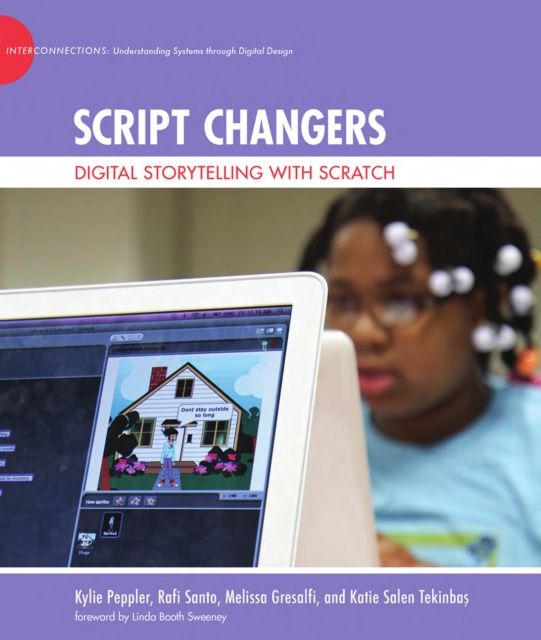
Script Changers
Script Changersshows the ways that stories offer a lens for seeing the world as a series of systems. It provides opportunities for students to create interactive and animated stories about creating positive change in their communities. These projects utilize the Scratch visual programming environment.
eBook

Book Conservation and Digitization
The successful transmediation of books and documents through digitization requires the synergetic partnership of many professional figures, that have what may sometimes appear as contrasting goals at heart. On one side, there are those who look after the physical objects and strive to preserve them for future generations, and on the other those involved in the digitization of the objects, the information that they contain, and the management of the digital data. These complementary activities are generally considered as separate and when the current literature addresses both fields, it does so strictly within technical reports and guidelines, concentrating on procedures and optimal workflow, standards, and technical metadata. In particular, more often than not, conservation is presented as ancillary to digitization, with the role of the conservator restricted to the preparation of items for scanning, with no input into the digital product, leading to misunderstanding and clashes of interests. Surveying a variety of projects and approaches to the challenging conservation-digitization balance and fostering a dialogue amongst practitioners, this book aims at demonstrating that a dialogue between apparently contrasting fields not only is possible, but it is in fact desirable and fruitful. Only through the synergetic collaboration of all people involved in the digitization process, conservators included, can cultural digital objects that represent more fully the original objects and their materiality be generated, encouraging and enabling new research and widening the horizons of scholarship.
eBook

Handbook of Service Description
The Handbook of Service Description introduces an in-depth overview of service description efforts.The book also highlights the recent Unified Service Description Language (USDL) in detail and discusses its methods.
eBook

The Future Was Here
Long ago, in 1985, personal computers came in two general categories: the friendly, childish game machine used for fun (exemplified by Atari and Commodore products); and the boring, beige adult box used for business (exemplified by products from IBM). The game machines became fascinating technical and artistic platforms that were of limited real-world utility. The IBM products were all utility, with little emphasis on aesthetics and no emphasis on fun. Into this bifurcated computing environment came the Commodore Amiga 1000. This personal computer featured a palette of 4,096 colors, unprecedented animation capabilities, four-channel stereo sound, the capacity to run multiple applications simultaneously, a graphical user interface, and powerful processing potential. It was, Jimmy Maher writes in The Future Was Here , the world's first true multimedia personal computer. Maher argues that the Amiga's capacity to store and display color photographs, manipulate video (giving amateurs access to professional tools), and use recordings of real-world sound were the seeds of the digital media future: digital cameras, Photoshop, MP3 players, and even YouTube, Flickr, and the blogosphere. He examines different facets of the platform--from Deluxe Paint to AmigaOS to Cinemaware--in each chapter, creating a portrait of the platform and the communities of practice that surrounded it. Of course, Maher acknowledges, the Amiga was not perfect: the DOS component of the operating systems was clunky and ill-matched, for example, and crashes often accompanied multitasking attempts. And Commodore went bankrupt in 1994. But for a few years, the Amiga's technical qualities were harnessed by engineers, programmers, artists, and others to push back boundaries and transform the culture of computing.
eBook
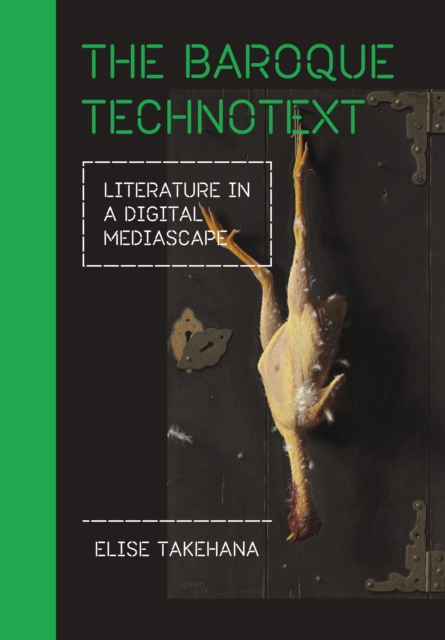
The Baroque Technotext
An analysis of the role of baroque and neo-baroque aesthetics in technotexts, reframing critical debate of contemporary experiments in literary practice in the late age of print. Works by Jonathan Safran Foer, Chris Ware and David Clark are investigated alongside other authors and media such as digital media, film, visual art and interface design.
eBook