
Catalogue Search | MBRL


Are you sure you want to remove the book from the shelf?

{{itemTitle}}
580,973
result(s) for
"COMPUTERS / Information Technology."
Sort by:

Big Data, Little Data, No Data
\"Big Data\" is on the covers ofScience, Nature, theEconomist, andWiredmagazines, on the front pages of theWall Street Journaland theNew York Times.But despite the media hyperbole, as Christine Borgman points out in this examination of data and scholarly research, having the right data is usually better than having more data; little data can be just as valuable as big data. In many cases, there are no data -- because relevant data don't exist, cannot be found, or are not available. Moreover, data sharing is difficult, incentives to do so are minimal, and data practices vary widely across disciplines.Borgman, an often-cited authority on scholarly communication, argues that data have no value or meaning in isolation; they exist within a knowledge infrastructure -- an ecology of people, practices, technologies, institutions, material objects, and relationships. After laying out the premises of her investigation -- six \"provocations\" meant to inspire discussion about the uses of data in scholarship -- Borgman offers case studies of data practices in the sciences, the social sciences, and the humanities, and then considers the implications of her findings for scholarly practice and research policy. To manage and exploit data over the long term, Borgman argues, requires massive investment in knowledge infrastructures; at stake is the future of scholarship.
eBook

Research methods in human-computer interaction
Research Methods in Human-Computer Interaction is a comprehensive guide to performing research and is essential reading for both quantitative and qualitative methods.Since the first edition was published in 2009, the book has been adopted for use at leading universities around the world, including Harvard University, Carnegie-Mellon University.
eBook

Connected Code
Coding, once considered an arcane craft practiced by solitary techies, is now recognized by educators and theorists as a crucial skill, even a new literacy, for all children. Programming is often promoted in K-12 schools as a way to encourage \"computational thinking\" -- which has now become the umbrella term for understanding what computer science has to contribute to reasoning and communicating in an ever-increasingly digital world.InConnected Code,Yasmin Kafai and Quinn Burke argue that although computational thinking represents an excellent starting point, the broader conception of \"computational participation\" better captures the twenty-first-century reality. Computational participation moves beyond the individual to focus on wider social networks and a DIY culture of digital \"making.\" Kafai and Burke describe contemporary examples of computational participation: students who code not for the sake of coding but to create games, stories, and animations to share; the emergence of youth programming communities; the practices and ethical challenges of remixing (rather than starting from scratch); and the move beyond stationary screens to programmable toys, tools, and textiles.
eBook

Network routing: algorithms, protocols, and architectures
Network Routing: Algorithms, Protocols, and Architectures, Second Edition explores network routing and how it can be broadly categorized into Internet routing, PSTN routing, and telecommunication transport network routing. The book systematically considers these routing paradigms, as well as their interoperability, discussing how algorithms, protocols, analysis, and operational deployment impact these approaches and addressing both macro-state and micro-state in routing. Readers will learn about the evolution of network routing, the role of IP and E.164 addressing and traffic engineering in routing, the impact on router and switching architectures and their design, deployment of network routing protocols, and lessons learned from implementation and operational experience. Numerous real-world examples bring the material alive. Bridges the gap between theory and practice in network routing, including the fine points of implementation and operational experienceRouting in a multitude of technologies discussed in practical detail, including, IP/MPLS, PSTN, and optical networkingPresents routing protocols such as OSPF, IS-IS, BGP in detailDetails various router and switch architecturesDiscusses algorithms on IP-lookup and packet classificationAccessible to a wide audience with a vendor-neutral approach
eBook

E-Services Adoption: Processes by Firms in Developing Nations
Volume 23B includes two chapters covering problems and implementations of solutions in e-services adoption processes in developing nations. These are exciting and useful chapters for executives and researchers seeking knowledge and theory of how to influence e-service adoptions in developing nations!.
eBook

Introduction to EEG- and speech-based emotion recognition
Introduction to EEG- and Speech-Based Emotion Recognition Methods examines the background, methods, and utility of using electroencephalograms (EEGs) to detect and recognize different emotions.By incorporating these methods in brain-computer interface (BCI), we can achieve more natural, efficient communication between humans and computers.
eBook
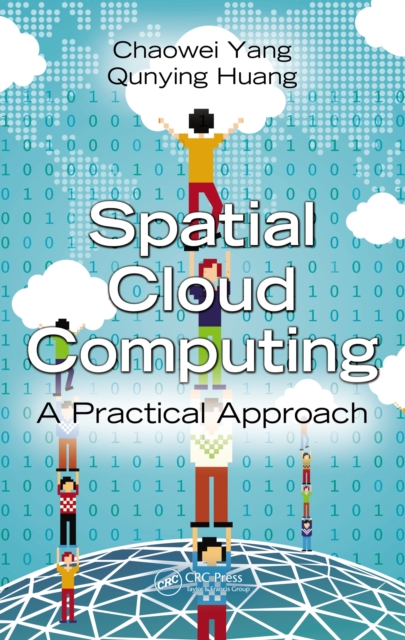
Spatial Cloud Computing
A computing cloud is a set of network enabled services, providing scalable, inexpensive computing platforms on demand, which can be accessed in a simple way. This book helps its readers understand the process of how to deploy and customize geospatial applications onto clouds, as well as how to optimize clouds to make them better support geospatial applications. It also discusses and presents the strategies for customizing different types of applications to better utilize the cloud capabilities, such as on-demand services.
eBook
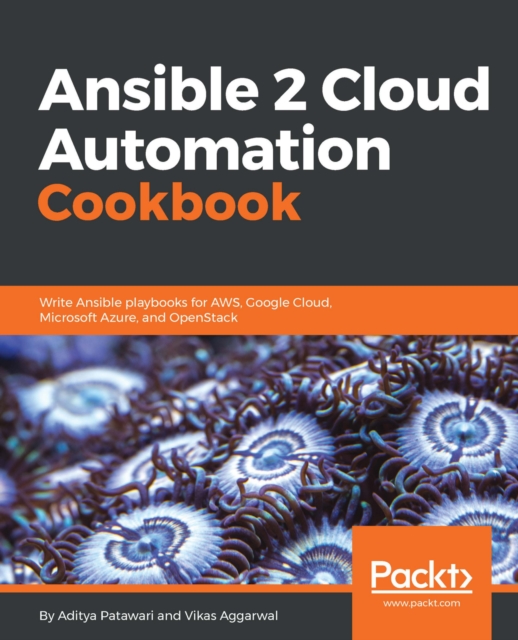
Ansible 2 cloud automation cookbook
Ansible is a powerful and versatile tool used for configuration management and orchestration. Ansible's usefulness is derived from its modules. This book focuses on modules that will help you provision cloud resources by interacting with various APIs exposed by cloud providers. Taking a step further, you will learn how to manage cloud ...
eBook

Fog and Edge Computing
</P> <b>A comprehensive guide to Fog and Edge applications, architectures, and technologies</b> <p>Recent years have seen the explosive growth of the Internet of Things (IoT): the internet- connected network of devices that includes everything from personal electronics and home appliances to automobiles and industrial machinery. Responding to the ever-increasing bandwidth demands and privacy concerns of the IoT, Fog and Edge computing concepts have developed to collect, analyze, and process data closer to devices and more efficiently than traditional cloud architecture. <p><i>Fog and Edge Computing: Principles and Paradigms</i>provides a comprehensive overview of the state-of-the-art applications and architectures driving this dynamic field of computing while highlighting potential research directions and emerging technologies. <p>Exploring topics such as developing scalable architectures, moving from closed systems to open systems, and ethical issues rising from data sensing, this timely book addresses both the challenges and opportunities that Fog and Edge computing presents. Contributions from leading IoT experts discuss federating Edge resources, middleware design issues, data management and predictive analysis, smart transportation and surveillance applications, and more. A coordinated and integrated presentation of topics helps readers gain thorough knowledge of the foundations, applications, and issues that are central to Fog and Edge computing. This valuable resource: <ul> <li>Discusses IoT and new computing paradigms in the domain such as Fog, Edge and Mist</li> <li>Provides insights on transitioning from current Cloud-centric and 4G/5G wireless environments to Fog computing</li> <li>Examines methods to optimize virtualized, pooled, and shared resources</li> <li>Identifies potential technical challenges and offers suggestions for possible solutions</li> <li>Discusses major components of Fog and Edge computing architectures such as middleware, interaction protocols, and autonomic management</li> <li>Includes access to a website portal for advanced online resources</li> </ul> <p><i>Fog and Edge Computing: Principles and Paradigms</i>is an essential source of up-to-date information for systems architects, developers, researchers, and advanced undergraduate and graduate students in fields of computer science and engineering.
eBook

Harnessing Green IT
“Ultimately, this is a remarkable book, a practical testimonial, and a comprehensive bibliography rolled into one. It is a single, bright sword cut across the various murky green IT topics. And if my mistakes and lessons learned through the green IT journey are any indication, this book will be used every day by folks interested in greening IT.”<br /> — <i>Simon Y. Liu, Ph.D. & Ed.D., Editor-in-Chief,</i> IT Professional <i>Magazine, IEEE Computer Society, Director, U.S. National Agricultural Library</i> <p><b>This book presents a holistic perspective onGreen IT by discussing its various facets and showing how to strategically embrace it</b></p> <p><i>Harnessing Green IT: Principles and Practices</i> examines various ways of making computing and information systems greener – environmentally sustainable -, as well as several means of using Information Technology (IT) as a tool and an enabler to improve the environmental sustainability. The book focuses on both greening of IT and greening by IT – complimentary approaches to attaining environmental sustainability.   In a single volume, it   comprehensively covers several key aspects of Green IT - green technologies, design, standards, maturity models, strategies and adoption -, and presents a clear approach to greening IT encompassing green use, green disposal, green design, and green manufacturing. It also illustrates how to stratgically apply green IT in practice in several areas.</p> <p>Key Features:</p> <ul> <li>Presents a comprehensive coverage of key topics of imprortance and practical relevance  - green technologies, design, standards, maturity models, strategies and adoption</li> <li>Highlights several useful approaches to embracing green IT in several areas</li> <li>Features chapters written by accomplished experts from industry and academia who have first-hand knowledge and expertise in specific areas of green IT</li> <li>Presents a set of review and discussion questions for each chapter that will help the readers to examine and explore the green IT domain further</li> <li>Includes a companion website providing  resources for further information and presentation slides</li> </ul> <p>This book will be an invaluable resource for IT Professionals, academics, students, researchers, project leaders/managers, IT business executives, CIOs, CTOs and anyone interested in Green IT and harnessing it to enhance our environment.</p>
eBook