
Catalogue Search | MBRL


Are you sure you want to remove the book from the shelf?

{{itemTitle}}
30,615
result(s) for
"COMPUTERS / Programming / Algorithms."
Sort by:

The golden ticket
The P-NP problem is the most important open problem in computer science, if not all of mathematics.The Golden Ticketprovides a nontechnical introduction to P-NP, its rich history, and its algorithmic implications for everything we do with computers and beyond. In this informative and entertaining book, Lance Fortnow traces how the problem arose during the Cold War on both sides of the Iron Curtain, and gives examples of the problem from a variety of disciplines, including economics, physics, and biology. He explores problems that capture the full difficulty of the P-NP dilemma, from discovering the shortest route through all the rides at Disney World to finding large groups of friends on Facebook. But difficulty also has its advantages. Hard problems allow us to safely conduct electronic commerce and maintain privacy in our online lives.
The Golden Ticketexplores what we truly can and cannot achieve computationally, describing the benefits and unexpected challenges of the P-NP problem.
eBook

Particle Swarm Optimisation
Helping readers numerically solve optimization problems, this book focuses on the fundamental principles and applications of PSO and QPSO algorithms. The authors develop their novel QPSO algorithm, a PSO variant motivated from quantum mechanics, and show how to implement it in real-world applications, including inverse problems, digital filter d.
eBook
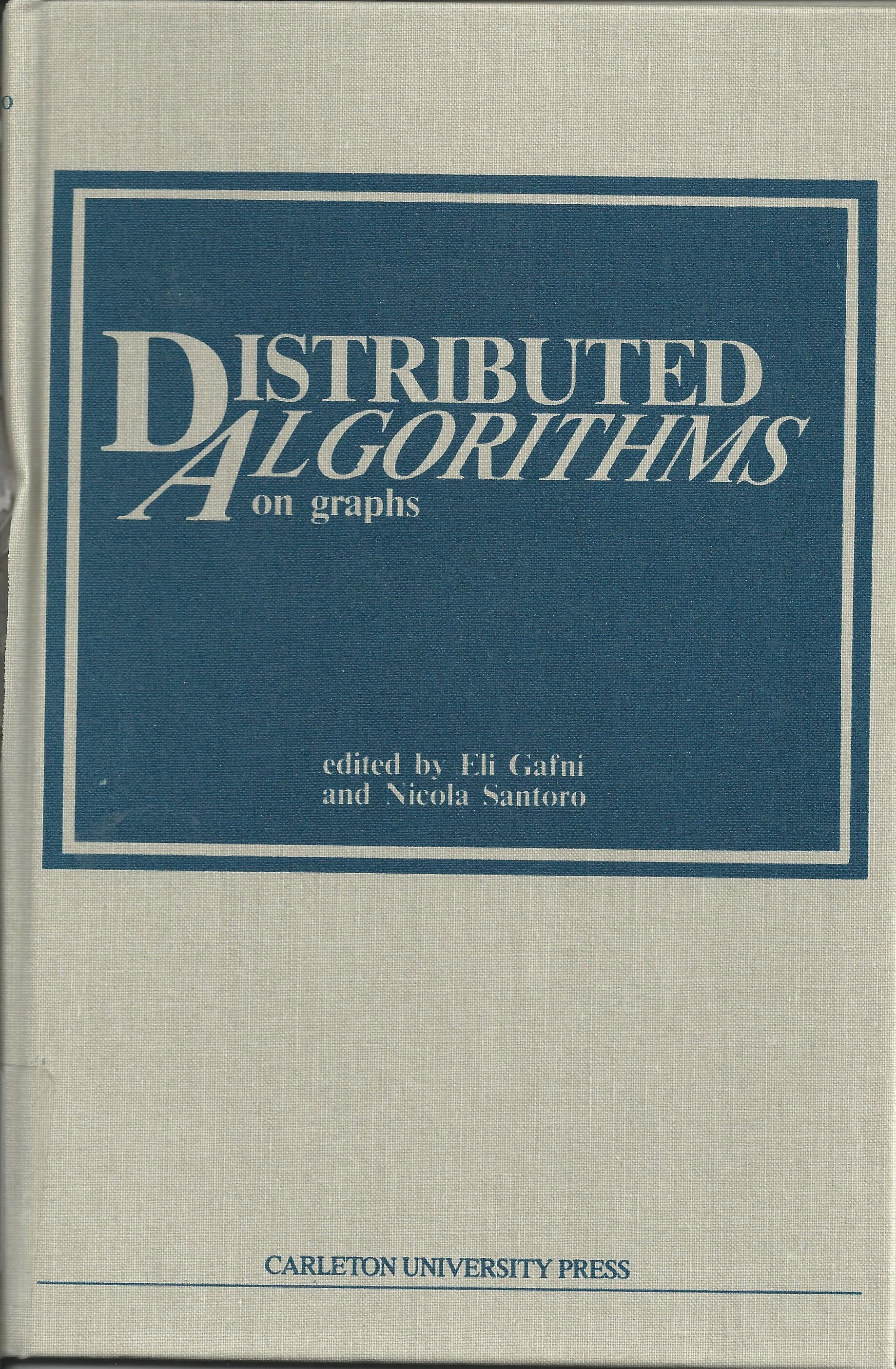
Distributed Algorithms on Graphs
This volume contains papers presented at the First International Workshop on Distributed Algorithms. The papers present solutions to a wide spectrum of problems (leader election, resource allocation, routing, etc.) and focus on a variety of issues that influence communications complexity.
eBook

Delaunay Mesh Generation
Written by authors at the forefront of modern algorithms research, this book demonstrates the power and versatility of Delaunay meshers in tackling complex geometric domains ranging from polyhedra with internal boundaries to piecewise smooth surfaces. It is one of the first to integrate a vast amount of cutting-edge material on Delaunay triangulations. Covering both volume and surface meshes, the book offers a rigorous theoretical analysis of mesh generation methods while also showing how the algorithms work well in practice.
eBook
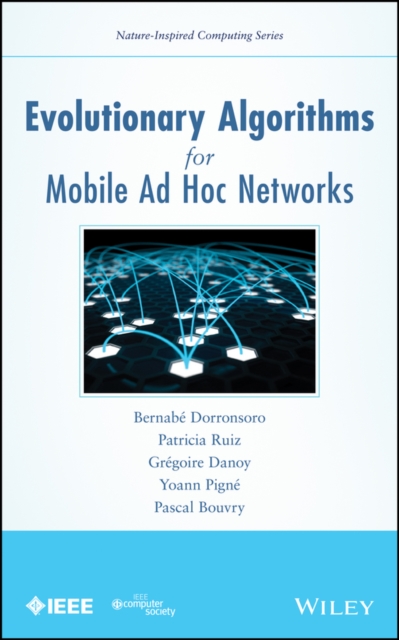
Evolutionary algorithms for mobile ad hoc networks
\"This comprehensive guide describes how evolutionary algorithms (EA) may be used to identify, model, and optimize day-to-day problems that arise for researchers in optimization and mobile networking. It provides efficient and accurate information on dissemination algorithms, topology management, and mobility models to address challenges in the field. It is an ideal book for researchers and students in the field of mobile networks\"--
eBook

Effective Concurrency in Go
Gain a deep understanding of concurrency and learn how to leverage concurrent algorithms to build high-throughput data processing applications, network servers and clients that scale.
Key Features
Learn about the Go concurrency primitives, Go memory model, and common concurrency patternsDevelop the insights on how to model solutions to real-life problems using concurrencyExplore practical techniques to analyze how concurrent programs behave
Book Description
The Go language has been gaining momentum due to its treatment of concurrency as a core language feature, making concurrent programming more accessible than ever. However, concurrency is still an inherently difficult skill to master, since it requires the development of the right mindset to decompose problems into concurrent components correctly. This book will guide you in deepening your understanding of concurrency and show you how to make the most of its advantages. You’ll start by learning what guarantees are offered by the language when running concurrent programs. Through multiple examples, you will see how to use this information to develop concurrent algorithms that run without data races and complete successfully. You’ll also find out all you need to know about multiple common concurrency patterns, such as worker pools, asynchronous pipelines, fan-in/fan-out, scheduling periodic or future tasks, and error and panic handling in goroutines. The central theme of this book is to give you, the developer, an understanding of why concurrent programs behave the way they do, and how they can be used to build correct programs that work the same way in all platforms. By the time you finish the final chapter, you’ll be able to develop, analyze, and troubleshoot concurrent algorithms written in Go.
What you will learn
Understand basic concurrency concepts and problemsLearn about Go concurrency primitives and how they workLearn about the Go memory model and why it is importantUnderstand how to use common concurrency patternsSee how you can deal with errors in a concurrent programDiscover useful techniques for troubleshooting
Who this book is for
If you are a developer with basic knowledge of Go and are looking to gain expertise in highly concurrent backend application development, then this book is for you. Intermediate Go developers who want to make their backend systems more robust and scalable will also find plenty of useful information. Prior exposure Go is a prerequisite.
eBook

Unity 2018 artificial intelligence cookbook : over 90 recipes to build and customize AI entities for your games with Unity
With the help of Artificial Intelligence, you can create engaging games consisting of intelligent enemies and intellectual behavior. Using Unity's API or built-in features allows limitless possibilities to create your game's worlds and characters. This cookbook covers essential techniques to help you take your game AI programming to the next level.
eBook

Pattern Recognition on Oriented Matroids
Pattern Recognition on Oriented Matroids covers a range of innovative problems in combinatorics, poset and graph theories, optimization, and number theory that constitute a far-reaching extension of the arsenal of committee methods in pattern recognition.
eBook
Advanced Data Structures and Algorithms
Solve complex problems by performing analysis of algorithms or selecting suitable techniques for optimal performance
Key Features
? Get familiar with various concepts and techniques of advanced data structures to solve real-world problems.
? Learn how to evaluate the efficiency and performance of an algorithm in terms of time and space complexity.
? A practical guide for students and faculty members who are interested in this important subject area of Computer Science.
Description
\"Advanced Data Structures and Algorithms\" is an important subject area in Computer Science that covers more complex and advanced topics related to data structures and algorithms. This book will teach you how to analyze algorithms to handle the difficulties of sophisticated programming. It will then help you understand how advanced data structures are used to store and manage data efficiently. Moving on, it will help you explore and work with Divide and Conquer techniques, Dynamic programming, and Greedy algorithms. Lastly, the book will focus on various String Matching Algorithms such as naïve string matching algorithms, Knuth–Morris–Pratt(KMP) Algorithm, and Rabin-Karp Algorithm. By the end of the book, you will be able to analyze various algorithms with time and space complexity to choose the best suitable algorithms for a given problem.
What you will learn
? Understand how to examine an algorithm's time and space complexity.
? Explore complex data structures like AVL tree, Huffman coding, and many more.
? Learn how to solve larger problems using Divide and Conquer techniques.
? Identify the most optimal solution using Greedy and Dynamic Programming.
? Learn how to deal with real-world problems using various approaches of the String Matching algorithms.
Who this book is for
This book is aligned with the curriculum of the Computer Engineering program offered by Mumbai University. The book is designed not only for Computer Engineering and Information Technology students but also for anyone who wants to learn about advanced data structures and analysis of algorithms.
Table of Contents
1. Analysis of Algorithm
2. Advanced Data Structures
3. Divide and Conquer
4. Greedy Algorithms
5. Dynamic Algorithms and NP-Hard and NP-Complete
6. String Matching
eBook