
Catalogue Search | MBRL


Are you sure you want to remove the book from the shelf?

{{itemTitle}}
17
result(s) for
"COMPUTERS / Programming Languages / General. bisacsh"
Sort by:

Practical Foundations for Programming Languages
Types are the central organizing principle of the theory of programming languages. In this innovative book, Professor Robert Harper offers a fresh perspective on the fundamentals of these languages through the use of type theory. Whereas most textbooks on the subject emphasize taxonomy, Harper instead emphasizes genetics, examining the building blocks from which all programming languages are constructed. Language features are manifestations of type structure. The syntax of a language is governed by the constructs that define its types, and its semantics is determined by the interactions among those constructs. The soundness of a language design – the absence of ill-defined programs – follows naturally. Professor Harper's presentation is simultaneously rigorous and intuitive, relying on elementary mathematics. The framework he outlines scales easily to a rich variety of language concepts and is directly applicable to their implementation. The result is a lucid introduction to programming theory that is both accessible and practical.
eBook
Learn to program with scratch
Scratch is a fun, free, beginner-friendly programming environment where you connect blocks of code to build programs. While most famously used to introduce kids to programming, Scratch can make computer science approachable for people of any age. Rather than type countless lines of code in a cryptic programming language, why not use colorful command blocks and cartoon sprites to create powerful scripts? In Learn to Program with Scratch, author Majed Marji uses Scratch to explain the concepts essential to solving real-world programming problems. The labeled, color-coded blocks plainly show each logical step in a given script, and with a single click, you can even test any part of your script to check your logic. You'll learn how to: -Harness the power of repeat loops and recursion -Use if/else statements and logical operators to make decisions -Store data in variables and lists to use later in your program -Read, store, and manipulate user input -Implement key computer science algorithms like a linear search and bubble sort Hands-on projects will challenge you to create an Ohm's law simulator, draw intricate patterns, program sprites to mimic line-following robots, create arcade-style games, and more! Each chapter is packed with detailed explanations, annotated illustrations, guided examples, lots of color, and plenty of exercises to help the lessons stick. Learn to Program with Scratch is the perfect place to start your computer science journey, painlessly.
eBook

The principles of object-oriented Javascript
If you've used a more traditional object-oriented language, such as C++ or Java, JavaScript probably doesn't seem object-oriented at all. It has no concept of classes, and you don't even need to define any objects in order to write code. But don't be fooled—JavaScript is an incredibly powerful and expressive object-oriented language that puts many design decisions right into your hands. In The Principles of Object-Oriented JavaScript, Nicholas C. Zakas thoroughly explores JavaScript's object-oriented nature, revealing the language's unique implementation of inheritance and other key characteristics. You'll learn: -The difference between primitive and reference values -What makes JavaScript functions so unique -The various ways to create objects -How to define your own constructors -How to work with and understand prototypes -Inheritance patterns for types and objects The Principles of Object-Oriented JavaScript will leave even experienced developers with a deeper understanding of JavaScript. Unlock the secrets behind how objects work in JavaScript so you can write clearer, more flexible, and more efficient code.
eBook
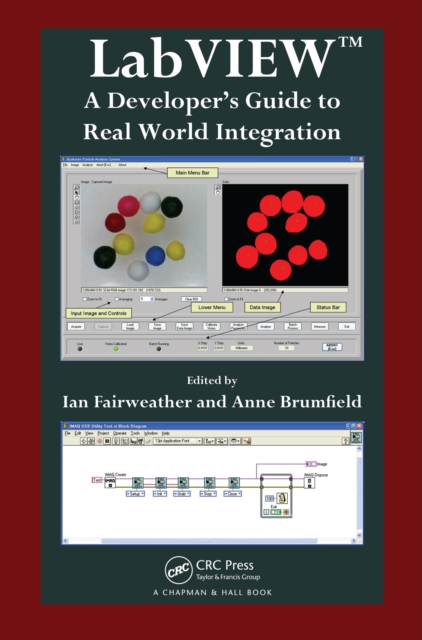
LabVIEW
Written by experienced LabVIEW(tm) developers and engineers, this guide explains how to integrate LabVIEW into real-life applications. Each chapter demonstrates the power and simplicity of LabVIEW in various applications, from image processing to solar tracking systems. Many of the chapters explore how exciting new technologies can be implemented i.
eBook

The C++ Workshop
The C++ Workshop is designed to help you master the core concepts of C++. Each chapter features challenging exercises and hands-on projects to guide you effectively through writing and compiling clean code in a real-time environment.
eBook

The Golden Ticket
The P-NP problem is the most important open problem in computer science, if not all of mathematics.The Golden Ticketprovides a nontechnical introduction to P-NP, its rich history, and its algorithmic implications for everything we do with computers and beyond. In this informative and entertaining book, Lance Fortnow traces how the problem arose during the Cold War on both sides of the Iron Curtain, and gives examples of the problem from a variety of disciplines, including economics, physics, and biology. He explores problems that capture the full difficulty of the P-NP dilemma, from discovering the shortest route through all the rides at Disney World to finding large groups of friends on Facebook. But difficulty also has its advantages. Hard problems allow us to safely conduct electronic commerce and maintain privacy in our online lives.
The Golden Ticketexplores what we truly can and cannot achieve computationally, describing the benefits and unexpected challenges of the P-NP problem.
eBook


Automated Data Collection with R
A hands on guide to web scraping and text mining for both beginners and experienced users of R
* Introduces fundamental concepts of the main architecture of the web and databases and covers HTTP, HTML, XML, JSON, SQL.
* Provides basic techniques to query web documents and data sets (XPath and regular expressions).
* An extensive set of exercises are presented to guide the reader through each technique.
* Explores both supervised and unsupervised techniques as well as advanced techniques such as data scraping and text management.
* Case studies are featured throughout along with examples for each technique presented.
* R code and solutions to exercises featured in the book are provided on a supporting website.
eBook
R high performance programming
About This Book Benchmark and profile R programs to solve performance bottlenecks Combine the ease of use and flexibility of R with the power of big data tools Filled with practical techniques and useful code examples to process large data sets more efficiently Who This Book Is For This book is for programmers and developers who want to improve the performance of their R programs by making them run faster with large data sets or who are trying to solve a pesky performance problem.
eBook

Introductory Statistics: A Conceptual Approach Using R
This comprehensive and uniquely organized text is aimed at undergraduate and graduate level statistics courses in education, psychology, and other social sciences. A conceptual approach, built around common issues and problems rather than statistical techniques, allows students to understand the conceptual nature of statistical procedures and to focus more on cases and examples of analysis. Wherever possible, presentations contain explanations of the underlying reasons behind a technique. Importantly, this is one of the first statistics texts in the social sciences using R as the principal statistical package. Key features include the following.
Conceptual Focus - The focus throughout is more on conceptual understanding and attainment of statistical literacy and thinking than on learning a set of tools and procedures.
Problems and Cases - Chapters and sections open with examples of situations related to the forthcoming issues, and major sections ends with a case study. For example, after the section on describing relationships between variables, there is a worked case that demonstrates the analyses, presents computer output, and leads the student through an interpretation of that output.
Continuity of Examples - A master data set containing nearly all of the data used in the book's examples is introduced at the beginning of the text. This ensures continuity in the examples used across the text.
Companion Website - A companion website contains instructions on how to use R, SAS, and SPSS to solve the end-of-chapter exercises and offers additional exercises.
Field Tested - The manuscript has been field tested for three years at two leading institutions.
eBook