
Catalogue Search | MBRL


Are you sure you want to remove the book from the shelf?

{{itemTitle}}
581,329
result(s) for
"COMPUTERS Information Technology."
Sort by:

The tao of computing
\"This text presents a broad, practical introduction to computers and computer technology. It uses a question and answer format to provide thoughtful answers to the many practical questions that students have about computing. The text offers a down-to-earth overview of fundamental computer fluency topics, from the basics of how a computer is organized to an overview of operating systems to a description of how the Internet works. The second edition includes new technological advances, new applications, examples from popular culture, and new research exercises\"-- Provided by publisher.
Book

Big Data, Little Data, No Data
\"Big Data\" is on the covers ofScience, Nature, theEconomist, andWiredmagazines, on the front pages of theWall Street Journaland theNew York Times.But despite the media hyperbole, as Christine Borgman points out in this examination of data and scholarly research, having the right data is usually better than having more data; little data can be just as valuable as big data. In many cases, there are no data -- because relevant data don't exist, cannot be found, or are not available. Moreover, data sharing is difficult, incentives to do so are minimal, and data practices vary widely across disciplines.Borgman, an often-cited authority on scholarly communication, argues that data have no value or meaning in isolation; they exist within a knowledge infrastructure -- an ecology of people, practices, technologies, institutions, material objects, and relationships. After laying out the premises of her investigation -- six \"provocations\" meant to inspire discussion about the uses of data in scholarship -- Borgman offers case studies of data practices in the sciences, the social sciences, and the humanities, and then considers the implications of her findings for scholarly practice and research policy. To manage and exploit data over the long term, Borgman argues, requires massive investment in knowledge infrastructures; at stake is the future of scholarship.
eBook

Asset protection through security awareness
\"Supplying a high-level overview of how to protect your company's physical and intangible assets, Asset Protection through Security Awareness explains the best ways to enlist the assistance of your employees as the first line of defense in safeguarding company assets and mitigating security risks. It reviews key topics surrounding computer security--including privacy, access controls, and risk management--to help you fill the gaps that might exist between management and the technicians securing your network systems. Requiring no previous networking or programming experience, the book delivers a practical approach to asset protection. It specifies the roles of managers and employees in creating a company-wide culture of security awareness and provides step-by-step instruction on how to build an effective security awareness team. Each chapter examines a separate security issue and provides a brief overview of how to address that issue. This book includes helpful tools and checklists to help you address: - Visual, digital, and auditory data security - Payment card industry (PCI) compliance, password management, and social engineering - User authentication methods - Computer and network forensics - Physical security and continuity planning - Privacy concerns and privacy-related regulation This concise security management primer facilitates the up-to-date understanding required to protect your digital and physical assets, including customer data, networking equipment, and employee information. Providing you with powerful tools of diplomacy, this text will help you win the support of your employees and empower them to be effective gatekeepers of your company's most valued assets and trade secrets. \"-- Provided by publisher.
Book

Research methods in human-computer interaction
Research Methods in Human-Computer Interaction is a comprehensive guide to performing research and is essential reading for both quantitative and qualitative methods.Since the first edition was published in 2009, the book has been adopted for use at leading universities around the world, including Harvard University, Carnegie-Mellon University.
eBook


Connected Code
Coding, once considered an arcane craft practiced by solitary techies, is now recognized by educators and theorists as a crucial skill, even a new literacy, for all children. Programming is often promoted in K-12 schools as a way to encourage \"computational thinking\" -- which has now become the umbrella term for understanding what computer science has to contribute to reasoning and communicating in an ever-increasingly digital world.InConnected Code,Yasmin Kafai and Quinn Burke argue that although computational thinking represents an excellent starting point, the broader conception of \"computational participation\" better captures the twenty-first-century reality. Computational participation moves beyond the individual to focus on wider social networks and a DIY culture of digital \"making.\" Kafai and Burke describe contemporary examples of computational participation: students who code not for the sake of coding but to create games, stories, and animations to share; the emergence of youth programming communities; the practices and ethical challenges of remixing (rather than starting from scratch); and the move beyond stationary screens to programmable toys, tools, and textiles.
eBook

Business process crowdsourcing : concept, ontology and decision support
This book conceptualises and develops crowdsourcing as an organisational business process. It argues that although for many organisations crowdsourcing still implies an immature one-off endeavour, when developed to a more repeatable business process it can harness innovation and agility. The book offers a process model to guide organisations towards the establishment of business process crowdsourcing (BPC), and empirically showcases and evaluates the model using two current major crowdsourcing projects. In order to consolidate the domain knowledge, the BPC model is turned into a heavyweight ontology capturing the concepts, hierarchical relationships and decision-making relationships necessary to establish crowdsourcing as a business process in an organisation. Lastly, based on the ontology it presents a decision tool that provides advice on making informed decisions about the performance of business process crowdsourcing activities.
Book

E-Services Adoption: Processes by Firms in Developing Nations
Volume 23B includes two chapters covering problems and implementations of solutions in e-services adoption processes in developing nations. These are exciting and useful chapters for executives and researchers seeking knowledge and theory of how to influence e-service adoptions in developing nations!.
eBook

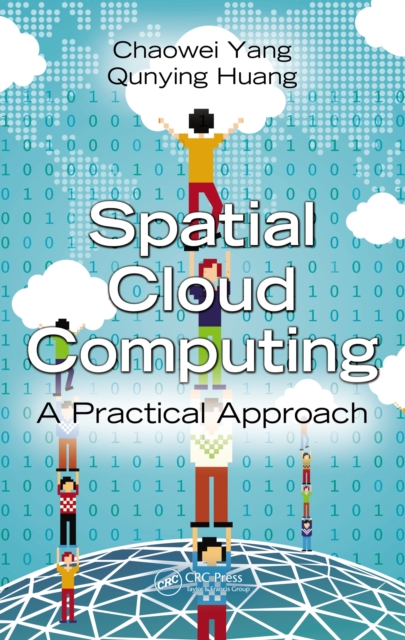
Spatial Cloud Computing
A computing cloud is a set of network enabled services, providing scalable, inexpensive computing platforms on demand, which can be accessed in a simple way. This book helps its readers understand the process of how to deploy and customize geospatial applications onto clouds, as well as how to optimize clouds to make them better support geospatial applications. It also discusses and presents the strategies for customizing different types of applications to better utilize the cloud capabilities, such as on-demand services.
eBook