
Catalogue Search | MBRL


Are you sure you want to remove the book from the shelf?

{{itemTitle}}
8,575
result(s) for
"CONTEMPORARY CULTURE"
Sort by:

Autumn
\"Fusing Keatsian mists and mellow fruitfulness with the vitality, the immediacy, and the color hit of pop art, Autumn is [an] ... excavation of the present by the past. The novel is a stripped-branches take on popular culture and a meditation--in a world growing ever more bordered and exclusive--on what richness and worth are, what harvest means\"-- Provided by publisher.
Book
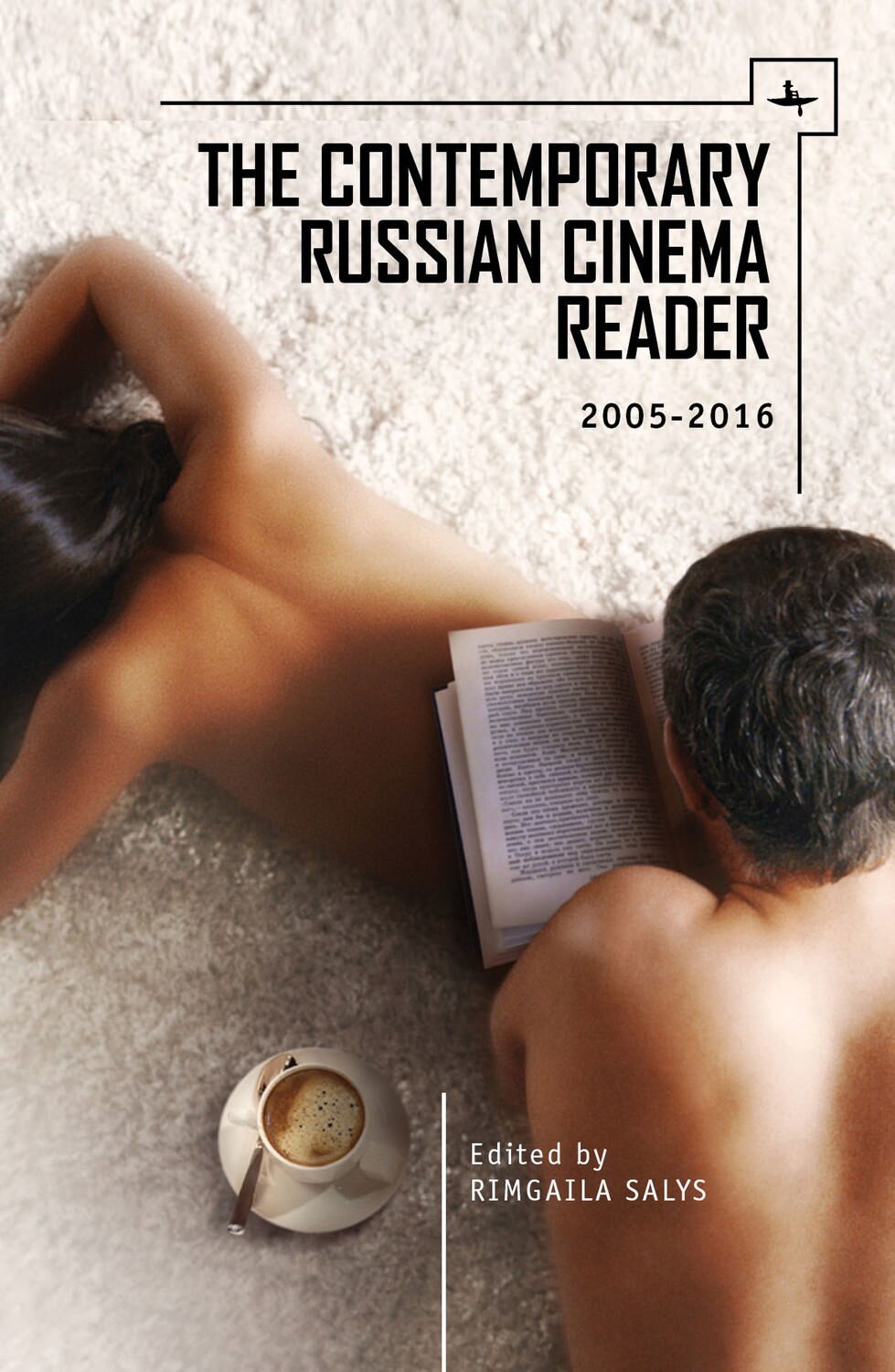
The contemporary Russian cinema reader, 2005-2016
This collection surveys recent developments in Russian cinema and introduces undergraduate students to significant films released between 2005 and 2016 that are also available with English subtitles. Essays on individual films provide background on directors' careers, detailed analyses of selected films, along with suggestions for further readings both in English and Russian.
eBook

The dream colony : a life in art
\"An innovative, iconoclastic curator of contemporary art, Walter Hopps founded his first gallery in L.A. at the age of twenty-one. At twenty-four, he opened the Ferus Gallery with then-unknown artist Edward Kienholz, where he turned the spotlight on a new generation of West Coast artists. Ferus was also the first gallery ever to show Andy Warhol's Campbell's Soup Cans and was shut down by the L.A. vice squad for a show of Wallace Berman's edgy art. At the Pasadena Art Museum in the sixties, Hopps mounted the first museum retrospectives of Marcel Duchamp and Joseph Cornell and the first museum exhibition of Pop Art--before it was even known as Pop Art. In 1967, when Hopps became the director of Washington's Corcoran Gallery of Art at age thirty-four, the New York Times hailed him as \"the most gifted museum man on the West Coast (and, in the field of contemporary art, possibly in the nation).\" He was also arguably the most unpredictable, an eccentric genius who was chronically late. (His staff at the Corcoran had a button made that said WALTER HOPPS WILL BE HERE IN TWENTY MINUTES.) Erratic in his work habits, he was never erratic in his commitment to art. Hopps died in 2005, after decades at the Menil Collection of art in Houston for which he was the founding director. A few years before that, he began work on this book, a vivid, personal, surprising, irreverent, and enlightening account of his life and of some of the greatest artistic minds of the twentieth century\"-- Provided by publisher.
Book

Buyers Beware
Buyers Beware offers a new perspective for critical inquiries about the practices of consumption in (and of) Caribbean popular culture. The book revisits commonly accepted representations of the Caribbean from “less respectable” segments of popular culture such as dancehall culture and 'sistah lit' that proudly jettison any aspirations toward middle-class respectability. Treating these pop cultural texts and phenomena with the same critical attention as dominant mass cultural representations of the region allows Patricia Joan Saunders to read them against the grain and consider whether and how their “pulp” preoccupation with contemporary fashion, music, sex, fast food, and television, is instructive for how race, class, gender, sexuality and national politics are constructed, performed, interpreted, disseminated and consumed from within the Caribbean.
eBook

The bones of grace : a novel
\"On the eve of her departure to find the bones of the walking whale--the fossil that provides a missing link in our evolution--Zubaida Haque falls in love with Elijah Strong, a man she meets in a darkened concert hall in Boston. Their connection is immediate and intense, despite their differences: Elijah belongs to a prototypical American family; Zubaida is the adopted daughter of a wealthy Bangladeshi family in Dhaka. When a twist of fate sends her back to her hometown, the inevitable force of society compels her to take a very different path: she marries her childhood best friend and settles into a traditional Bangladeshi life\"-- Provided by publisher.
Book

On Changing the Subject: ‘Secularity’, ‘Religion’, and the Idea of the Human
The ‘religion/secular’ frame should be retired as a way of characterizing contemporary northern European cultures. The concepts of ‘secularity’ and ‘religion’ are both falsifying and question begging. They invisibly and unhelpfully predetermine the conversation about who and where we are now. Further, they are terms which increasingly lack salience in these cultures. If we seek to locate and articulate, in order to reflectively engage, the horizons within which contemporary northern Europeans generally live, the goods that orient people’s lives, the ideas and values that move and motivate them, we need to talk not about ‘religion’ and the lack of it, but about the idea of the human. Within the concept of the human is nested today the sense of orientation, meaning, goodness and importance that notions of ‘religion’ used to express. This is the conceptual territory on which arguments about ‘what really matters’ are now conducted. If one wishes to have salience in contemporary culture, one needs to speak to this.
Journal Article

Begin with the past : building of the National Museum of African American History & Culture
\"The story of the vision behind and building of the National Museum of African American History and Culture\"-- Provided by publisher.
Book

Re-Imagining the Museum
Re-Imagining the Museum presents new interpretations of museum history and contemporary museum practices.
Through a range of case studies from the UK, North America and Australia, Andrea Witcomb moves away from the idea that museums are always 'conservative' to suggest they have a long history of engaging with popular culture and addressing a variety of audiences. She argues that museums are key mediators between high and popular culture and between government, media practitioners, cultural policy-makers and museums professionals.
Analyzing links between museums and the media, looking at the role of museums in cities, and discussing the effects on museums of cultural policies, Re-Imagining the Museum presents a vital tool in the study of museum practice.
eBook

Pop departures
\"Pop Departures centers on the topics of consumerism and display, as well as our ongoing infatuation with celebrity culture, all of which are bound up tightly with a constantly changing media and communications landscape. To better understand some of the shifts that have occurred since the 1960s, the catalogue highlights three artistic moments that center largely on developments in the United States. It features key works by pioneers of American pop art in the 1960s, followed by critical responses to popular culture imagery in the 1980s and early 1990s, and finally, contemporary artistic departures after the turn of the millennium. What made the image culture of consumption such a compelling topic? And how has the discussion shifted and eddied since classic pop art shattered dearly held ideals of artistic practice?\"-- Provided by publisher.
Book