
Catalogue Search | MBRL


Are you sure you want to remove the book from the shelf?

{{itemTitle}}
9,788
result(s) for
"CONTRIBUTION RATE"
Sort by:

Eco-Dynamic Analysis of the Community Structure of Nekton in the Northern South China Sea
The universal laws of thermodynamics in the process of ecosystem development have long been the common research focus of ecology and biophysics. Eco-exergy from thermodynamics is a popular theory in the study of ecosystem self-organization that has been widely used in the study of wetlands and aquatic ecosystems. This study is based on the data of bottom trawl fishery resources in the Northern South China Sea in 1964–1965, 1997–1999, 2006–2007, and 2017. Based on the eco-exergy theory, the exergy contribution rate (PC) of the nekton community and the exergy contribution rate (PL) of different organismic populations were constructed. The eco-exergy (EX) and specific eco-exergy (EXsp) of the nekton in the northeastern South China Sea were analyzed. The results show that, from 1964 to 2017, the EX and EXsp of the nekton community decreased 13.28-fold and 1.42-fold, respectively. Fish populations remained the major contributors to the EX and EXsp of the nekton community; however, compared to crustaceans and cephalopods, their role in maintaining the stability and complexity of the community structure was gradually weakened, and the genetic information per unit of biomass decreased. Meanwhile, compared to fish, the proportion of the EX of crustaceans and cephalopods in the nekton community showed an upward trend. The proportion of crustaceans increased from 2.76% in 1997–1999 to 14.84% in 2017, while that of cephalopods increased from 3.55% to 16.67%. Based on the findings, we speculate that crustaceans and cephalopods play an increasing role in the stability and complexity of the fishery resource structure in the Northern South China Sea. The species replacement in the nekton was obvious, and the dominant species of the Nekton community gradually changed from k-type species to r-type species in the Northern South China Sea.
Journal Article

Adequacy of Retirement Income after Pension Reforms in Central, Eastern and Southern Europe
All countries in the former transition economies of Central, Eastern, and Southern Europe have undertaken public pension reforms of varying depth and orientation, often with the support of the World Bank. Although the reformed public pension schemes provide broad benefit adequacy, in most cases additional measures are needed to achieve fiscal sustainability in an aging society. 'Adequacy of Retirement Income after Pension Reforms in Central, Eastern, and Southern Europe: Eight Country Studies' assesses the benefit adequacy of the reformed pension systems for eight countries—Bulgaria, the Czech Republic, Croatia, Hungary, Poland, Romania, the Slovak Republic, and Slovenia—to identify policy gaps and options. The authors identify the motivations for reform against the backdrop of the trend toward multi-pillar arrangements, document key provisions, and compare them in the context of the World Bank's five-pillar paradigm for pension reform. They then evaluate the sustainability and adequacy of reformed pension systems and provide recommendations to address gaps and take advantage of opportunities for further reforms. The case studies and summary suggest the following broad policy conclusions: • Fiscal sustainability has improved in most study countries, but few are fully prepared for the inevitability of population aging. • The linkage between contributions and benefits has been strengthened, and pension system designs are better suited to market conditions • Levels of income replacement are generally adequate for all but some categories of workers (including those with intermittent formal sector employment or low lifetime wages), and addressing their needs requires initiatives that go beyond pension policy. • Further reforms should focus on extending labor force participation by the elderly to avoid benefit cuts that could undermine adequacy and very high contribution rates that could discourage formal sector employment. • More decisive financial market reforms are needed for funded provisions to deliver on the expectations of participants and keep funded pensions safe. This book will be of interest to policy makers, researchers, and everyone interested in the topic of pensions in the region, and beyond.
eBook

Pension Reforms in Japan
This paper analyzes various reform options for Japan's public pension in light of large fiscal consolidation needs of the country. The most attractive option is to increase the pension eligibility age in line with high and rising life expectancy. This would have a positive effect on long-run economic growth and would be relatively fair in sharing the burden of fiscal adjustment between younger and older generations. Other attractive options include better targeting by \"clawing back\" a small portion of pension benefits from wealthy retirees, reducing preferential tax treatment of pension benefit incomes, and collecting contributions from dependent spouses of employees, who are currently eligible for pension benefits even though they make no contributions. These options, if implemented concurrently, could reduce the government annual subsidy and the government deficit by up to 1¼ percent of GDP by 2020.
eBook
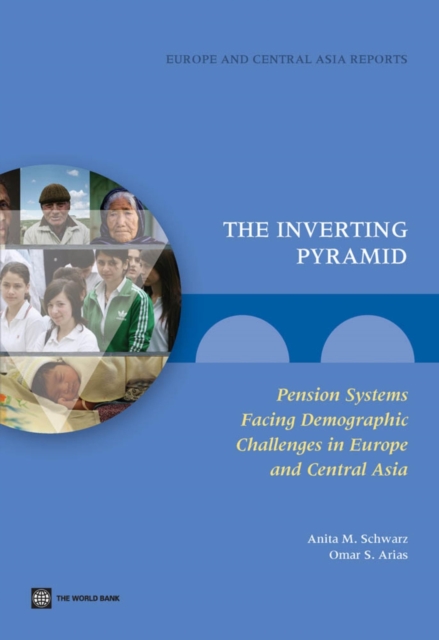
The inverting pyramid
Pension systems in Europe and Central Asia are facing unprecedented demographic change. While many of the countries in the region have undertaken reforms when the economy faces difficult times, these reforms are frequently reversed when the economy improves. The demographic challenges that the region faces require a sustained effort toward changing the pension system toward something which provides adequate and sustainable benefits. The book documents the increased generosity of pension systems in Europe from their initial inception, noting that the current expectations of the public are based on the most recent round of generosity. The book seeks to show a nontechnical audience that such generosity is neither based on customary practice nor affordable in the future. The increased generosity in the past was only possible because the demographic pyramid was expanding, but as it inverts with fewer young people and more elderly, that generosity will no longer be affordable. Returning to the pension system of the 1970's will go a long way toward providing adequate and sustainable benefits in the future. Moving to a more sustainable system will require reforms to labor markets, improvements in savings mechanisms, and may require additional public resources. The extent to which a country can undertake reforms in labor markets, savings, and public finances can influence the extent to which its pension system will have to change, with different solutions possible for different countries. But in all cases, the changes that need to be made have to be widely discussed and publicly accepted to prevent reversals. The book hopes to stimulate widespread public discussion of the issue to help countries make sustainable choices with gradual implementation, before they face such daunting challenges that they have to undertake sudden, harsh measures.
eBook

An Improved Sobol Sensitivity Analysis Method
The Sobol method is a variance-based global sensitivity analysis method that evaluates single-input and multiple-input interaction effects by calculating the contribution of a single input to the output variance and the contribution of multiple inputs to the output variance. The Sobol method requires each input to obey a uniform distribution of U [0,1], but it is difficult to meet the requirements in practice. Taking the sum function as an example, this paper analyzes the inapplicability of the existing Sobol method when the input does not obey the uniform distribution U [0,1]. To solve the inapplicability of the Sobol method and broaden the application scope, an improved Sobol sensitivity analysis method is proposed. First, the effect of the joint probability density function not 1 on sensitivity calculation is studied; second, the input parameters are changed to uniform distribution U [0,1] through variable substitution; finally, a complete algorithm model is presented and logical sensitivity analysis results are obtained. Application verification shows that the improved Sobol method is more scientific, applicable and practical.
Journal Article

China's pension system
China is at a critical juncture in its economic transition. A comprehensive reform of its pension and social security systems is an essential element of a strategy aimed toward achieving a harmonious society and sustainable development. Among policy makers, a widely held view is that the approach to pension provision and reform efforts piloted over the last 10-15 years is insufficient to enable China's economy and population to realize its development objectives in the years ahead. This volume suggests a national pension system that no longer distinguishes along urban and rural locational or hukou lines yet takes account of the diverse nature of employment relations and capacity of individuals to make contributions. This volume is organized as follows: the main text outlines this vision, focusing on summarizing the key features of a proposed long-term pension system. It first examines key trends motivating the need for reform then outlines the proposed three-pillar design and the rationale behind the design choices. It then moves on to examine financing options. The text continues by discussing institutional reform issues, and the final section concludes. The six appendixes provide additional analytical detail supporting the findings in the main text. The pension system design can play an important role in supporting or constraining such economic and demographic transitions: 1) fragmentation and lack of portability of rights hinder labor market efficiency and contribute to coverage gaps; 2) multiple schemes for salaried workers, civil servants, and, in some areas, migrants similarly impact labor markets; 3) legacy costs that are largely financed through current pension contributions weaken incentives for compliance and accurate wage reporting; 4) very limited risk pooling and interurban resource transfers limit the insurance function of the urban pension system and create spatial disparities in old-age income protection; 5) low retirement ages affect incentives and benefits and undermine fiscal sustainability; and 6) relatively low returns on individual accounts result in replacement rates significantly less than anticipated while at the macro level, are likely to inhibit wider efforts to stimulate higher domestic consumption.
eBook


Sustainability of pension systems in the new EU member states and Croatia : coping with aging challenges and fiscal pressures
This study finds that pension reforms in recent years have improved the efficiency and sustainability of pension systems in the new member states of the European Union and Croatia. However, for many countries, these probably have not gone far enough to ensure long-term sustainability, given the aging of the population. Reforms have included changes to Pay-As-You-Go (PAYG) systems, including increases in retirement ages (not at least for women), new benefit formulas, and new indexation mechanism. Some countries (Latvia and Poland) have further strengthened the link of contributions and benefits to the sustainability of the PAYG system through the introduction of national defined contribution accounts. The link is strengthened also by moving to a point system, which has been adopted by many of the countries. Several countries have introduced a second, private, pension pillar, funded through diversion of part of the pension contributions, thereby diversifying risk. However, some countries (in particular the Czech Republic, Slovenia, and Romania) will need to do more to safeguard the long-term viability of their pension systems, while others face challenges to ensure equitable pension systems and adequate living standards for all elderly people.
eBook

Effects of roots and canopy of Medicago sativa L. on soil and water conservation for steep spoil heaps
Spoil heaps are vulnerable to intense rainfall, and the understanding of the impact of vegetation on runoff and sediment production is limited. Models of spoil heaps with dimensions of 3.46 m × 2.00 m × 0.60 m (with a 30° slope and 10% gravel content in the entire soil profile) were constructed. Three planting densities of grass (Medicago sativa L. 20 cm × 20 cm, 15 cm × 15 cm, and 10 cm × 10 cm) were established, with a bare slope (BS) as the control. A rainfall simulator was used to investigate how planting densities of two treatments of intact grass (IG) with an average height of the canopy of 38.07 ± 15.52 cm and only roots (OR) influenced runoff and sediment production under rainfall intensities of 0.8, 1.2, and 1.8 mm/min. Compared with the BS plots, the runoff generation times (RGTs) of the IG and OR treatments decreased by 18.34%–79.73%. Compared with BS, the IG canopy can reduce the runoff rates (RRs) by 6.02%–82.71% (except for 1.8 mm/min rainfall intensity and 20 cm × 20 cm density conditions) under different rainfall intensities, and the reduction benefit increased with increasing vegetation density. However, the RRs of the OR plots increased by 6.02%–70.68% compared to those of the BS plots (except for MS10 with a rainfall intensity of 0.8 mm/min). The grass canopy under different planting densities can reduce the soil loss rate (SLR) by 24.74%–98.53%. The SLRs of the OR treatment decreased by 64.28%–87.51% at a rainfall intensity of 0.8 mm/min. However, the SLRs increased by 2.03%–84.72% under heavy rainfall conditions (1.2 and 1.8 mm/min). Compared with the IG treatment, the sediment production from the OR treatment under the same runoff conditions increased, ranging from 81.10% to 364.91%. The contribution to soil and water conservation of different density grass canopies was generally positive, which is contrary to the root systems except at the rainfall intensity of 0.8 mm/min. Rainfall intensity was the primary factor contributing to soil and water conservation effectiveness (53% and 65%), followed by vegetation components (30% and 25%).
•Effects of grass component on runoff and soil production of steep spoil heaps were revealed.•Grass canopy can effectively reduce the slope runoff rate while contrary to root system.•Soil conservation benefit of canopy was positive while root was negative under heavy rainfall.•Rainfall intensity was the primary factor influencing erosion followed by grass components.
Journal Article