
Catalogue Search | MBRL


Are you sure you want to remove the book from the shelf?

{{itemTitle}}
434
result(s) for
"COOKING / Reference."
Sort by:

Grocery : the buying and selling of food in America
The New York Times -bestselling author \"digs deep into the world of how we shop and how we eat.It's a marvelous, smart, revealing work\" (Susan Orlean, #1 bestselling author).In a culture obsessed with food--how it looks, what it tastes like, where it comes from, what is good for us--there are often more questions than answers.
eBook

Plain but wholesome : foodways of the Mormon pioneers
Plain But Wholesome presents a groundbreaking foray into Mormon history. Brock Cheney explores the foodways of Mormon pioneers from their trek west through the arrival of the railroad and reveals new perspectives on the fasci-nating Mormon settlement era. Relying on original diaries, newspaper accounts, and recipe books from the 1850s, Cheney draws a vivid portrait of what Mormon pioneers ate and drank. Although other authors have sketched the subject before, this portrait is the first effort that might be described as scholarly, though the lively prose will interest a broad general audience.
Presented here are the first explicit descriptions of the menus, food processes, and recipes of the Mormon pioneers. While many have supposed that earlier pioneer foodways continued to be handed down through Mormon families, Cheney has confirmed traditions going back generations and covering more than a century. The book also exposes myths and clichés about pioneer piety and hardships, as Cheney examines such pioneer extravagances as fresh “oysters on the half shell” and pioneer trends of alcohol consumption.
A perfect gift for the history buff or Dutch oven chef, Plain But Wholesome will also prove its place among scholars and historians. With its rollicking blend of historical source material and modern interpretation, this book will entertain and educate novice and expert alike.
eBook
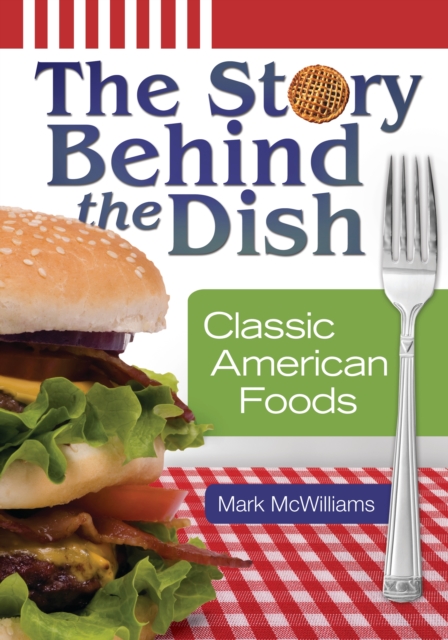
The Story Behind the Dish
Profiling 48 classic American foods ranging from junk and fast food to main dishes to desserts, this book reveals what made these dishes iconic in American pop culture. Americans have increasingly embraced food culture, a fact proven by the rising popularity of celebrity chefs and the prominence of television shows celebrating food themes. This fascinating overview reveals the surprising story behind the foods America loves. The Story Behind the Dish: Classic American Foods is an engaging pop culture resource which helps tell the story of American food. Each chapter is devoted to one of 48 distinctive American dishes and features the story of where the food developed, what inspired its creation, and how it has evolved. The book not only covers each food as a single entry, but also analyzes the themes and events that connect them, making the text useful as both a reference and a narrative on the history of food.
eBook

The Future of Post-Human Culinary Art
Is culinary art really so exact that, as Delia Smith once wrote, \"cooking is an exact art and not some casual game\"? (BQ 2012) This exact view of cooking can be contrasted with an opposing observation by Tom Jaine, when he argued that, \"if cooking becomes.
eBook

Building a meal
An internationally renowned chemist, popular television personality, and bestselling author, Hervé This heads the first laboratory devoted to molecular gastronomy-the scientific exploration of cooking and eating. By testing recipes that have guided cooks for centuries, and the various dictums and maxims on which they depend, Hervé This unites the head with the hand in order to defend and transform culinary practice.
With this new book, Hervé This's scientific project enters an exciting new phase. Considering the preparation of six bistro favorites-hard-boiled egg with mayonnaise, simple consommé, leg of lamb with green beans, steak with French fries, lemon meringue pie, and chocolate mousse-he isolates the exact chemical properties that tickle our senses and stimulate our appetites. More important, he connects the mind and the stomach, identifying methods of culinary construction that appeal to our memories, intelligence, and creativity. By showing that the creation of a meal is as satisfying as its consumption, Herve This recalibrates the balance between food and our imaginations. The result is a revolutionary perspective that will tempt even the most casual cooks to greater flights of experimentation.
eBook

Effects of Household Cooking on Mineral Composition and Retention in Widespread Italian Vegetables
Background/Objectives: The process of cooking food can result in alterations to its nutrient composition due to changes in water content and the destruction or loss of certain micronutrients that occur in response to heat. This study examined the impact of diverse cooking techniques, namely grilling, microwave, and steam, on the macronutrients and minerals of vegetables commonly utilized in Italian cuisine (two varieties of zucchini, eggplants, and potatoes). Methods: The proximate composition was determined according to the Association of Official Analytical Chemists (AOAC) methods. The content of the minerals (Ca, K, P, Mg, Na, Fe, Zn, and Mn) was determined via ICP plasma after liquid washing. Results: Regarding macronutrients, the results revealed a notable difference in the carbohydrate profiles, whereas mineral retention demonstrated considerable heterogeneity. Some minerals, such as Na, Ca, Mn, and Fe, were found to be more prone to significant increases or losses. Moreover, the true retention factor (TR) calculations indicated that microwave cooking resulted in higher retention compared to the other methods for zucchini, while grilling demonstrated higher TR than microwave cooking for eggplants. Potatoes exhibited lower TR values than the other vegetables and their steaming resulted in higher retention than microwave cooking for K, P, Fe, and Zn. Conclusions: The results confirm the heterogeneous behaviors of minerals in commonly consumed Italian vegetables subjected to different cooking methods. The data underscore the need for additional research to understand the effects of heat treatments on mineral profiles and to determine specific retention factors linked to various cooking techniques. The significant gap between “true” and “apparent” retention factors, caused by changes in water content during cooking, highlight the need for new experimental data to update and enrich the existing literature on this topic.
Journal Article

Effect of durum wheat semolina substitution with broad bean flour (Vicia faba) on the Maccheronccini pasta quality
This study investigated the effect of Maccheronccini fortification with different levels (10, 30 and 50 %) of broad bean flour (Vicia faba) on its nutritional and technological quality. Incorporation of the legume flour significantly increased protein, dietary fibre and mineral contents of produced pasta (P < 0.05). The mineral and protein dietary reference intake (DRI) contributions were higher in enriched pasta considering an intake of 200 g day⁻¹ person⁻¹ (cooked pasta). Cooking losses were relatively low regardless of the substitution level. Colour parameters of produced pasta indicated comparable brightness and higher redness values for enriched pasta. Higher levels of phytates were also found which could compromise iron bioavailability as was predicted through phytate/mineral molar ratios which remained higher than the inhibitory threshold values for calcium and iron intestinal absorption. Enriched pasta showed significantly lower glycaemic index and slightly greater per cent protein digestibility as regard to the control. Produced Maccheronccini pasta had good technological properties with regard to colour and cooking behaviour. Moreover, contribution to DRIs and nutritional value were enhanced upon broad bean flour addition.
Journal Article

One-Off Subsidies and Long-Run Adoption—Experimental Evidence on Improved Cooking Stoves in Senegal
Free technology distribution can be an effective development policy instrument if market-driven adoption is socially inefficient and hampered by affordability constraints. Yet, policy makers often oppose free distribution, arguing that reference dependence lowers the willingness to pay (WTP) and thus hinders market potentials in the long run. For improved cookstoves, this paper studies the WTP six years after a randomized one-time free distribution in 2009. We demonstrate that the cookstoves were intensely used by the treatment group households in the years after randomization until they reached their designated lifetime. Using a real-purchase offer, we find that both treatment and control households reveal a remarkably high WTP in 2015. The estimated confidence interval suggests that we can exclude a substantial negative effect on the treatment group. The policy implication is that one-time free distribution does not necessarily undermine future market establishment, and thus can be an effective policy instrument if rapid dissemination is the objective.
Journal Article

Emission factors and light absorption properties of brown carbon from household coal combustion in China
Brown carbon (BrC) draws increasing attention due to its effects on climate and other environmental factors. In China, household coal burned for heating and cooking purposes releases huge amounts of carbonaceous particles every year; however, BrC emissions have rarely been estimated in a persuasive manner due to the unavailable emission characteristics. Here, seven coals jointly covering geological maturity from low to high were burned in four typical stoves as both chunk and briquette styles. The optical integrating sphere (IS) method was applied to measure the emission factors (EFs) of BrC and black carbon (BC) via an iterative process using the different spectral dependence of light absorption for BrC and BC and using humic acid sodium salt (HASS) and carbon black (CarB) as reference materials. The following results have been found: (i) the average EFs of BrC for anthracite coal chunks and briquettes are 1.08 ± 0.80 and 1.52 ± 0.16 g kg−1, respectively, and those for bituminous coal chunks and briquettes are 8.59 ± 2.70 and 4.01 ± 2.19 g kg−1, respectively, reflecting a more significant decline in BrC EFs for bituminous coals than for anthracites due to briquetting. (ii) The BrC EF peaks at the middle of coal's geological maturity, displaying a bell-shaped curve between EF and volatile matter (Vdaf). (iii) The calculated BrC emissions from China's residential coal burning amounted to 592 Gg (1 Gg = 109 g) in 2013, which is nearly half of China's total BC emissions. (iv) The absorption Ångström exponents (AAEs) of all coal briquettes are higher than those of coal chunks, indicating that the measure of coal briquetting increases the BrC ∕ BC emission ratio and thus offsets some of the climate cooling effect of briquetting. (v) In the scenario of current household coal burning in China, solar light absorption by BrC (350–850 nm in this study) accounts for more than a quarter (0.265) of the total absorption. This implies the significance of BrC to climate modeling.
Journal Article

Invention of the Modern Cookbook
This eye-opening history will change the way you read a cookbook or regard a TV chef, making cooking ventures vastly more interesting—and a lot more fun. Every kitchen has at least one well-worn cookbook, but just how did they come to be? Invention of the Modern Cookbook is the first study to examine that question, discussing the roots of these collections in 17th-century England and illuminating the cookbook's role as it has evolved over time. Readers will discover that cookbooks were the product of careful invention by highly skilled chefs and profit-minded publishers who designed them for maximum audience appeal, responding to a changing readership and cultural conditions and utilizing innovative marketing and promotion techniques still practiced today. They will see how cookbooks helped women adjust to the changes of the Enlightenment and Industrial Revolution by educating them on a range of subjects from etiquette to dealing with household servants. And they will learn how the books themselves became \"modern, \" taking on the characteristics we now take for granted.
eBook