
Catalogue Search | MBRL


Are you sure you want to remove the book from the shelf?

{{itemTitle}}
16
result(s) for
"COOKING / Specific Ingredients."
Sort by:

Milk
How did an animal product that spoils easily, carries disease, and causes digestive trouble for many of its consumers become a near-universal symbol of modern nutrition? In the first cultural history of milk, historian Deborah Valenze traces the rituals and beliefs that have governed milk production and consumption since its use in the earliest societies.
Covering the long span of human history,Milkreveals how developments in technology, public health, and nutritional science made this once-rare elixir a modern-day staple. The book looks at the religious meanings of milk, along with its association with pastoral life, which made it an object of mystery and suspicion during medieval times and the Renaissance. As early modern societies refined agricultural techniques, cow's milk became crucial to improving diets and economies, launching milk production and consumption into a more modern phase. Yet as business and science transformed the product in the nineteenth and twentieth centuries, commercial milk became not only a common and widely available commodity but also a source of uncertainty when used in place of human breast milk for infant feeding. Valenze also examines the dairy culture of the developing world, looking at the example of India, currently the world's largest milk producer.
Ultimately, milk's surprising history teaches us how to think about our relationship to food in the present, as well as in the past. It reveals that although milk is a product of nature, it has always been an artifact of culture.
eBook

Tropical Fruits and Other Edible Plants of the World
Tropical fruits such as banana, mango, papaya, and pineapple are familiar and treasured staples of our diets, and consequently of great commercial importance, but there are many other interesting species that are little known to inhabitants of temperate regions. What delicacies are best known only by locals? The tropical regions are home to a vast variety of edible fruits, tubers, and spices. Of the more than two thousand species that are commonly used as food in the tropics, only about forty to fifty species are well known internationally. Illustrated with high-quality photographs taken on location in the plants' natural environment, this field guide describes more than three hundred species of tropical and subtropical species of fruits, tubers, and spices.
In Tropical Fruits and Other Edible Plants of the World, Rolf Blancke includes all the common species and features many lesser known species, including mangosteen and maca, as well as many rare species such as engkala, sundrop, and the mango plum. Some of these rare species will always remain of little importance because they need an acquired taste to enjoy them, they have too little pulp and too many seeds, or they are difficult to package and ship. Blancke highlights some fruits-the araza (Eugenia stipitata) and the nutritious peach palm (Bactris gasipaes) from the Amazon lowlands, the Brunei olive (Canarium odontophyllum) from Indonesia, and the remarkably tasty soursop (Annona muricata) from Central America-that deserve much more attention and have the potential to become commercially important in the near future.
Tropical Fruits and Other Edible Plants of the World also features tropical plants used to produce spices, and many tropical tubers, including cassava, yam, and oca. These tubers play a vital role in human nutrition and are often foundational to the foodways of their local cultures, but they sometimes require complex preparation and are often overlooked or poorly understood distant from their home context.
Tropical fruits such as banana, mango, papaya, and pineapple are familiar and treasured staples of our diets, and consequently of great commercial importance, but there are many other interesting species that are little known to inhabitants of temperate regions. What delicacies are best known only by locals? The tropical regions are home to a vast variety of edible fruits, tubers, and spices. Of the more than two thousand species that are commonly used as food in the tropics, only about forty to fifty species are well known internationally. Illustrated with high-quality photographs taken on location in the plants' natural environment, this field guide describes more than three hundred species of tropical and subtropical species of fruits, tubers, and spices.InTropical Fruits and Other Edible Plants of the World, Rolf Blancke includes all the common species and features many lesser known species, including mangosteen and maca, as well as many rare species such as engkala, sundrop, and the mango plum. Some of these rare species will always remain of little importance because they need an acquired taste to enjoy them, they have too little pulp and too many seeds, or they are difficult to package and ship. Blancke highlights some fruits-the araza (Eugenia stipitata) and the nutritious peach palm (Bactris gasipaes) from the Amazon lowlands, the Brunei olive (Canarium odontophyllum) from Indonesia, and the remarkably tasty soursop (Annona muricata) from Central America-that deserve much more attention and have the potential to become commercially important in the near future.Tropical Fruits and Other Edible Plants of the World also features tropical plants used to produce spices, and many tropical tubers, including cassava, yam, and oca. These tubers play a vital role in human nutrition and are often foundational to the foodways of their local cultures, but they sometimes require complex preparation and are often overlooked or poorly understood distant from their home context.
eBook

Japan's Dietary Transition and Its Impacts
In a little more than a century, the Japanese diet has undergone a dramatic transformation. In 1900, a plant-based, near-subsistence diet was prevalent, with virtually no consumption of animal protein. By the beginning of the twenty-first century, Japan's consumption of meat, fish, and dairy had increased markedly (although it remained below that of high-income Western countries). This dietary transition was a key aspect of the modernization that made Japan the world's second largest economic power by the end of the twentieth century, and it has helped Japan achieve an enviable demographic primacy, with the world's highest life expectancy and a population that is generally healthier (and thinner) than that of other modern affluent countries. In this book, Vaclav Smil and Kazuhiko Kobayashi examine Japan's gradual but profound dietary change and investigate its consequences for health, longevity, and the environment. Smil and Kobayashi point out that the gains in the quality of Japan's diet have exacted a price in terms of land use changes, water requirements, and marine resource depletion; and because Japan imports so much of its food, this price is paid globally as well as domestically. The book's systematic analysis of these diverse consequences offers the most detailed account of Japan's dietary transition available in English.
eBook
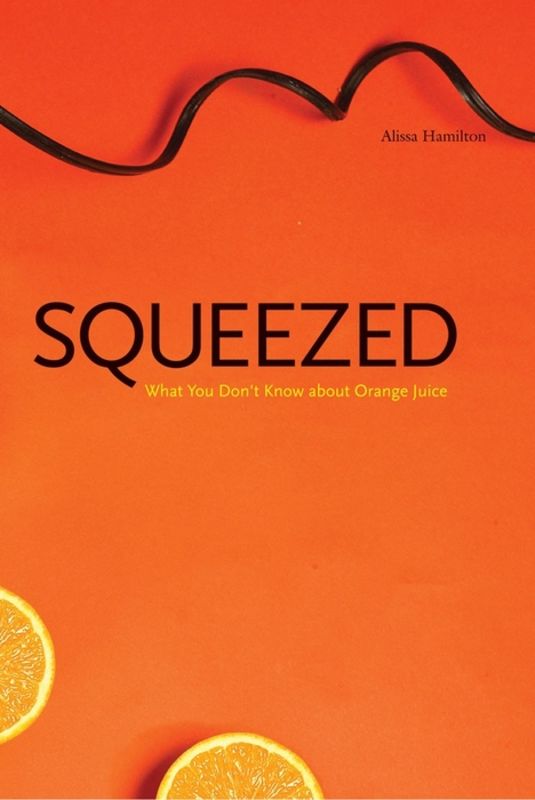
Squeezed
Close to three quarters of U.S. households buy orange juice. Its popularity crosses class, cultural, racial, and regional divides. Why do so many of us drink orange juice? How did it turn from a luxury into a staple in just a few years? More important, how is it that we don't know the real reasons behind OJ's popularity or understand the processes by which the juice is produced?
In this enlightening book, Alissa Hamilton explores the hidden history of orange juice. She looks at the early forces that propelled orange juice to prominence, including a surplus of oranges that plagued Florida during most of the twentieth century and the army's need to provide vitamin C to troops overseas during World War II. She tells the stories of the FDA's decision in the early 1960s to standardize orange juice, and the juice equivalent of the cola wars that followed between Coca-Cola (which owns Minute Maid) and Pepsi (which owns Tropicana). Of particular interest to OJ drinkers will be the revelation that most orange juice comes from Brazil, not Florida, and that even \"not from concentrate\" orange juice is heated, stripped of flavor, stored for up to a year, and then reflavored before it is packaged and sold. The book concludes with a thought-provoking discussion of why consumers have the right to know how their food is produced.
eBook

Physicochemical and Sensorial Evaluation of Meat Analogues Produced from Dry-Fractionated Pea and Oat Proteins
Pea protein dry-fractionated (PDF), pea protein isolated (PIs), soy protein isolated (SIs) and oat protein (OP) were combined in four mixes (PDF_OP, PIs_OP, PDF_PIs_OP, SIs_OP) and extruded to produce meat analogues. The ingredients strongly influenced the process conditions and the use of PDF required higher specific mechanical energy and screw speed to create fibrous texture compared to PIs and SIs. PDF can be conveniently used to produce meat analogues with a protein content of 55 g 100 g−1, which is exploitable in meat-alternatives formulation. PDF-based meat analogues showed lower hardness (13.55–18.33 N) than those produced from PIs and SIs (nearly 27 N), probably due to a more porous structure given by the natural presence of carbohydrates in the dry-fractionated ingredient. PDF_OP and PIs_PDF_OP showed a significantly lower water absorption capacity than PIs OP and SIs_OP, whereas pea-based extrudates showed high oil absorption capacity, which could be convenient to facilitate the inclusion of oil and fat in the final formulation. The sensory evaluation highlighted an intense odor and taste profile of PDF_OP, whereas the extrudates produced by protein isolates had more neutral sensory characteristics. Overall, the use of dry-fractionated protein supports the strategies to efficiently produce clean-labeled and sustainable plant-based meat analogues.
Journal Article
Modification of Physicochemical Properties of Breadfruit Flour Using Different Twin-Screw Extrusion Conditions and Its Application in Soy Protein Gels
The objective was to modify functional properties of breadfruit flours using twin-screw extrusion and test the physicochemical properties of the extruded flours. Extruded breadfruit flours were produced with twin-screw extrusion using different last barrel temperature (80 °C or 120 °C) and feed moisture content (17% or 30%). These conditions resulted in four extruded flours with different mechanical (specific mechanical energy, SME) and thermal (melt temperature) energies. At temperatures below the gelatinization of the native starch (<70 °C), swelling power was increased in all extruded treatments. Solubility was dramatically increased in high-SME extruded flours at all tested temperatures. Water holding capacity was dramatically increased in the low-SME extruded flours. A two-fold higher cold peak viscosity was obtained for low SME-high temperature extruded flour compared with the other extruded flours. Low SME-low temperature extruded flour still exhibited a hot peak viscosity, which occurred earlier than in native flour. Setback was decreased in all extruded flours, especially in high-SME treatments. The incorporation of extruded flours into soy protein gels did not affect cooking loss, while hardness and springiness decreased with the addition of extruded flours. Overall, extrusion of breadfruit flour altered functional flour properties, including water holding capacity and pasting properties, and modified the texture of soy protein gels.
Journal Article

Isaria cicadae Miquel Improves the Growth Performance, Physiological Response and Meat Quality of Giant Freshwater Prawn, Macrobrachium rosenbergii
ABSTRACT A 9-week feeding trial was conducted to investigate the effects of Isaria cicadae Miquel (I. cicadae) on growth performance and meat quality of giant freshwater prawn (Macrobrachium rosenbergii). The prawns were fed with five isonitrogenous (40.54% crude protein) and isolipid (6.16% crude lipid) diets with different I. cicadae levels (0, 100, 200, 400, and 800 mg Kg-1). Results revealed that I. cicadae significantly increased specific growth ratio (SGR) and protein efficiency ratio (PER), while decreased feed intake (fi) and feed conversion ratio (FCR). Meanwhile, I. cicadae significantly increased plasma ALT activity, urea nitrogen, total protein, albumin and globulin contents, while significantly decreased AST activity in 400 mg Kg-1 group. haemolymph SOD and GSh-PX activity was enhanced significantly in 400 and 800 mg Kg-1 group, respectively, while MDA content was significantly decrease in these two groups. I. cicadae did not affect the muscle cooking loss, but significantly increased the compression loss. Moreover, I. cicadae significantly increased the muscle texture profile including gumminess, hardness and chewiness, and decreased the muscle sensory evaluations including whiteness and succulency. Therefore, 100 mg Kg-1 I. cicadae could improve growth performance and meat quality of giant freshwater prawn, reduce the damage of oxidative stress.
Journal Article

Improving dietary red seaweed Kappaphycus alvarezii (Doty) Doty ex. P. Silva meal utilization in Asian seabass Lates calcarifer
The seaweed,
Kappaphycus alvarezii
(Doty) Doty ex. P. Silva, has a high potential to be one of the key ingredients in animal feeds based on its nutritional content and commercial availability. In a previous study, 6 % of raw seaweed meal was successfully included in the diets formulated for Asian seabass (
Lates calcarifer
). In the present study, diets were formulated to include cooked seaweed meal at elevated levels from 6 to 22 % to investigate the effect of cooking in improving the dietary seaweed utilization. Diets with 0 % (SW0) or 6 % raw seaweed (SW6R) served as the control (CTRL) treatments. Seven experimental diets were fed to juvenile Asian seabass for 10 weeks at apparent satiation level. Diet stability and digestibility were also determined. Cooked seaweed meal performed better in term of water stability than the uncooked seaweed and water stability improved with increasing level of seaweed in the diets. Fish fed 6 % cooked seaweed (SW6) showed significantly (
P
< 0.05) higher weight gain and specific growth rate than other treatments and yielded the best feed conversion ratio. Except fish fed 22 % seaweed (SW22), survival (%) of experimental fish was not affected by the dietary seaweed inclusion. Dry matter apparent digestibility coefficient (ADC) ranged from 59.03 to 73.65 %. Protein ADC of the diets decreased as seaweed inclusion level increased and ranged from 68.86 to 92.05 %. Lipid ADC was not significantly different (
P
> 0.05) among dietary treatments. In conclusion, cooked seaweed meal at 6 % dietary inclusion level is recommended for Asian seabass.
Journal Article
Reinvigorating Modern Breadmaking Based on Ancient Practices and Plant Ingredients, with Implementation of a Physicochemical Approach
In this study, the potential use of ancient plant ingredients in emerging bakery products based on possible prehistoric and/or ancient practices of grinding and breadmaking was explored. Various ancient grains, nuts and seeds (einkorn wheat, barley, acorn, lentil, poppy seeds, linseed) were ground using prehistoric grinding tool replicas. Barley-based sourdough prepared by multiple back-slopping steps was added to dough made from einkorn alone or mixed with the above ingredients (20% level) or commercial flours alone (common wheat, spelt, barley). Sieving analysis showed that 40% of the einkorn flour particles were >400 μm, whereas commercial barley and common wheat flours were finer. Differential scanning calorimetry revealed that lentil flour exhibited higher melting peak temperature and lower apparent enthalpy of starch gelatinization. Among all bread formulations tested, barley dough exhibited the highest elastic modulus and complex viscosity, as determined by dynamic rheometry; einkorn breads fortified with linseed and barley had the softest and hardest crust, respectively, as indicated by texture analysis; and common wheat gave the highest loaf-specific volume. Barley sourdough inclusion into einkorn dough did not affect the extent of starch retrogradation in the baked product. Generally, incorporation of ancient plant ingredients into contemporary bread formulations seems to be feasible.
Journal Article
