
Catalogue Search | MBRL


Are you sure you want to remove the book from the shelf?

{{itemTitle}}
3,640
result(s) for
"COOKING General."
Sort by:

How to cook everything : simple recipes for great food
Updated to incorporate the latest tastes and cooking trends, a step-by-step guide to cooking includes more than two thousand contemporary recipes complemented by how-to information, tips on cooking techniques, and an expanded coverage of healthy foods.
Book

Falafel Nation
When people discuss food in Israel, their debates ask politically charged questions: Who has the right to falafel? Whose hummus is better? But Yael Raviv'sFalafel Nationmoves beyond the simply territorial to divulge the role food plays in the Jewish nation. She ponders the power struggles, moral dilemmas, and religious and ideological affiliations of the different ethnic groups that make up the \"Jewish State\" and how they relate to the gastronomy of the region. How do we interpret the recent upsurge in the Israeli culinary scene-the transition from ideological asceticism to the current deluge of fine restaurants, gourmet stores, and related publications and media?
Focusing on the period between the 1905 immigration wave and the Six-Day War in 1967, Raviv explores foodways from the field, factory, market, and kitchen to the table. She incorporates the role of women, ethnic groups, and different generations into the story of Zionism and offers new assertions from a secular-foodie perspective on the relationship between Jewish religion and Jewish nationalism. A study of the changes in food practices and in attitudes toward food and cooking,Falafel Nationexplains how the change in the relationship between Israelis and their food mirrors the search for a definition of modern Jewish nationalism.
eBook

Midnight chicken : (& other recipes worth living for)
\"There are lots of ways to start a story, but this one begins with a chicken. There was a time when, for Ella Risbridger, the world had become overwhelming. Sounds were too loud, colours were too bright, everyone moved too fast. One night she found herself lying on her kitchen floor, wondering if she would ever get up - and it was the thought of a chicken, of roasting it, and of eating it, that got her to her feet and made her want to be alive. Midnight Chicken is a cookbook. Or, at least, you'll flick through these pages and find recipes so inviting that you will head straight for the kitchen: roast garlic and tomato soup, uplifting chilli-lemon spaghetti, charred leek lasagne, squash skillet pie, spicy fish finger sandwiches and burnt-butter brownies. It's the kind of cooking you can do a little bit drunk, that is probably better if you've got a bottle of wine open and a hunk of bread to mop up the sauce. But if you settle down and read it with a cup of tea (or a glass of that wine), you'll also discover that it's an annotated list of things worth living for--a manifesto of moments worth living for. This is a cookbook to make you fall in love with the world again\"--Publisher's website.
Book

A History of Cookbooks
A History of Cookbooks provides a sweeping literary and historical overview of the cookbook genre, exploring its development as a part of food culture beginning in the Late Middle Ages. Studying cookbooks from various Western cultures and languages, Henry Notaker traces the transformation of recipes from brief notes with ingredients into detailed recipes with a specific structure, grammar, and vocabulary. In addition, he reveals that cookbooks go far beyond offering recipes: they tell us a great deal about nutrition, morals, manners, history, and menus while often providing entertaining reflections and commentaries. This innovative book demonstrates that cookbooks represent an interesting and important branch of nonfiction literature.
eBook


Cuisine and empire
Rachel Laudan tells the remarkable story of the rise and fall of the world’s great cuisines—from the mastery of grain cooking some twenty thousand years ago, to the present—in this superbly researched book. Probing beneath the apparent confusion of dozens of cuisines to reveal the underlying simplicity of the culinary family tree, she shows how periodic seismic shifts in “culinary philosophy”—beliefs about health, the economy, politics, society and the gods—prompted the construction of new cuisines, a handful of which, chosen as the cuisines of empires, came to dominate the globe. Cuisine and Empire shows how merchants, missionaries, and the military took cuisines over mountains, oceans, deserts, and across political frontiers. Laudan’s innovative narrative treats cuisine, like language, clothing, or architecture, as something constructed by humans. By emphasizing how cooking turns farm products into food and by taking the globe rather than the nation as the stage, she challenges the agrarian, romantic, and nationalistic myths that underlie the contemporary food movement.
eBook

Carpathia : food from the heart of Romania
\"The first book to celebrate the culturally diverse and delicious cuisine of Romania A true fusion of East and West, where traditional recipes are given a truly modern twist Romania is a true cultural melting pot, its character rooted in many traditions from Greek, Turkish, and Slavic in the south and east, to Austrian, Hungarian, and Saxon in the north and west. Carpathia, the first book from food writer Irina Georgescu, aims to introduce readers to Romania's unique, bold and delicious cuisine. Bringing the country to life with stunning photography and recipes, it will take the reader on a culinary journey to the very heart of the Balkans, exploring Romania's history, traditions, and food, one mouth-watering recipe at a time. From chargrilled eggplants, polenta fritters, and butter bean hummus, to tangy borًs, stuffed breads, and Viennese-style layer cakes, this book is a true celebration of a country that's never afraid to mix things up!\"-- Provided by publisher.
Book

The Expert Cook in Enlightenment France
In the eighteenth-century French household, the servant cook held a special place of importance, providing daily meals and managing the kitchen and its finances. In this scrupulously researched and witty history, Sean Takats examines the lives of these cooks as they sought to improve their position in society and reinvent themselves as expert, skilled professionals. Much has been written about the cuisine of the period, but Takats takes readers down into the kitchen and introduces them to the men and women behind the food. It is only in that way, Takats argues, that we can fully recover the scientific and cultural significance of the meals they created, and, more important, the contributions of ordinary workers to eighteenth-century intellectual life. He shows how cooks, along with decorators, architects, and fashion merchants, drove France's consumer revolution, and how cooks' knowledge about a healthy diet and the medicinal properties of food advanced their professional status by capitalizing on the Enlightenment's new concern for bodily and material happiness. The Expert Cook in Enlightenment France explores a unique intersection of cultural history, labor history, and the history of science and medicine. Relying on an unprecedented range of sources, from printed cookbooks and medical texts to building plans and commercial advertisements, Takats reconstructs the evolving role of the cook in Enlightenment France. Academics and students alike will enjoy this fascinating study of the invention of the professional chef, of how ordinary workers influenced emerging trends of scientific knowledge, culture-creation, and taste in eighteenth-century France.
eBook

Pistachio : savory & sweet recipes inspired by world cuisines
\"Pistachio: Savory & Sweet Recipes Inspired by World Cuisines celebrates the striking flavor of this jewellike, delectable nut. With over 60 recipes, authors Barbara Bryant and Georgeanne Brennan draw inspiration from the culinary traditions of Turkey, Iran, Afghanistan, North Africa, Italy, Greece, Spain, France, and the Middle East, giving the dishes a contemporary spin. In addition to exploring their culinary history and nutritional value, the authors also provide tips on how to toast and store the nut, as well as how to make your own staples, such as pistachio flour, butter, milk, and paste\" -- Amazon.
BOOK
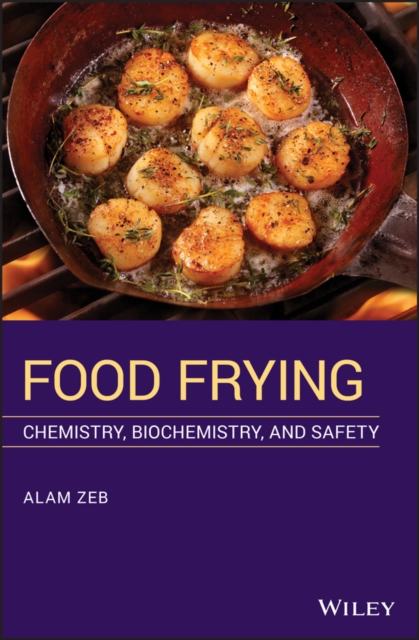
Food Frying
A wide-ranging exploration of the science and practice of food frying Frying is one of the world's most popular methods of food preparation. Whether using oils or fats, it is valued for the particular flavors and textures it can bring, and represents a multibillion-dollar sector of the global economy. Food Frying: Chemistry, Biochemistry and Safety explores this important cooking technique in its scientific dimensions, charting the relationships between the chemical reactions produced during frying, the changes in food quality that these engender, and associated digestive and health-related issues. By outlining these connections, the author provides an aid to a safer, healthier approach to food frying. Topics covered range from culturally specific forms of frying to detailed analyses of the chemical and biochemical processes involved in its practice. Delivering these insights in a practical and easy-to-follow manner, this unique text includes: * A complete survey of food frying, encompassing cultural, chemical, biochemical, and toxicological concerns * Guidance on the accurate assessment of health, quality, and safety issues associated with food frying Coverage of the latest technologies and methods involved with frying * Information on the possible future development of fried foods Food Frying: Chemistry, Biochemistry and Safety is an invaluable resource for all those who work with fried foods, whether they be food industry professionals, food scientists, or workers in the oil and fat industries.
eBook