
Catalogue Search | MBRL


Are you sure you want to remove the book from the shelf?

{{itemTitle}}
1,851
result(s) for
"COPERNICUS"
Sort by:

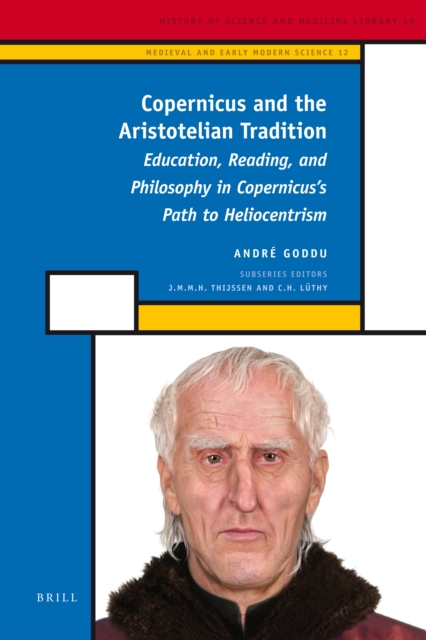
Copernicus and the Aristotelian Tradition
Drawing on a half century of scholarship, of Polish studies of Copernicus and Cracow University, and of Copernicus's sources, this book offers a comprehensive re-evaluation of Copernicus's achievement, and explains his commitment to the uniform, circular motions of celestial bodies, and his views about hypotheses.
eBook


Setting Aside All Authority
Setting Aside All Authority is an important account and analysis of seventeenth-century scientific arguments against the Copernican system. Christopher M. Graney challenges the long-standing ideas that opponents of the heliocentric ideas of Copernicus and Galileo were primarily motivated by religion or devotion to an outdated intellectual tradition, and that they were in continual retreat in the face of telescopic discoveries.
Graney calls on newly translated works by anti-Copernican writers of the time to demonstrate that science, not religion, played an important, and arguably predominant, role in the opposition to the Copernican system. Anti-Copernicans, building on the work of the Danish astronomer Tycho Brahe, were in fact able to build an increasingly strong scientific case against the heliocentric system at least through the middle of the seventeenth century, several decades after the advent of the telescope. The scientific case reached its apogee, Graney argues, in the 1651 New Almagest of the Italian Jesuit astronomer Giovanni Battista Riccioli, who used detailed telescopic observations of stars to construct a powerful scientific argument against Copernicus. Setting Aside All Authority includes the first English translation of Monsignor Francesco Ingoli's essay to Galileo (disputing the Copernican system on the eve of the Inquisition's condemnation of it in 1616) and excerpts from Riccioli's reports regarding his experiments with falling bodies.
eBook


The Copernican question
In 1543, Nicolaus Copernicus publicly defended his hypothesis that the earth is a planet and the sun a body resting near the center of a finite universe. But why did Copernicus make this bold proposal? And why did it matter? The Copernican Question reframes this pivotal moment in the history of science, centering the story on a conflict over the credibility of astrology that erupted in Italy just as Copernicus arrived in 1496. Copernicus engendered enormous resistance when he sought to protect astrology by reconstituting its astronomical foundations. Robert S. Westman shows that efforts to answer the astrological skeptics became a crucial unifying theme of the early modern scientific movement. His interpretation of this \"long sixteenth century,\" from the 1490s to the 1610s, offers a new framework for understanding the great transformations in natural philosophy in the century that followed.
eBook

Copernicus : genius of modern astronomy
\"A biography of fifteenth-century Polish astronomer Nicolaus Copernicus who theorized that the sun, not the earth, was the center of the universe and that all the planets, including the earth, revolved around the sun. Includes related activities for readers\"-- Provided by publisher.
BOOK

Copernicus Global Land Cover Layers—Collection 2
In May 2019, Collection 2 of the Copernicus Global Land Cover layers was released. Next to a global discrete land cover map at 100 m resolution, a set of cover fraction layers is provided depicting the percentual cover of the main land cover types in a pixel. This additional continuous classification scheme represents areas of heterogeneous land cover better than the standard discrete classification scheme. Overall, 20 layers are provided which allow customization of land cover maps to specific user needs or applications (e.g., forest monitoring, crop monitoring, biodiversity and conservation, climate modeling, etc.). However, Collection 2 was not just a global up-scaling, but also includes major improvements in the map quality, reaching around 80% or more overall accuracy. The processing system went into operational status allowing annual updates on a global scale with an additional implemented training and validation data collection system. In this paper, we provide an overview of the major changes in the production of the land cover maps, that have led to this increased accuracy, including aligning with the Sentinel 2 satellite system in the grid and coordinate system, improving the metric extraction, adding better auxiliary data, improving the biome delineations, as well as enhancing the expert rules. An independent validation exercise confirmed the improved classification results. In addition to the methodological improvements, this paper also provides an overview of where the different resources can be found, including access channels to the product layer as well as the detailed peer-review product documentation.
Journal Article
In Situ/Remote Sensing Integration to Assess Forest Health—A Review
For mapping, quantifying and monitoring regional and global forest health, satellite remote sensing provides fundamental data for the observation of spatial and temporal forest patterns and processes. While new remote-sensing technologies are able to detect forest data in high quality and large quantity, operational applications are still limited by deficits of in situ verification. In situ sampling data as input is required in order to add value to physical imaging remote sensing observations and possibilities to interlink the forest health assessment with biotic and abiotic factors. Numerous methods on how to link remote sensing and in situ data have been presented in the scientific literature using e.g. empirical and physical-based models. In situ data differs in type, quality and quantity between case studies. The irregular subsets of in situ data availability limit the exploitation of available satellite remote sensing data. To achieve a broad implementation of satellite remote sensing data in forest monitoring and management, a standardization of in situ data, workflows and products is essential and necessary for user acceptance. The key focus of the review is a discussion of concept and is designed to bridge gaps of understanding between forestry and remote sensing science community. Methodological approaches for in situ/remote-sensing implementation are organized and evaluated with respect to qualifying for forest monitoring. Research gaps and recommendations for standardization of remote-sensing based products are discussed. Concluding the importance of outstanding organizational work to provide a legally accepted framework for new information products in forestry are highlighted.
Journal Article