
Catalogue Search | MBRL


Are you sure you want to remove the book from the shelf?

{{itemTitle}}
411
result(s) for
"COVID-19 (Disease) Political aspects United States."
Sort by:

Unprepared : America in the time of coronavirus
A chronicle of the COVID-19 pandemic as it unfolded gathers statements from President Trump and other elected officials, leading journalists, and scientists to offer a portrait of the confusion, drama, and fear that defined the outbreak.
Book

COVID-19 and vaccine hesitancy: A longitudinal study
How do attitudes toward vaccination change over the course of a public health crisis? We report results from a longitudinal survey of United States residents during six months (March 16 –August 16, 2020) of the COVID-19 pandemic. Contrary to past research suggesting that the increased salience of a disease threat should improve attitudes toward vaccines, we observed a decrease in intentions of getting a COVID-19 vaccine when one becomes available. We further found a decline in general vaccine attitudes and intentions of getting the influenza vaccine. Analyses of heterogeneity indicated that this decline is driven by participants who identify as Republicans, who showed a negative trend in vaccine attitudes and intentions, whereas Democrats remained largely stable. Consistent with research on risk perception and behavior, those with less favorable attitudes toward a COVID-19 vaccination also perceived the virus to be less threatening. We provide suggestive evidence that differential exposure to media channels and social networks could explain the observed asymmetric polarization between self-identified Democrats and Republicans.
Journal Article

Getting America back to work
\"Over the last two months, the COVID-19 pandemic has thrown a robust American economy into disarray, completely shutting down major business sectors and putting millions of people out of work overnight. With so much at stake and with all options seemingly on the table, it is crucial that we commit ourselves to the long-term goal of restoring the sorts of free-market policies that led to the Trump Economic Boom prior to the China Virus crisis. Although massive government interventions that Barack Obama pursued following the Great Recession might presently appear beneficial or even essential, a return to Obama's \"new normal\" of stagnant growth would lead to disastrous and persisting economic damage. We must instead return, as soon as is safely possible, to the Trump model of economic prosperity that produced the strongest labor market in modern history\"-- Provided by publisher.
Book
Partisanship, health behavior, and policy attitudes in the early stages of the COVID-19 pandemic
To study the U.S. public's health behaviors, attitudes, and policy opinions about COVID-19 in the earliest weeks of the national health crisis (March 20-23, 2020).
We designed and fielded an original representative survey of 3,000 American adults between March 20-23, 2020 to collect data on a battery of 38 health-related behaviors, government policy preferences on COVID-19 response and worries about the pandemic. We test for partisan differences COVID-19 related policy attitudes and behaviors, measured in three different ways: party affiliation, intended 2020 Presidential vote, and self-placed ideological positioning. Our multivariate approach adjusts for a wide range of individual demographic and geographic characteristics that might confound the relationship between partisanship and health behaviors, attitudes, and preferences.
We find that partisanship-measured as party identification, support for President Trump, or left-right ideological positioning-explains differences in Americans across a wide range of health behaviors and policy preferences. We find no consistent evidence that controlling for individual news consumption, the local policy environment, and local pandemic-related deaths erases the observed partisan differences in health behaviors, beliefs, and attitudes. In further analyses, we use a LASSO regression approach to select predictors, and find that a partisanship indicator is the most commonly selected predictor across the 38 dependent variables that we study.
Our analysis of individual self-reported behavior, attitudes, and policy preferences in response to COVID-19 reveals that partisanship played a central role in shaping individual responses in the earliest months of the COVID-19 pandemic. These results indicate that partisan differences in responding to a national public health emergency were entrenched from the earliest days of the pandemic.
Journal Article

Hoax : Donald Trump, Fox News, and the dangerous distortion of truth
The CNN correspondent examines Donald Trump's controversial relationship with the Fox News network and discusses the tensions at the network between Trump loyalists and the few remaining journalists.
Book
To vax or not to vax: Predictors of anti-vax attitudes and COVID-19 vaccine hesitancy prior to widespread vaccine availability
The novel coronavirus (COVID-19) is a highly contagious disease responsible for millions of deaths worldwide. Effective vaccines against COVID-19 are now available, however, an extreme form of vaccine hesitancy known as anti-vax attitudes challenge vaccine acceptance and distribution efforts. To understand these anti-vax attitudes and their associated psychological characteristics, we examined several predictors of vaccine hesitancy for COVID-19 and anti-vax attitudes generally. We surveyed 1004 adults (M = 47.0 years, SD = 17.1 years, range 18–98 years) in September-October 2020 across the United States (51% female, 49% male; 76.5% White, 23.5% non-White), prior to widespread availability of the COVID-19 vaccines. Attitudes toward vaccinations were influenced by a variety of factors, especially political attitudes. We should therefore anticipate and attempt to mitigate these challenges to achieving widespread vaccination to reduce the spread of COVID-19 and other communicable diseases.
Journal Article
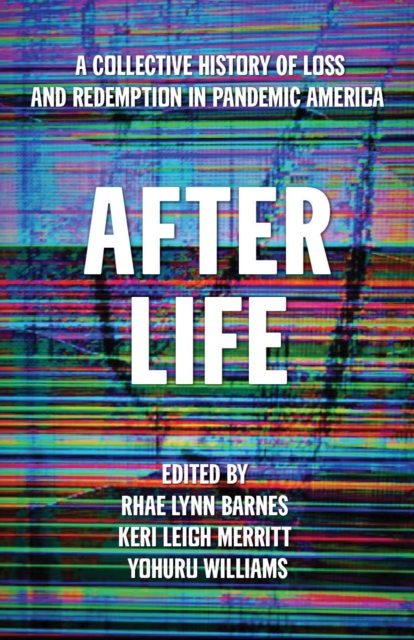
After Life
After Life is a collective history of how Americans experienced, navigated, commemorated, and ignored mass death and loss during the global COVID-19 pandemic, mass uprisings for racial justice, and the near presidential coup in 2021 following the 2020 election. Inspired by the writers who documented American life during the Great Depression and World War II for the Works Progress Administration (WPA), the editors asked twenty-first-century historians and legal experts to focus on the parallels, convergences, and differences between the exceptional \"long 2020\", while it unfolds, and earlier eras in U.S. History. Providing context for the entire volume, After Life's Introduction explains how COVID-19 and America's long history of inequality, combined with a corrupt and unconcerned federal government, produced one of the darkest times in our nation's history. Discussing the rise of the COVID-19 death toll in the United States, eventually exceeding the 1918 flu, the AIDS epidemic, and the Civil War, it ties public health, immigration, white supremacy, elections history, and epidemics together, and provides a short history of the Black Lives Matter protests of 2020 and the beginnings of a Third Reconstruction. After Life documents how Americans have dealt with grief, pain, and loss, both individually and communally, and how we endure and thrive. The title is an affirmation that even in our suspended half-living during lockdowns and quarantines, we are a nation of survivors—with an unprecedented chance to rebuild society in a more equitable way. Contributors include: Gwendolyn Hall, Heather Ann Thompson, Jacquelyn Dowd Hall, Keith Ellison, Keri Leigh Merritt, Martha Hodes, Mary Kathryn Nagle, Mary L. Dudziak, Monica Muñoz Martinez, Peniel E. Joseph, Philip J. Deloria, Rhae Lynn Barnes, Robert L. Tsai, Robin D. G. Kelley, Scott Poulson-Bryant, Stephen Berry, Tera W. Hunter, Ula Y. Taylor, and, Yohuru Williams.
eBook
A comprehensive analysis of COVID-19 vaccination behavior: The influence of religion, information sources, political leanings, and demographic factors
The COVID-19 pandemic highlighted the crucial role of vaccines in controlling the virus. Despite their effectiveness, however, vaccine hesitancy remained a challenge, particularly within certain population groups. This multi-disciplinary study investigates the diverse socio-demographic factors influencing COVID-19 vaccination decisions in the United States. Through a nationally representative survey of 5,240 people, the research explores the interplay of information sources, religious beliefs, political party, and demographic characteristics of the respondents. Our findings reveal associations of main sources of information with vaccination likelihood, with the Centers for Disease Control and Prevention demonstrating the highest association with full vaccination. Religious beliefs are significant determinants, with Evangelical Protestants exhibiting the lowest vaccination rates. We also highlight the intricate relationship between political leanings and vaccination behavior, emphasizing higher levels of vaccination among Democrats. Demographic variables, including age, education, gender, and race/ethnicity, also play pivotal roles, exposing disparities in vaccination access and decisions. In particular, older individuals and those with higher levels of education show a greater inclination to achieve full vaccination, while women and African Americans are less likely to attain complete vaccination. Lastly, while major ethnoracial groups seem to respond to different sources of information similarly, there are also nuanced differences, such as Asians being especially likely to be fully vaccinated if they depend on the CDC or other health sources while more disadvantaged groups seem less responsive to these sources. Overall, this research provides a comprehensive analysis of the nuanced factors shaping vaccination behavior. It contributes valuable knowledge to public health strategies, emphasizing the need for targeted communication campaigns tailored to diverse communities.
Journal Article

Estimating direct and spill-over impacts of political elections on COVID-19 transmission using synthetic control methods
Mass gathering events have been identified as high-risk environments for community transmission of coronavirus disease 2019 (COVID-19). Empirical estimates of their direct and spill-over effects however remain challenging to identify. In this study, we propose the use of a novel synthetic control framework to obtain causal estimates for direct and spill-over impacts of these events. The Sabah state elections in Malaysia were used as an example for our proposed methodology and we investigate the event’s spatial and temporal impacts on COVID-19 transmission. Results indicate an estimated (i) 70.0% of COVID-19 case counts within Sabah post-state election were attributable to the election’s direct effect; (ii) 64.4% of COVID-19 cases in the rest of Malaysia post-state election were attributable to the election’s spill-over effects. Sensitivity analysis was further conducted by examining epidemiological pre-trends, surveillance efforts, varying synthetic control matching characteristics and spill-over specifications. We demonstrate that our estimates are not due to pre-existing epidemiological trends, surveillance efforts, and/or preventive policies. These estimates highlight the potential of mass gatherings in one region to spill-over into an outbreak of national scale. Relaxations of mass gathering restrictions must therefore be carefully considered, even in the context of low community transmission and enforcement of safe distancing guidelines.
Journal Article

Determinants of COVID-19 skepticism and SARS-CoV-2 vaccine hesitancy: findings from a national population survey of U.S. adults
Background
The enduring presence of COVID-19 skepticism and SARS-CoV-2 vaccine hesitancy is an ongoing impediment to the global response effort to the current pandemic. This study seeks to identify determinants of skepticism and vaccine hesitancy in U.S. adults.
Methods
Data are from the Values and Beliefs of the American Public Survey, conducted in 2021 by the Gallup Organization in conjunction with Baylor University. The survey used stratified random probability sampling of the U.S. adult population (
N
= 1222). Outcome measures were respective single items assessing COVID-19 skepticism and SARS-CoV-2 vaccine hesitancy. Exposure variables included political, religious, and sociodemographic indicators, and moderators assessed personal history of COVID-19 and losing a relative or close friend to COVID-19.
Results
Skepticism and vaccine hesitancy were strongly associated with conservative and Republican political preference and conservative religious beliefs, and less so with socioeconomic status. Personal experience with COVID-19 did not mitigate the effect of politics on skepticism and barely reduced the odds for hesitancy. Results confirm that attitudes toward COVID-19 are politically and religiously conditioned, and are especially a product of conservative political preference.
Conclusion
Skepticism about COVID-19 and hesitancy regarding SARS-CoV-2 vaccination are highest among the political and religious right. Efforts to increase immunization through public education may be inadequate; resistance appears ideological. Other solutions may need to be considered, which risk widespread pushback both politically and religiously motivated.
Journal Article