
Catalogue Search | MBRL


Are you sure you want to remove the book from the shelf?

{{itemTitle}}
20
result(s) for
"COVID-19 Pandemic, 2020- Economic aspects United States."
Sort by:

The pandemic paradox : how the COVID crisis made Americans more financially secure
\"In March 2020, economic and social life across the United States came to an abrupt halt as the country tried to slow the spread of COVID-19. In the worst economic contraction since the Great Depression, twenty-two million people lost their jobs between mid-March and mid-April of 2020. And yet somehow the finances of most Americans improved during the pandemic--savings went up, debts went down, and fewer people had trouble paying their bills. In The Pandemic Paradox, economist Scott Fulford explains this seeming contradiction, describing how the pandemic reshaped the American economy. As Americans grappled with remote work, \"essential\" work, and closed schools, three massive pandemic relief bills, starting with the CARES Act on March 27, 2020, managed to protect many of America's most vulnerable. Fulford draws from the Consumer Financial Protection Bureau's \"Making Ends Meet\" surveys--which he helped design--to interweave macroeconomic trends in spending, saving, and debt with stories of individual Americans' economic lives during the pandemic. We meet Winona, who quit her job to take care of her children; Marvin, who retired early and worried that his savings wouldn't last; Lisa, whose expenses went up after her grown kids (and their dog) moved back home; and many others. What the statistics and the stories show, Fulford argues, is that a better, fairer, more productive economy is still possible. The success of pandemic relief policy proves that Americans' economic fragility is not an unsolvable problem. But we have to choose to solve it.\"--Amazon.com.
Book

COVID-19 Contracting: Opportunities, Actions and Reimbursements
In March 2020, Congress passed the CARES Act as part of the federal response to COVID-19. The act had certain provisions for federal contracting, including providing additional flexibilities. Contracting plays a critical role in the pandemic response as agencies obligate billions of dollars for goods and services. The act also included a provision to review federal contracting in response to COVID-19. This book examines, among other objectives, COVID-19 contract obligations and characteristics of vendors, contracting challenges, including with agency assessments of vendors, and whether lessons learned reflect those challenges.
eBook
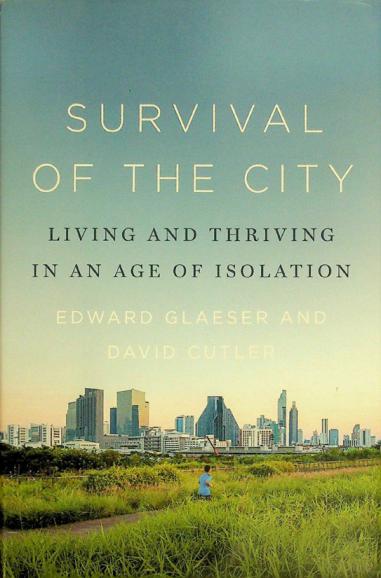
The survival of the city : living and thriving in an age of isolation
\"In Survival of the City, an urbanist and a public health expert join forces to explain where cities are right now and provide a prescription for a healthy future for them\"-- Provided by publisher.
Book

Meeting Regional STEMM Workforce Needs in the Wake of COVID-19
The COVID-19 pandemic is transforming the global economy and significantly shifting workforce demand, requiring quick, adaptive responses. The pandemic has revealed the vulnerabilities of many organizations and regional economies, and it has accelerated trends that could lead to significant improvements in productivity, performance, and resilience, which will enable organizations and regions to thrive in the \"next normal.\" To explore how communities around the United States are addressing workforce issues laid bare by the COVID-19 pandemic and how they are taking advantage of local opportunities to expand their science, technology, engineering, mathematics, and medicine (STEMM) workforces to position them for success going forward, the Board of Higher Education and Workforce of the National Academies of Sciences, Engineering, and Medicine convened a series of workshops to identify immediate and near-term regional STEMM workforce needs in the wake of the COVID-19 pandemic.
The workshop planning committee identified five U.S. cities and their associated metropolitan areas - Birmingham, Alabama; Boston, Massachusetts; Richmond, Virginia; Riverside, California; and Wichita, Kansas - to host workshops highlighting promising practices that communities can use to respond urgently and appropriately to their STEMM workforce needs. A sixth workshop discussed how the lessons learned during the five region-focused workshops could be applied in other communities to meet STEMM workforce needs.
This proceedings of a virtual workshop series summarizes the presentations and discussions from the six public workshops that made up the virtual workshop series and highlights the key points raised during the presentations, moderated panel discussions and deliberations, and open discussions among the workshop participants.
eBook

Coronavirus criminals and pandemic profiteers : accountability for those who caused the crisis
\"In 2020, hundreds of thousands of coronavirus deaths were caused not by the vicissitudes of nature but by the callous and opportunistic decisions of powerful people, as revealed here by John Nichols\"-- Provided by publisher
BOOK

Knowledge Towns
The remote work revolution presents a unique opportunity for higher education institutions to reinvent themselves and become talent magnets.
In Knowledge Towns, David J. Staley and Dominic D. J. Endicott argue that the location of a college or university is a necessary piece of any region's effort to attract remote knowledge workers and accelerate economic development and creative placemaking. Just as every town expects a church, bank branch, post office, and coffeehouse, Staley and Endicott write, we will see a decentralized network of institutions of higher education flourish, acting as cornerstones for the post-pandemic rebuilding of our society and economy.
In calling for a \"college in any town, \" they are not simply proposing placing a traditional college within a town or city, but envisioning instead a particular kind of higher education institution called a \"knowledge enterprise.\" In addition to providing the services of a traditional college, a knowledge enterprise acts as a talent magnet, attracting workers looking to move to cheaper and more attractive destinations.
With the post-COVID-19 shift to more remote work, and millions of people moving to more affordable and livable cities, a place that wants to attract talent will require a thriving academic environment. This represents a new opportunity for \"town and gown\" to create collaborative communities. The pandemic has accelerated existing trends that put at risk the viability of many colleges and universities, as well as that of many towns and cities. The talent magnet strategy outlined in this book offers colleges and towns a plan of action for regeneration.
eBook

The work of living : working people talk about their lives and the year the world broke
At the height of the COVID-19 pandemic, Maximillian Alvarez conducted a series of intimate interviews with workers of various stripes, from all around the United States, about their jobs, their lives, dreams, and struggles, and about their experiences living through a year when the world itself seemed to break apart. --Adapted from back cover summary.
Book

NYU Stern School of Business Prof. of Economics Paul Romer
NYU Stern School of Business Prof of Economics Paul Romer speaks with Bloomberg's David Westin.
Streaming Video

Geographic Analysis of Four Social Safety Nets’ Responsiveness to the Pandemic Recession and Social Sustainability
The present study investigates the geographic distribution patterns of the responsiveness of four safety net programs during the significant economic downturn triggered by the 2020 pandemic: Unemployment Insurance, the Supplemental Nutrition Assistance Program, Medicaid, and Temporary Assistance for Needy Families. An analysis of each state’s enrollment changes in these safety net programs from the pre-pandemic to the pandemic period relative to labor-market performance, using a responsiveness index, revealed which programs were most responsive to the pandemic recession in specific states or regions. Consistent with national findings, the present study suggests that Unemployment Insurance responded the most to the economic downturn of 2020, followed by the Supplemental Nutrition Assistance Program, Medicaid, and Temporary Assistance for Needy Families. Findings also show that Arizona and New Mexico responded highly across all four programs relative to labor-market performance. We used exploratory spatial data analysis to determine whether the spatial patterns of the responsiveness index identified in the study are statistically significant globally and locally within a given neighborhood structure. Our findings suggest that spatial distribution patterns are not random for the Supplemental Nutrition Assistance Program and Temporary Assistance for Needy Families at the global level. Moreover, statistically low-low clusters were found in different areas of these two programs: the Supplemental Nutrition Assistance Program in northern states and Temporary Assistance for Needy Families in southern states. Our analyses of the four safety nets’ responsiveness to labor market performance are consistent with the underlying social sustainability principles, particularly livelihood security and social well-being. Our findings can help policymakers make data-driven and better-informed decisions to assist those facing financial hardship, paving the way for improved policies and new opportunities for prosperity.
Journal Article