
Catalogue Search | MBRL


Are you sure you want to remove the book from the shelf?

{{itemTitle}}
33,965
result(s) for
"CREDIT AGENCY"
Sort by:

The Effectiveness of Credit Rating Agency Monitoring
This study investigates how differences between the rating agencies' initial (at the date of debt issuance) and subsequent (post-issuance) monitoring incentives affect securitizing banks' rating accuracy. We hypothesize that the agencies have stronger incentives to monitor issuers when providing initial versus post-issuance ratings. We document that initial ratings are positively associated with off-balance sheet securitized assets and incrementally associated with on-balance sheet retained securities. However, subsequent ratings fail to capture current exposure to off-balance sheet securitizations. We also find that subsequent ratings reflect default risk less accurately than initial ratings. The subsequent ratings' responsiveness to default risk is worse when a bank has more off-balance sheet securitized assets. Collectively, our findings are consistent with lax post-issuance monitoring. They raise questions about the effectiveness of using ratings as an ongoing contracting mechanism and suggest that conclusions about rating accuracy could differ depending on whether researchers focus on initial versus post-issuance ratings.
Journal Article

Consensus credit ratings: a view from banks
While the production of credit ratings has long been limited mainly to rating agencies (CRAs), recent years have seen the growing popularity of consensus credit ratings crowdsourced from banks (i.e., bank ratings). We provide the first comprehensive examination of the properties and informativeness of bank ratings relative to CRA ratings. We find that bank ratings often deviate from CRA ratings, with over 60% of firm-months having different bank and CRA ratings. These deviations contain useful information. Bank ratings improve out-of-sample prediction of defaults and CRA rating revisions and explain the cross-section of credit spreads. However, bank ratings do not improve out-of-sample prediction of credit excess returns, indicating that current prices incorporate bank rating information. Overall our findings suggest that bank ratings are a useful supplement to traditional credit ratings.
Journal Article

Detecting conflicts of interest in credit rating changes: A distribution dynamics approach
In this study, we compare the adjustments of credit ratings by an investor-paid credit rating agency (CRA), represented by Egan-Jones Ratings Company, and an issuer-paid CRA, represented by Moody's Investors Service, vis-à-vis conflict of interest and reputation. A novel distribution dynamics approach is employed to compute the probability distribution and, hence, the downgrade and upgrade probabilities of a credit rating assigned by these two CRAs of different compensation systems based on the dataset of 750 U.S. issuers between 2011 and 2018, that is, after the passage of the Dodd-Frank Act. It is found that investor-paid ratings are more likely to be downgraded than issuer-paid ratings only in the lower rating grades, which is consistent with the argument that investor-paid agencies have harsher attitudes toward potentially defaulting issuers to protect their reputation. We do not find evidence that issuer-paid CRAs provide overly favorable treatments to issuers with threshold ratings, implying that reputation concerns and the Dodd-Frank regulation mitigate the conflict of interests, while issuer-paid CRAs are more concerned about providing accurate ratings.
Journal Article

Did Credit Rating Agencies Make Unbiased Assumptions on CDOs?
We compare key CDO assumptions from two departments within the same rating agency but with different financial incentives. Assumptions made by the ratings division are more favorable than those by the surveillance department. The differences are not explained by collateral switching during the ramp-up period, a long time gap between reports, nor the collapse of the CDO market in 2007 Additionally, CDOs rated with more favorable assumptions by the ratings group were more likely to be subsequently downgraded. As the useful signals from the surveillance group were seemingly ignored, these findings suggest rating agencies bias towards high ratings.
Journal Article

Credit Ratings as Coordination Mechanisms
In this article, we provide a novel rationale for credit ratings. The rationale that we propose is that credit ratings serve as a coordinating mechanism in situations where multiple equilibria can obtain. We show that credit ratings provide a \"focal point\" for firms and their investors, and explore the vital, but previously overlooked implicit contractual relationship between a credit rating agency (CRA) and a firm through its credit watch procedures. Credit ratings can help fix the desired equilibrium and as such play an economically meaningful role. Our model provides several empirical predictions and insights regarding the expected price impact of rating changes.
Journal Article

Credit Scoring and Its Effects on the Availability and Affordability of Credit
The Fair and Accurate Credit Transaction Act of 2003 (the FACT Act) directed several federal agencies to conduct studies related to the credit reporting industry. A primary concern was the accuracy and fairness of the credit reporting and scoring systems. In this article, Federal Reserve System Board economists report on a study in which they examined various issues related to credit scoring, including how credit scoring has affected the availability and affordability of credit. In a responding commentary, Calvin Bradford notes flaws and deficiencies in the Federal Reserve System study.
Journal Article

Does Increased Competition Affect Credit Ratings? A Reexamination of the Effect of Fitch’s Market Share on Credit Ratings in the Corporate Bond Market
We examine two competing views regarding the impact of competition among credit rating agencies on rating quality: the view that rating agencies do not sacrifice their reputation by inflating firm ratings, and the view that competition among rating agencies arising from the conflict of interest inherent in an “issuer pay” model creates pressure to inflate ratings. Using Fitch’s market share as a measure of competition among rating agencies and controlling for the endogeneity problem caused by unobservable industry effects, we find no relation between Fitch’s market share and ratings, suggesting that competition does not lead to rating inflation.
Journal Article
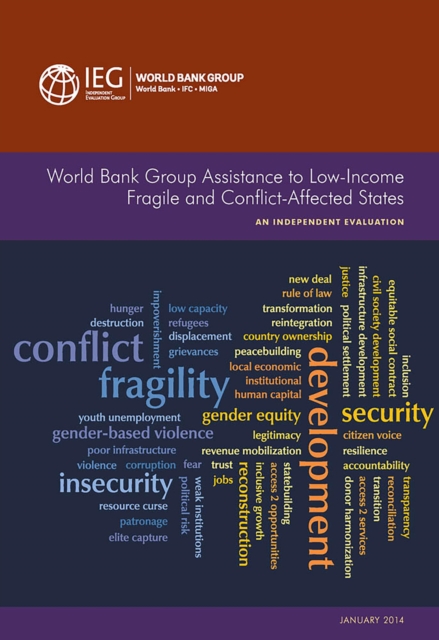
World Bank Group assistance to low-income fragile and conflict-affected states
Fragile and conflict-affected states (FCS) have become an important focus of World Bank Group assistance in recent years as recognition of the linkages between fragility, conflict, violence, and poverty has grown. Addressing issues of recurring conflict and political violence and helping build legitimate and accountable state institutions are central to the Bank Group's poverty reduction mission. This evaluation assesses the relevance and effectiveness of World Bank Group country strategies and assistance programs to FCS. The operationalization of the World Development Report 2011: Conflict, Security, and Development (2011 WDR) is also assessed, to see how the framework has been reflected in subsequent analytical work, country assistance strategies, and the assistance programs. The evaluation framework was derived from the concepts and priorities articulated in recent WDRs, policy papers, and progress reports issued by Bank Group management, to draw lessons from FCS. The framework is organized around the three major themes emerging from the 2011 WDR: building state capacity, building capacity of citizens, and promoting inclusive growth and jobs. The evaluation focuses on International Development Association (IDA)-only countries, which are deemed to have certain characteristics such as very low average income and no access to private finance, making them eligible for special finance tools and programs. As the benchmark for measuring results, Bank Group performance is evaluated in 33 fragile and conflict-affected states against that of 31 IDA-only countries that have never been on the FCS list. Six new country case studies; analyses of Bank Group portfolios; human resources and budget data; secondary analysis of IEG evaluations; background studies including those on aid flows, gender, private sector development, and jobs; and surveys of Bank Group staffs and stakeholders are also included in the evaluation.
eBook

Public financial institutions in the energy transition: the impact of export credit agencies
Achieving a clean energy transition requires global financial flows to be redirected away from fossil fuels and into renewable energy. While capital market actors and multilateral financial institutions have been the subject of significant scholarly attention, public bilateral financial institutions, especially Export Credit Agencies (ECAs), have been largely overlooked. This is an important oversight given ECAs are the source of billions of dollars of public finance for fossil fuels, which has helped to lock-in recipient countries to fossil fuel energy systems. Using a panel dataset of ECA transactions in the energy sector, we show that despite some improvements in financial flows after the Paris Agreement in 2015, fossil fuel investments remain pervasive and growth in clean energy investments is minimal. To better understand changes in ECA portfolios, we examine the cases of the Export-Import Bank of the United States (ExIm) and UK Export Finance (UKEF). Drawing on elite interviews, we identify three factors that are shaping ExIm’s and UKEF’s capacity to promote renewable energy exports: the extent of political control over the bureaucracy, the size and composition of green industrial bases, and the policy tools available to both ECAs to support the renewables sector. This has important implications for policymakers seeking to green ECA portfolios.
Journal Article

Review of risk mitigation instruments for infrastructure financing and recent trends and developments
The objective of the Review of Risk Mitigation Instruments for Infrastructure Financing and Recent Trends and Developments is to provide a concise yet comprehensive guide as well as reference information for practitioners of infrastructure financing, including private sector financiers and developing country officials. The work is also intended as a reference for institutions offering (or developing) risk mitigation instruments, allowing them to learn from each other's recent practices. The book is organized into five chapters with the following objectives: Chapter 1 Type of Risk Mitigation Instruments: increases awareness of the different types and nature of risk mitigation instruments currently available for private financiers. Chapter 2 Recent Trends in Risk Mitigation: highlights areas in risk mitigation for developing country infrastructure financing receiving recent attention. Chapter 3 Characteristics of Providers and Compatibility: summarizes the characteristics of multilateral, bilateral, and private providers of risk mitigation instruments and the compatibility of those instruments. Chapter 4 Innovative Application of Risk Mitigation Instruments: presents recent developments and innovative applications of risk mitigation instruments through case transactions. Chapter 5 Challenges Ahead: summarizes areas that pose challenges to the use of risk mitigation instruments as catalysts of infrastructure development. The focus of this book is on the multilateral development banks and agencies (that is, The World Bank Group and regional development banks and affiliates) and bilateral development agencies and export credit and investment agencies of major developed countries that have supported the compilation of this information.
eBook