
Catalogue Search | MBRL


Are you sure you want to remove the book from the shelf?

{{itemTitle}}
29,692
result(s) for
"CRIMINAL CONDUCT"
Sort by:

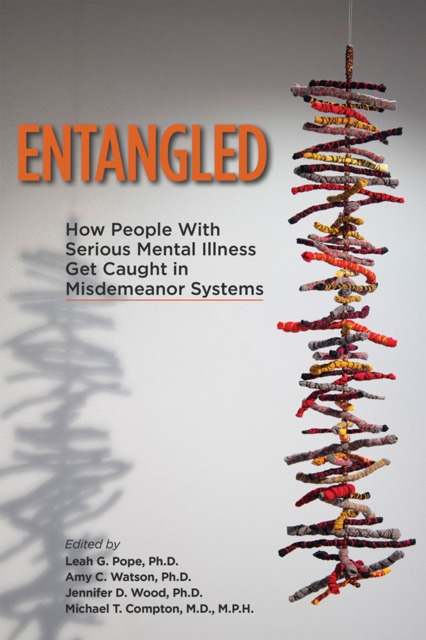
Entangled
This book draws on data from a mixed-method, multisite study to analyze how people with SMI become involved with the criminal legal system. Solution-oriented at its core, this book reviews necessary reforms and policy advances in the criminal legal system and the mental health crisis response system, advocating for a multisystem approach that will help individuals with mental illness embrace a life of recovery, hope, empowerment, and integration.
eBook


Desconexión moral y diferencias de género en víctimas del conflicto armado, infractores de la ley y escolares
Resumo O estudo dos mecanismos cognitivos de desconexão moral associados ao comportamento delitivo em adolescentes e sua variabilidade de acordo com o gênero, são temas de crescente interesse na criminologia. Este estudo tem como objetivo examinar comparativamente os mecanismos de desconexão moral e as diferenças de gênero em adolescentes infratores, jovens desvinculados de grupos armados ilegais e escolares. Foi utilizada uma metodologia quantitativa, desenho não experimental do tipo transversal e escopo comparativo. A amostra não probabilística foi composta por três grupos populacionais: adolescentes desvinculados de grupos armados ilegais (G1), adolescentes infratores (G2) e adolescentes escolares sem histórico de comportamento delitivo (G3). Os resultados mostram que os adolescentes do G2 apresentaram maior utilização dos diferentes mecanismos de desconexão moral em relação aos demais adolescentes. Foram encontradas diferenças de gênero na desconexão moral intra e intergrupal, com escores significativamente maiores nos homens, principalmente no G2. Esses resultados apóiam a necessidade de considerar os processos cognitivo-morais e o gênero nos modelos explicativos e em uma abordagem interdisciplinar da delinquência juvenil. Por último, também é necessário levar em consideração o tipo de envolvimento dos adolescentes em grupos e atividades delitivas.
Resumen El estudio de los mecanismos cognitivos de desconexión moral asociados al comportamiento delictivo en adolescentes, y su variabilidad de acuerdo con el género, es un tema de creciente interés en criminología. Este estudio tiene el objetivo de examinar comparativamente los mecanismos de desconexión moral y las diferencias de género en adolescentes infractores de la ley, jóvenes desvinculados de grupos armados ilegales y escolares. Se utilizó una metodología cuantitativa, diseño no experimental de tipo transversal y alcance comparativo. Se contó con una muestra no probabilística compuesta por tres grupos poblacionales: adolescentes desvinculados de grupos armados ilegales (G1), adolescentes infractores de la ley (G2) y adolescentes escolares sin antecedentes de comportamiento delictivo (G3). Los resultados muestran que los adolescentes del G2 presentan un mayor uso de los diferentes mecanismos de desconexión moral en comparación con los otros adolescentes. Se encontraron diferencias de género en la desconexión moral a nivel intra e intergrupal, con puntuaciones significativamente más altas en los hombres, en especial, del G2. Estos resultados apoyan la necesidad de considerar a los procesos cognitivo-morales y al género en los modelos explicativos y de abordaje interdisciplinar de la delincuencia juvenil. Por último, también es necesario tener en cuenta el tipo de vinculación de los adolescentes en grupos y actividades delictivas.
Abstract Studying the cognitive mechanisms of moral disengagement associated with criminal conducts in adolescents and their variability according to gender is a growing topic of interest in criminology. This study's objective is to comparatively examine moral disengagement mechanisms and gender differences in criminal adolescents, youth disassociated from illegal armed groups and students. A quantitative methodology was used and the design was non-experimental and cross-sectional, with a comparative scope. The study included a non-probability sample composed of three population groups: adolescents disassociated from illegal armed groups (G1), criminal adolescents (G2) and adolescent students without criminal records (G3). The results show that adolescents from G2 used the different moral disengagement mechanisms more compared to other adolescents. Gender differences were observed in moral disengagement between groups and individuals, with significantly higher scores for males, especially in G2. These results support the need to consider cognitive-moral and gender processes in explanatory models and juvenile delinquency interdisciplinary models.. Lastly, it is also necessary to take the type of association of adolescents in criminal groups and activities into account.
Journal Article

Impact of covid on riots and associated behaviors in the united states
IntroductionThe racial riots of 2020 in the US, beginning in Minneapolis, had a global impact inciting protests internationally. We look at the impact of COVID, the social isolation and frustration that therefore existed and how this effected the instigation of the riots.Objectives--To review the history of racism in the United States and the abolition theories, comparing US and UK. --To consider the impact of international immigration on the cultural tension in the US; Minnesota accepted a large population of Somalis in 1992 as refugees. --To explore how this progress toward racial equality has stagnated under the leadership of President Donald Trump. --To look at how COVID in the context of the above historical factors has served as a unwitting catalyst to racial riots and global protests.MethodsLiterature research including historical accounts of principles of abolition, post-civil war reconstructive political manuevers, 1950’s segregation protests and political supports (US and UK), refugee relief efforts made by the US [specifically related to Somalia], and reports regarding the impact of COVID on the 2020 reaction to racial injustice.ResultsEvidence suggests that across time periods, recourses of politicians [US and global] resulted in negative relations internationally with respect to immigration. The unique situation created by COVID resulted in a crucible effect following the death of George Floyd.ConclusionsPrevious attempts at creating equality have proven unsuccessful and apathetic on the part of those in power. This has lead to a situation where COVID created a perfect storm in order to ignite racial tensions in the US.
Journal Article
Desconexión moral y diferencias de género en víctimas del conflicto armado, infractores de la ley y escolares Moral disengagement and gender differences in victims of armed conflict, law offenders and schoolchildren
El estudio de los mecanismos cognitivos de desconexión moral asociados al comportamiento delictivo en adolescentes, y su variabilidad de acuerdo con el género, es un tema de creciente interés en criminología. Este estudio tiene el objetivo de examinar comparativamente los mecanismos de desconexión moral y las diferencias de género en adolescentes infractores de la ley, jóvenes desvinculados de grupos armados ilegales y escolares. Se utilizó una metodología cuantitativa, diseño no experimental de tipo transversal y alcance comparativo. Se contó con una muestra no probabilística compuesta por tres grupos poblacionales: adolescentes desvinculados de grupos armados ilegales (G1), adolescentes infractores de la ley (G2) y adolescentes escolares sin antecedentes de comportamiento delictivo (G3). Los resultados muestran que los adolescentes del G2 presentan un mayor uso de los diferentes mecanismos de desconexión moral en comparación con los otros adolescentes. Se encontraron diferencias de género en la desconexión moral a nivel intra e intergrupal, con puntuaciones significativamente más altas en los hombres, en especial, del G2. Estos resultados apoyan la necesidad de considerar a los procesos cognitivo-morales y al género en los modelos explicativos y de abordaje interdisciplinar de la delincuencia juvenil. Por último, también es necesario tener en cuenta el tipo de vinculación de los adolescentes en grupos y actividades delictivas.
Journal Article
Factores implicados en el fracaso escolar de adolescentes con conducta delictiva
Colombia is implementing the Adolescent Responsibility System educational service. In this context, this article describes the academic characteristics of adolescents with criminal conducts, determines the relationships between academic factors and analyzes which ones affect academic failure. A predictive, cross-sectional study was developed to do so, in which 248 adolescents from Bogotá and Cundinamarca participated. 85.5% were male and 14.5% were female, between 14 and 20 years of age (A=16.72, S.D.=1,128). The results show high levels of academic failure and moderate relationships between academic factors and academic failure. The academic variables that best helped predict academic failure were low performance, deficiencies in school participation opportunities, rewards for school participation and social skills. These findings’ implications was a topic of discussion.
Journal Article

Beyond acts and omissions: remark-able criminal conduct
I argue that instead of analysing a criminal offence's conduct element in terms of acts and omissions, we should ask whether the defendant has belied a contextually salient expectation as to how she should, or routinely would, conduct herself. Slightly different sets of expectations are salient depending on whether our interest is in questions of criminalisation, or the proper interpretation of existing offences, but the criminal law is normally interested only in conduct-tokens that belie a relevant expectation. Belying such an expectation need not itself suggest culpability, but it does mark out the conduct as remark-able, in the sense of being ‘worthy of remark’. I argue that this ‘Remark-able Conduct Requirement’ (RCR) analysis helps us narrow the field of conduct-tokens that are normatively appropriate candidates for criminalisation, and when adapted for use in interpreting existing offences it: (a) generates familiar and plausible liability outcomes; (b) simplifies the application of the law; (c) offers a principled argument to limit the scope of offences drafted in overly broad terms, by excluding innocuous doings from potential criminal liability; and (d) suggests ways to make progress on philosophical puzzles about how we should conduct ourselves.
Journal Article

Barriers to Asset Recovery
It is estimated that the proceeds of crime, corruption and tax evasion represent between $1 trillion and $1.6 trillion per year, with half coming from developing countries. Proceeds are typically transferred abroad and hidden in foreign jurisdictions, thus requiring international cooperation. Various international conventions and agreements require international cooperation on this issue, in particular the United Nations Convention against Corruption; however, only $5 billion in stolen assets have been repatriated over the last 15 years. This enormous gap reveals that significant barriers continue to impede asset recovery despite the commitments taken by governments, civil society and the private sector. Drawing on the experience of practitioners with hands-on experience, the Stolen Asset Recovery (StAR) Initiative launched this study to identify the barriers to stolen asset recovery internationally, provide brief analysis of the impact of these barriers, and propose recommendations for overcoming these obstacles. This volume is intended to guide policy makers in their efforts to ensure necessary resources and the development of a plan, policy or strategy aimed at eradicating the barriers to asset recovery. In addition, this study proposes actions to be taken by the G20, international organizations, financial institutions, developmental agencies and civil society.
eBook

Examination of crime and similar concepts in the medical law
Crime is a human behavior that has captivated the thoughts of scholars of various disciplines throughout history. Philosophers, sociologists, psychologists and others have investigated and analyzed the concept of crime from different aspects. Crime is the main topic of criminal law, and in its legal meaning is a well-known term with a certain conceptual load that should not be confused with similar concepts such as guilt, civil crime (quasi tort), and particularly, the disciplinary transgression. Although crime has common points with all the above, it is an independent concept with unique effects, features, and descriptions that distinguish it from similar acts. This article aims to determine the difference between the concepts of crime, guilt, civil crime and disciplinary transgression through enumeration of the related issues as well as examples of medical disciplinary crimes and transgressions. Identifying and distinguishing these concepts can improve the procedure of prosecuting crimes and disciplinary transgression, bring punishment to criminals and transgressors, and facilitate compensation of pecuniary and non-pecuniary losses due to committers' fault or failure. Thus we may avoid taking a wrong route that can lead to infringement of individuals' rights.
Journal Article