
Catalogue Search | MBRL


Are you sure you want to remove the book from the shelf?

{{itemTitle}}
17,964
result(s) for
"CRITICAL PHILOSOPHY"
Sort by:

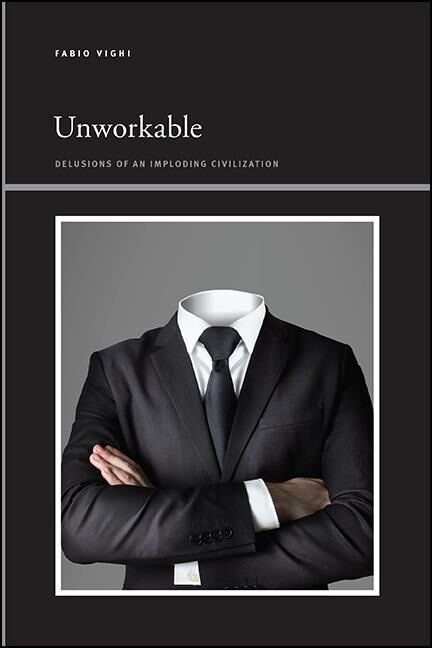
Unworkable
Unworkable discusses the ongoing implosion of our
globalized world from three distinct angles: the capitalist
elimination of labor through technological automation, the
dissolution of our shared social narratives, and the subtle
imposition of an increasingly pervasive ideological order. Aiming
to root out the lost cause of this implosion, Fabio Vighi returns
to Marx by way of Hegel, Lacan, Gorz, Baudrillard, and other
thinkers who, in different ways, have reflected on the complex
dialectical structure of modernity and its hidden conditions of
possibility. Capitalism, Vighi argues, fundamentally redefined the
meaning of work and prevented the emergence of alternative forms of
life. In our own time, the delusions of work and the values that
propel life under capitalism have become, in Vighi's analysis,
unworkable . And yet, even as we become an increasingly
\"workless\" society, we continue to abide by the same laws of
productivity and profit.
eBook

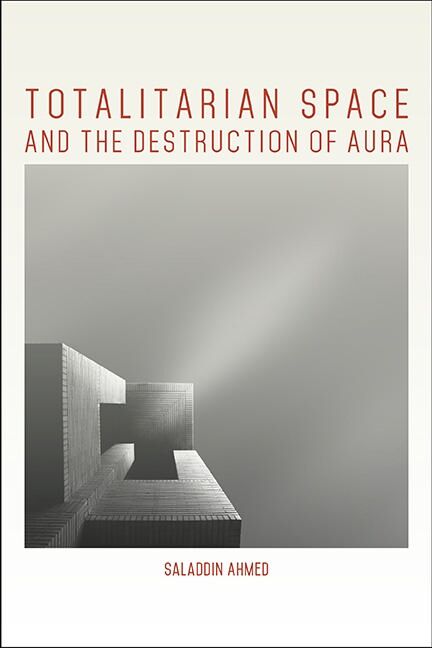
Totalitarian Space and the Destruction of Aura
We live today within a system in which state and corporate power
aim to render space flat, transparent, and uniform, for only then
can it be truly controlled. The gaze of power and the commodity
form are capable of infiltrating even the darkest of corners, and
often, we invite them into our most private spaces. We do so as a
matter of convenience, but also to placate ourselves and cope with
the alienation inherent in our everyday lives. The resulting
dominant space can best be termed totalitarian. It is space
stripped of uniqueness, deprived of the \"spatial aura\" necessary
for authentic experience. In Totalitarian Space and the
Destruction of Aura , Saladdin Ahmed sets out to help us grasp
what has been lost before no trace remains. He draws attention to
that which we might prefer not to see, but despite the bleakness of
this indictment of reality, the book also offers a message of hope.
Namely, it is only once we comprehend the magnitude of the threat
to our spatial experience and our own complicity in sustaining this
system that we can begin to resist the totalizing forces at work.
eBook

Critical Theory from the Margins
Great critical theorists from Marx and Engels to Adorno and
Horkheimer not only came from the margins but also stayed faithful
to the plight of the marginalized. They refused to compromise about
the struggle for equality and tried to universalize its
emancipatory essence. From Marx to Benjamin, critical philosophers
who showed fidelity to the cause were denied a career in European
universities and made impoverished, stateless, and homeless.
Marginalization and critical theory are inseparable; yet, today,
Marxism is institutionalized, and the Frankfurt School's Critical
Theory is gentrified. Critical Theory from the Margins ,
however, revives the Critical Theory that endorses criticism,
aiming to negate dominant regimes of truth. It is unapologetic in
its fidelity to the universalist struggles of the minoritized. In
that spirit, Saladdin Ahmed shows that capitalism imposes a
totalitarian social mode of existence and neoliberalism perpetuates
fascism as a class of ideology across nationalist and religious
movements. This book, then, is both a theorization and an argument
in favor of the application of the episteme of the silenced as the
essence of the critical education necessary for achieving universal
emancipation.
eBook


Global Fragments
Global Fragments offers an innovative analysis of globalization that aims to circumvent the sterile dichotomies that either praise or demonize globalization. Eduardo Mendieta applies an interdisciplinary approach to one of the most fundamental experiences of globalization: the mega-urbanization of humanity. The claim that globalization unsettles our epistemic maps of the world is tested against a study of Latin America. Mendieta also recontextualizes the work of three major theorists of globalization—Enrique Dussel, Cornel West, and Jürgen Habermas—to show how their thinking reflects engagement with central problems of globalization and, conversely, how globalization itself is exemplified through the reception of their work. Beyond the epistemic hubris of social theories that seek to accept or reject a globalized world, Mendieta calls for a dialogic cosmopolitanism that departs from the mutuality of teaching and learning in a world that is global but not totalized.
eBook

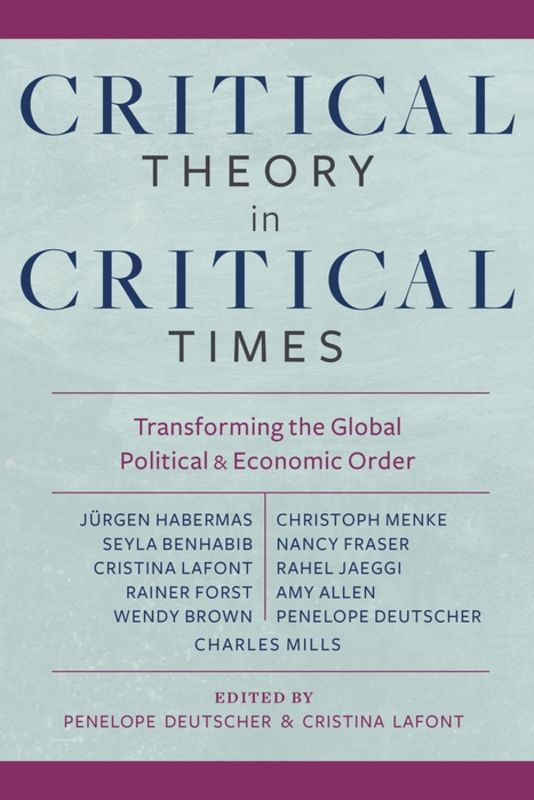
Critical Theory in Critical Times
We live in critical times. We face a global crisis in economics and finance, a global ecological crisis, and a constant barrage of international disputes. Perhaps most dishearteningly, there seems to be little faith in our ability to address such difficult problems. However, there is also a more positive sense in which these are critical times. The world's current state of flux gives us a unique window of opportunity for shaping a new international order that will allow us to cope with current and future global crises.InCritical Theory in Critical Times, eleven of the most distinguished critical theorists offer new perspectives on recent crises and transformations of the global political and economic order. Essays from Jürgen Habermas, Seyla Benhabib, Cristina Lafont, Rainer Forst, Wendy Brown, Christoph Menke, Nancy Fraser, Rahel Jaeggi, Amy Allen, Penelope Deutscher, and Charles Mills address pressing issues including international human rights and democratic sovereignty, global neoliberalism, novel approaches to the critique of capitalism, critical theory's Eurocentric heritage, and new directions offered by critical race theory and postcolonial studies. Sharpening the conceptual tools of critical theory, the contributors toCritical Theory in Critical Timesreveal new ways of expanding the diverse traditions of the Frankfurt School in response to some of the most urgent and important challenges of our times.
eBook