
Catalogue Search | MBRL


Are you sure you want to remove the book from the shelf?

{{itemTitle}}
439
result(s) for
"Cabala History."
Sort by:

Keeping the mystery alive : Jewish mysticism in Latin American cultural production
\"This book delves into creative renditions of key aspects of Jewish Mysticism in Latin American literature, film, and art from the perspective of literary and cultural studies. The overarching question is whether the authors presented question, or reproduce literally, traditional renditions of the Jewish mysticism, and how this aspect of their literature and visual art relates to the Latin American canon to which they belong\"-- Provided by publisher.
BOOK

Language, Eros, Being
This long-awaited, magisterial study-an unparalleled blend of philosophy, poetry, and philology-draws on theories of sexuality, phenomenology, comparative religion, philological writings on Kabbalah, Russian formalism, Wittgenstein, Rosenzweig, William Blake, and the very physics of the time-space continuum to establish what will surely be a highwater mark in work on Kabbalah. Not only a study of texts, Language, Eros, Being is perhaps the fullest confrontation of the body in Jewish studies, if not in religious studies as a whole.Elliot R. Wolfson explores the complex gender symbolism that permeates Kabbalistic literature. Focusing on the nexus of asceticism and eroticism, he seeks to define the role of symbolic and poetically charged language in the erotically configured visionary imagination of the medieval Kabbalists. He demonstrates that the traditional Kabbalistic view of gender was a monolithic and androcentric one, in which the feminine was conceived as being derived from the masculine. He does not shrink from the negative implications of this doctrine, but seeks to make an honest acknowledgment of it as the first step toward the redemption of an ancient wisdom.Comparisons with other mystical traditions-including those in Christianity, Buddhism, and Islam-are a remarkable feature throughout the book. They will make it important well beyond Jewish studies, indeed, a must for historians of comparative religion, in particular of comparative mysticism.Praise for Elliot R. Wolfson:\"Through a Speculum That Shines is an important and provocative contribution to the study of Jewish mysticism by one of the major scholars now working in this field.\"-Speculum
eBook

Sleep, death, and rebirth : mystical practices of Lurianic Kabbalah
\"In the sixteenth century, the famous kabbalist Isaac Luria transmitted a secret trove of highly complex mystical practices to a select groups of students. These meditations were designed to capitalize on sleep and death states in order to effectively split one's soul into multiple parts, and which, when properly performed, permitted the adept to free oneself from the cycle of rebirth. Through an in-depth analysis of these contemplative practices within the broader context of Lurianic literature, Zvi Ish-Shalom guides us on a penetrating scholarly journey into a realm of mystical teachings and practices never before available in English, illuminating a radically monistic vision of reality at the heart of Kabbalistic metaphysics and practice\"-- Provided by publisher.
BOOK
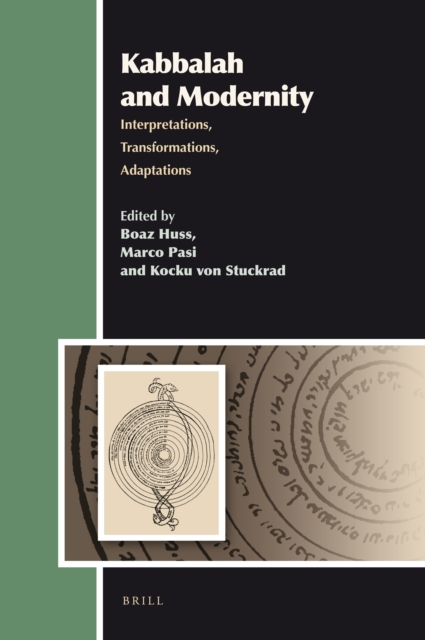
Kabbalah and Modernity
This volume brings together leading representatives of the recent debate about the persistence of kabbalah in the modern world. It breaks new ground for a better understanding of the role of kabbalah in modern religious, intellectual, and political discourse.
eBook

Concealment and Revelation
During the twelfth and thirteenth centuries, great new trends of Jewish thought emerged whose widely varied representatives--Kabbalists, philosophers, and astrologers--each claimed that their particular understanding revealed the actual secret of the Torah. They presented their own readings in a coded fashion that has come to be regarded by many as the very essence of esotericism. Concealment and Revelation takes us on a fascinating journey to the depths of the esoteric imagination. Carefully tracing the rise of esotericism and its function in medieval Jewish thought, Moshe Halbertal's richly detailed historical and cultural analysis gradually builds conceptual-philosophical force to culminate in a masterful phenomenological taxonomy of esotericism and its paradoxes. Among the questions addressed: What are the internal justifications that esoteric traditions provide for their own existence, especially in the Jewish world, in which the spread of knowledge was of great importance? How do esoteric teachings coexist with the revealed tradition, and what is the relationship between the various esoteric teachings that compete with that revealed tradition?
eBook
Knowledge of God and the Development of Early Kabbalah
In Knowledge of God and the Development of Early Kabbalah, Jonathan Dauber offers a fresh consideration of the emergence of Kabbalah against the backdrop of a re-evaluation of the relationship between Kabbalistic and philosophic discourse.
eBook

Kabbalistic Self-Help: The Microcosm in Practice
Medieval and early modern Jewish works of self-improvement share a set of conventions identifying them as a genre. They all imagine the ideal self as a microcosm for a divinized cosmos, and they instruct their readers to conform to the ideal by means of ritual cognition, affect, ritual practice, and social action based in Jewish law. They also assume existence within a community so that material care for others was crucial to ideal selfhood. Contemporary kabbalistic self-help retains the microcosmic model, but some of its authors substitute psychotherapeutic and economic discourse for religious discourse, minimizing requirements for social action, maximizing the power of affect and ritual cognition, and valuing the attainment of personal desire. Other authors, however, use psychological discourse to emphasize the importance of social justice. Thus contemporary writers of kabbalistic self-help adapt and reformulate this earlier genre to different ends, depending on their use of religious, psychotherapeutic, and economic discourse.
Journal Article

Alef, Mem, Tau
This highly original, provocative, and poetic work explores the nexus of time, truth, and death in the symbolic world of medieval kabbalah. Demonstrating that the historical and theoretical relationship between kabbalah and western philosophy is far more intimate and extensive than any previous scholar has ever suggested, Elliot R. Wolfson draws an extraordinary range of thinkers such as Frederic Jameson, Martin Heidegger, Franz Rosenzweig, William Blake, Julia Kristeva, Friedrich Schelling, and a host of kabbalistic figures into deep conversation with one another.Alef, Mem, Taualso discusses Islamic mysticism and Buddhist thought in relation to the Jewish esoteric tradition as it opens the possibility of a temporal triumph of temporality and the conquering of time through time. The framework for Wolfson's examination is the rabbinic teaching that the wordemet,\"truth,\" comprises the first, middle, and last letters of the Hebrew alphabet,alef, mem,andtau,which serve, in turn, as semiotic signposts for the three tenses of time-past, present, and future. By heeding the letters ofemetwe discern the truth of time manifestly concealed in the time of truth, the beginning that cannot begin if it is to be the beginning, the middle that re/marks the place of origin and destiny, and the end that is the figuration of the impossible disclosing the impossibility of figuration, the finitude of death that facilitates the possibility of rebirth. The time of death does not mark the death of time, but time immortal, the moment of truth that bestows on the truth of the moment an endless beginning of a beginningless end, the truth of death encountered incessantly in retracing steps of time yet to be taken-between, before, beyond.
eBook
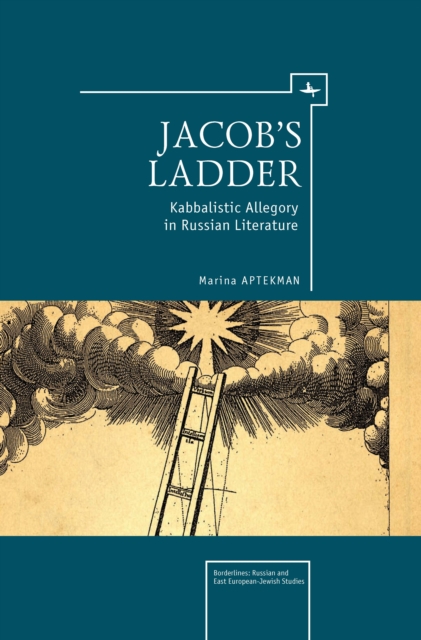
Jacob's Ladder
Jacob’s Ladder discusses the reflection of kabbalistic allegory in Russian literature and provides a detailed analysis of the evolution of the perception of Kabbalah in Russian consciousness. Aptekman investigates the questions of when, how, and why Kabbalah has been used in Russian literary texts from Pre-Romanticism to Modernism and what particular role it played in the larger context of the Russian literary tradition. The correct understanding of this liaison helps the reader clarify many enigmatic images in Russian literary works of the last two centuries and to understand the roots of a particular cultural falsification that played an important role in the anti-Semitic mythology of the twentieth century.
eBook

Jewish Medieval Traditions concerning the Origins of the Kabbalah
The questions where the Kabbalah came from, how it appears, and under what circumstances, bothered the scholars of the Kabbalah, but no less the Kabbalists themselves in the Middle Ages. This article is concentrated on identifying and signifying three types of traditions in thirteenth-century Kabbalah, each of which reflects a unique stance concerning this topic. The first stance attributes the emergence of the Kabbalah to mystical revelation of Elijah to the ancestors of the first Kabbalistic circles in Provence. Another sees the Kabbalistic truths as part of the Torah of Moses and therefore as a national heritage. A third tradition, however, attributes the Kabbalah to Adam, the first person and the ancestor of mankind at whole. The article points out the self-consciousness behind each myth, the differences between them, and the hidden discourse between these traditions regarding the notion of the Kabbalah as universal wisdom and its cultural context in general.
Journal Article