
Catalogue Search | MBRL


Are you sure you want to remove the book from the shelf?

{{itemTitle}}
404
result(s) for
"Cabinetwork."
Sort by:

Roman splendour, English arcadia : the English taste for Pietre Dure and the Sixtus cabinet at Stourhead
\"At Stourhead in Wiltshire, the Palladian mansion contains an extraordinary Roman cabinet glittering with gilt-bronze mounts, semi-precious stones and elaborate architectural ornament. Its faًcade conceals over 125 more-or-less secret drawers. The cabinet was brought to Stourhead in the 1740s by Henry Hoare 'the Magnificent', of the Hoare banking dynasty; he had purchased it in Rome, where it had been made for Pope Sixtus V, whose papacy, from 1585 to 1590, coincided with the Spanish Armada. The superb quality of the 'Sixtus Cabinet' was fully revealed by conservation in 2006-7 and this galvanized research into its history.\"--Publisher's description.
Book



Good Bones, Great Pieces
\"An excellent and useful book for both beginners and more experienced home decorators . . .Encourages us all to be both carefree and careful\" ( Martha Stewart). Making a home is a lifelong pursuit and it starts with your very first place.Suzanne and Lauren McGrath, a mother-daughter team, operate the popular blog Good Bones, Great Pieces.
eBook


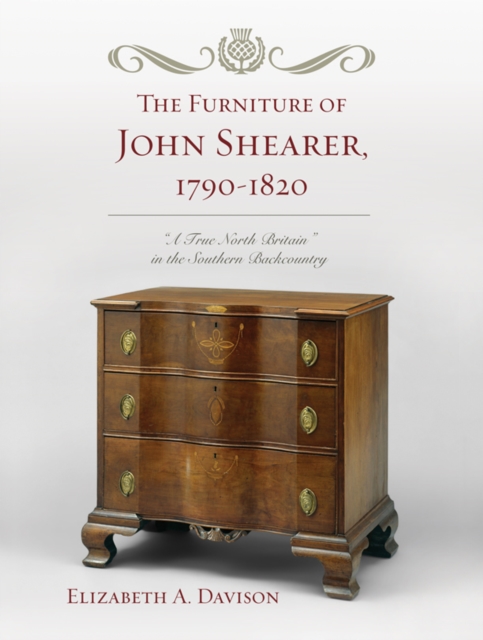
The furniture of John Shearer, 1790–1820
This book is a full-color catalogue raisonne interprets the distinctive furniture made by John Shearer, one of the most accomplished and intriguing furniture makers during the post-Revolutionary period. Shearer emigrated from Scotland in the late 18th century and retained loyalist sympathies throughout his life, evidenced by the imagery and inscriptions sympathetic to various British causes—such as the suppression of the Irish rebellion in 1798 and the British victory in the Battle of Trafalgar in 1805—that he worked into his furniture. Davison provides insight into the furniture's appeal to Anglo-American patrons, not secret loyalists, but men still culturally tied to Great Britain. Shearer's pieces are scattered among various collections, and many of them have been identified only in the last 25 years. This catalog is the only work in which all of Shearer's known pieces of furniture are presented in a single volume.
eBook

Reframing Chinese Labour Rights: Chinese Unionists, Pro-Labour Societies and the Nationalist Movement in Melbourne, 1900–10
In the early twentieth century, Chinese cabinetmakers' militancy in Melbourne not only secured a fair wage from Chinese employers but also influenced emerging pro-labour societies. The Chinese Cabinetmakers' Union was founded in response to their exclusion from minimum wages law when Chinese cabinetmakers were reimagined as \"coolies\" to emphasise the threat of cheaper Chinese labour. As Australian discriminatory policies increasingly curtailed Chinese workers' rights, the Chinese community was divided in response. The development of Chinese unions and pro-labour societies in Melbourne contrasted with Sydney where the Chinese merchant elite also mobilised against discrimination. The two groups had different perspectives on labour rights, which were being reshaped as part of an emerging Chinese nationalist movement. Chinese unionists in Melbourne participated in the Chinese nationalists' movement through newspapers, public meetings, speeches, donations and outdoor excursions. The alliance of Chinese unionists and the prolabour societies reflected the fact that the Chinese working class in Melbourne demanded worker rights in a complex mix of the \"politics of place,\" embedded in a revolutionary nationalist movement and community organisation
Journal Article
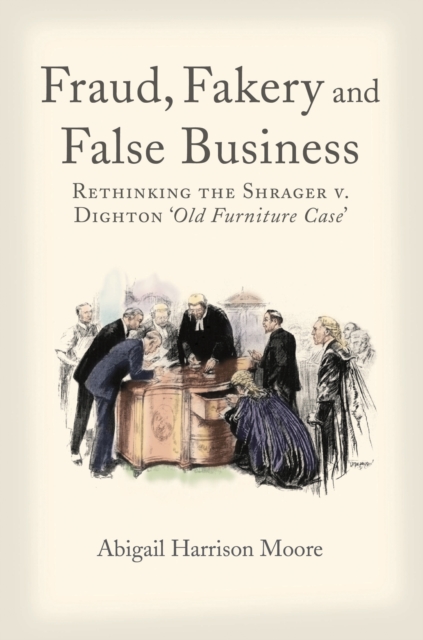
Fraud, Fakery and False Business
In 1922, Adolphe Shrager having made his fortune during the First World War, approached the London dealer Basil Dighton for advice on purchasing antique furniture.Dighton sold him about five hundred items but shortly afterwards Shrager discovered that one of his 'collector's pieces' was judged to be a fake and grossly over-priced, and he sued.
eBook

Thomas Day
Thomas Day (180161), a free man of color from Milton, North Carolina, became the most successful cabinetmaker in North Carolina white or black during a time when most blacks were enslaved and free blacks were restricted in their movements and activities. His surviving furniture and architectural woodwork still represent the best of nineteenth-century craftsmanship and aesthetics. In this lavishly illustrated book, Patricia Phillips Marshall and Jo Ramsay Leimenstoll show how Day plotted a carefully charted course for success in antebellum southern society. Beginning in the 1820s, he produced fine furniture for leading white citizens and in the 1840s and '50s diversified his offerings to produce newel posts, stair brackets, and distinctive mantels for many of the same clients. As demand for his services increased, the technological improvements Day incorporated into his shop contributed to the complexity of his designs. Days style, characterized by undulating shapes, fluid lines, and spiraling forms, melded his own unique motifs with popular design forms, resulting in a distinctive interpretation readily identified to his shop. The photographs in the book document furniture in public and private collections and architectural woodwork from private homes not previously associated with Day. The book provides information on more than 160 pieces of furniture and architectural woodwork that Day produced for 80 structures between 1835 and 1861. Through in-depth analysis and generous illustrations, including over 240 photographs (20 in full color) and architectural photography by Tim Buchman, Marshall and Leimenstoll provide a comprehensive perspective on and a new understanding of the powerful sense of aesthetics and design that mark Days legacy.
eBook