
Catalogue Search | MBRL


Are you sure you want to remove the book from the shelf?

{{itemTitle}}
16
result(s) for
"Caddo Indians History."
Sort by:


The Archaeology of the Caddo
This landmark volume provides the most comprehensive overview to date of the prehistory and archaeology of the Caddo peoples. The Caddos lived in the Southeastern Woodlands for more than 900 years beginning around AD 800-900, before being forced to relocate to Oklahoma in 1859. They left behind a spectacular archaeological record, including the famous Spiro Mound site in Oklahoma as well as many other mound centers, plazas, farmsteads, villages, and cemeteries.
The Archaeology of the Caddoexamines new advances in studying the history of the Caddo peoples, including ceramic analysis, reconstructions of settlement and regional histories of different Caddo communities, Geographic Information Systems and geophysical landscape studies at several spatial scales, the cosmological significance of mound and structure placements, and better ways to understand mortuary practices. Findings from major sites and drainages such as the Crenshaw site, mounds in the Arkansas River basin, Spiro Mound, the Oak Hill Village site, the George C. Davis site, the Willow Chute Bayou Locality, the Hughes site, Big Cypress Creek basin, and the McClelland and Joe Clark sites are also summarized and interpreted. This volume reintroduces the Caddos' heritage, creativity, and political and religious complexity.
eBook
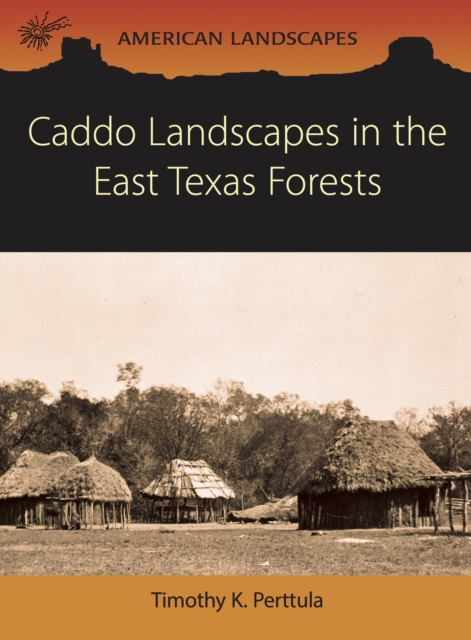
Caddo Landscapes in the East Texas Forests
In this major, highly illustrated, new study Tim Perttula explores the cultural and social landscape of the Caddo Indian peoples (hayaanuh) for about 1000 years between c. 900 and 1900 AD. There were continual changes in the character and extent of ancestral landscapes, through times of plenty, risk, and hardship, as well as in relationships between different communities of Caddo peoples dispersed or concentrated across the landscape at different points in time. These ancestral peoples, in all their diversity of origins, material culture, subsistence, and rituals and religious beliefs, actively created their societies by establishing connected places on the land that became home and lead to the formation of social networks across environments with a diverse mosaic of resources. Established places lent order to the chaotic worlds of people and nature, and they embodied history and the cosmos here on earth. Caddo Landscapes explores the ancestral Caddo constructed landscape, providing detailed information on earthen mounds, specialized non-mound structures, domestic settlements and their key facilities as well as associated gardens and fields, and places where salt, clay, lithic raw materials, and other materials were obtained and the social ties that linked communities in numerous ways. The character and key sequences of ceramics are discussed and radiometric dating evidence provided.
eBook

The Native Ground
InThe Native Ground, Kathleen DuVal argues that it was Indians rather than European would-be colonizers who were more often able to determine the form and content of the relations between the two groups. Along the banks of the Arkansas and Mississippi rivers, far from Paris, Madrid, and London, European colonialism met neither accommodation nor resistance but incorporation. Rather than being colonized, Indians drew European empires into local patterns of land and resource allocation, sustenance, goods exchange, gender relations, diplomacy, and warfare. Placing Indians at the center of the story, DuVal shows both their diversity and our contemporary tendency to exaggerate the influence of Europeans in places far from their centers of power. Europeans were often more dependent on Indians than Indians were on them. Now the states of Arkansas, Oklahoma, Kansas, and Colorado, this native ground was originally populated by indigenous peoples, became part of the French and Spanish empires, and in 1803 was bought by the United States in the Louisiana Purchase. Drawing on archaeology and oral history, as well as documents in English, French, and Spanish, DuVal chronicles the successive migrations of Indians and Europeans to the area from precolonial times through the 1820s. These myriad native groups-Mississippians, Quapaws, Osages, Chickasaws, Caddos, and Cherokees-and the waves of Europeans all competed with one another for control of the region. Only in the nineteenth century did outsiders initiate a future in which one people would claim exclusive ownership of the mid-continent. After the War of 1812, these settlers came in numbers large enough to overwhelm the region's inhabitants and reject the early patterns of cross-cultural interdependence. As citizens of the United States, they persuaded the federal government to muster its resources on behalf of their dreams of landholding and citizenship. With keen insight and broad vision, Kathleen DuVal retells the story of Indian and European contact in a more complex and, ultimately, more satisfactory way.
eBook
Three nations, one place: comparative analyses of Comanche and Caddo social change during the Spanish colonial era, 1689-1821
An intensive exploration of the changes experienced by the Comanches and Caddoans during Spain's occupation of the Southern Plains (1689-1921), McCollough focuses on the relationship between political and economic conditions and patterns of settlement, production and social reproduction. Challenging historical views that structure a dichotomy of the colonizers and the colonized, this study examines global, regional and local populations as it details the points of interface between Euro-American markets, Native American commodities and indigenous social groups in this early colonial period.
eBook

The Adair site: Ouachita River Valley relations through ceramic analysis
The Adair site (3GA1), located in the Upper Ouachita River Valley in Garland CO, Arkansas is an Upper Ouachita Caddo site. The people at the site are presumed to be at the center of cultural dominance for the area and had interaction with Caddo sites in the region. This thesis explores this by studying the whole vessel collections that were excavated at the Adair site in the 1930s. Comparing the Adair collection to three other Caddo sites provides information about the social standing of the Adair site, its relations with other sites, and how it fits into the greater fabric of Caddo culture in the Upper Ouachita River Valley.
Dissertation

The Pawnee Mission Letters, 1834-1851
Rev. John Dunbar and Samuel Allis set out in 1834 to establish a mission to Indians beyond the Rocky Mountains. Unable to obtain a guide and with only a vague knowledge of the West, they instead encountered the Pawnee Indians in Nebraska. It was the beginning of a twelve-year odyssey to convert the tribe to Protestant Christianity and New England civilization. Dunbar and Allis traveled with the Pawnees on buffalo hunts and spent time at their villages, recording the customs and habits of the tribe. After a permanent community was established, the American Board of Commissioners for Foreign Missions sent additional missionaries and conflicts over conversion methods ensued, nearly destroying the mission community. The mission was eventually abandoned in 1846, when hostilities between the Sioux and the Pawnees escalated. This collection of letters written by and to the missionaries, as well as their journal entries, illustrates the life of the mission, from the everyday complications of building and maintaining a community far from urban areas, to the navigation of the bureaucratic policies of the federal government and the American Board, to the ideological differences of the Pawnees multiple missionaries and the ensuing rift within the community. These writings provide a unique and personal portrayal of this small white community in the heart of the Pawnees domain.
eBook

Mitochondrial DNA of Protohistoric Remains of an Arikara Population from South Dakota: Implications for the Macro-Siouan Language Hypothesis
Mitochondrial DNA (mtDNA) was extracted from skeletal remains excavated from three Arikara sites in South Dakota occupied between AD 1600 and 1832. The diagnostic markers of four mtDNA haplogroups to which most Native Americans belong (A, B, C, and D) were successfully identified in the extracts of 55 (87%) of the 63 samples studied. The frequencies of the four haplogroups were 42%, 29%, 22%, and 7%, respectively, and principal coordinates analysis and Fisher's exact tests were conducted to compare these haplogroup frequencies with those from other populations. Both analyses showed closer similarity among the Mohawk, Arikara, and Sioux populations than between any of these three and any other of the comparison populations. Portions of the first hypervariable segment (HVSI) of the mitochondrial genome were successfully amplified and sequenced for 42 of these 55 samples, and haplotype networks were constructed for two of the four haplogroups. The sharing of highly derived lineages suggests that some recent admixture of the Arikara with Algonquian-speaking and Siouan-speaking groups has occurred. The Arikara shared more ancient lineages with both Siouan and Cherokee populations than with any other population, consistent with the Macro-Siouan language hypothesis that Iroquoian, Siouan, and Caddoan languages share a relatively recent common ancestry.
Journal Article
Brothers Apart: The Legend of Nacogdoches and Natchitoches
\"Years ago when Texas was nothing but a wide open range, without cement streets, fast highways, and tall buildings. A time when Texas was brand new, flowing with green trees, tall grass, clean clear lakes and rivers, and animals running the plains free and wild. There lived a tribe of Indians called the Caddoans.\" (ProQuest LLC) Read a story of about the Caddo Indians.
Journal Article

Caddo Sun Accounts across Time and Place
Billy Day, a Tunica/Biloxi, recently described the significance of the sun for Caddoan people. Day quoted an \"old Caddo relative\" of his who said: \"I used to go outside and hold my hands up and bless myself with the sun--'a'hat.' Well, I can't do that anymore because they say we are sun worshipers. We didn't worship the sun. We worshiped what was behind it--the power behind it.\" Day's comments served to illustrate the centrality of the sun among ancient Caddoans, but it also hinted at change over time as well as resistance to that change. This essay uses sun accounts as a prism into Caddo history. It asks, In what ways did sun stories change over time? The author's main argument is that constructing a simple cause-and-effect transformation model does not adequately reflect Caddo history. The Caddos had more than one people, more than one sun account, more than one history, and more than one way of recording history. This article is organized around several key moments in which the Caddos shared a sun account that made it into the written records. The first part of this essay looks at a Caddo origin account, paying particular attention to the man who published the story, anthropologist George Dorsey. The second and third parts of this essay also focus on accounts that Dorsey published but do so from the perspective of his Caddo collaborators, the political leader White Bread and the medicine doctor Wing. The fourth part of this essay turns to the works of two more recent scholars, Vynola Beaver Newkumet and Howard Meredith, who wrote about the sun's origins in relation to Caddo dance. The fifth and final part goes back to the earliest known contact period to explore European descriptions of Caddo sun accounts, beginning with Francisco Casanas. All of these records represent moments in which Caddos and outsiders exchanged information, and uncovering the historical context in which people shared sun stories is as significant as the recorded words. (Contains 48 notes.)
Journal Article