
Catalogue Search | MBRL


Are you sure you want to remove the book from the shelf?

{{itemTitle}}
16
result(s) for
"Caesar, Julius Influence."
Sort by:

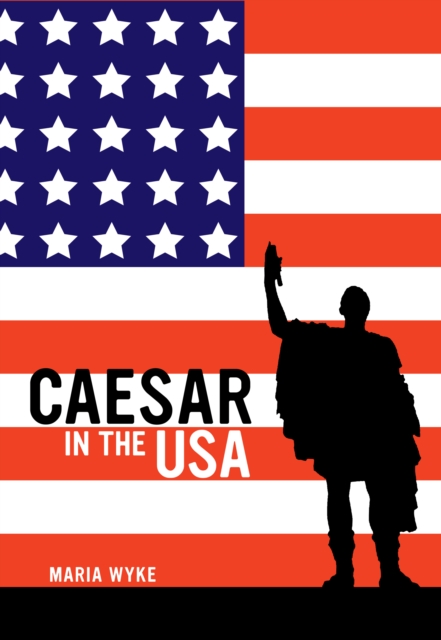
Caesar in the USA
The figure of Julius Caesar has loomed large in the United States since its very beginning, admired and evoked as a gateway to knowledge of politics, war, and even national life. In this lively and perceptive book, the first to examine Caesar's place in modern American culture, Maria Wyke investigates how his use has intensified in periods of political crisis, when the occurrence of assassination, war, dictatorship, totalitarianism or empire appears to give him fresh relevance. Her fascinating discussion shows how—from the Latin classroom to the Shakespearean stage, from cinema, television and the comic book to the internet—Caesar is mobilized in the U.S. as a resource for acculturation into the American present, as a prediction of America’s future, or as a mode of commercial profit and great entertainment.
eBook

Caesarism in the post-revolutionary age : crisis, populace and leadership
Debates about the legitimacy and 'essence' of political rule and the search for 'ideal' forms of government have been at the very heart of political thought ever since antiquity. Caesarism in the Post-Revolutionary Age explores the complex relationship between democracy and dictatorship from the 18th century onwards. More concretely, it assesses how democracy emerged as something compatible with dictatorship, both at the level of political thought and practice. Taking Caesarism - a political alternative somewhere between democracy and dictatorship - as its key concept, the book considers: To what extent was Caesarism seen as a new post-revolutionary form of rule? What were the flaws and perils, strengths and promises of Caesaristic regimes? Can 19th-century Caesarism be characterised as a 'prelude' to 20th-century totalitarianism? What is the legacy and ongoing appeal of Caesarism in the contemporary world? This study will be of value to anyone interested in modern political history, but also contemporary politics.
Book

An Ethos of Sincerity: Echoes of the De Republica in Cicero's Pro Marcello
In September 46 bc, Cicero delivered a speech in the Senate, praising the dictator Caesar for the clemency and wisdom he had shown in pardoning M. Marcellus. The forgiveness of a man who had been, in Caesar's own words, characterized by particular acerbitas seemed all the more magnanimous, and Cicero recalls the occasion in a letter sent to his friend, S. Sulpicius Rufus. He was so overwhelmed by Caesar's generosity, he adds, that he broke a period of self-imposed silence and spoke at length when he was asked to give his opinion. The words he delivered apparently extempore were later written down and published, probably quite soon after the event of their delivery. It has come down to us as the Pro Marcello, and in this speech Cicero does not just praise the dictator but also attempts to influence Caesar, and steer him towards a more republican attitude.
Journal Article


“Frappons L'usurpateur!”: The Rehearsal of Shakespearean Revolution in Victor Hugo's Cromwell
This article examines the way in which Julius Caesar and other related plays by Shakespeare helped to closely shape both the themes and ideological structure in Victor Hugo's Cromwell. Traditional approaches to the Shakespeare-Hugo conjunction have limited their analysis to the two critical texts by Hugo, the Preface to Cromwell and his book William Shakespeare. These approaches tend to be vague and ingenuous, as they commonly take at face value whatever Hugo had to say about his plays, without verifying whether Shakespeare is actually or not a determinant influence in his dramatic oeuvre. By exploring textual parallelisms between Shakespeare's plays and Cromwell, this article aims to lay down a firmer textual basis for this important comparative site. The analysis is moreover conducted within a speculative frame that accords to the category of revolution a decisive role in Hugo's poetics. A logic of resurrectionary iteration and uncanny causality is held to govern the process of literary appropriation by means of which a prominent exponent of Romantic freedom reactivates Shakespearean transgression in order to deploy an English historical drama of usurpation, revolution and tyrannicide. Recent work on Julius Caesar by Richard Wilson and other critics lends support to my claims.
Journal Article


Aristotle My Beloved: Poetry, Diagnosis, and the Dreams of Julius Caesar Scaliger
Notoriously Aristotelian in his poetic theory, linguistics, and natural philosophy, Julius Caesar Scaliger (1484–1558) also reimagined the lost love poetry that Aristotle himself was said to have written. Scaliger'sNew Epigramsof 1533 combine a distinctively humanist view of Aristotle as an elegant polymath with a sustained experiment in refashioning the Petrarchan love lyric. Most visibly in poems about dreams and dreaming, Scaliger educes his speaker's erotic despair from philosophical problems in contemporary Aristotelian accounts of the soul, knowledge, and personal identity. The strange but compelling texts that result form a crossroads for Scaliger's own identities as physician, philosopher, and poet.
Journal Article

DONALD H TAYLOR
There is plenty of enthusiasm for the idea that by using xAPI we can track informal learning, often in conjunction with algorithms or AI. Undoubtedly, this data can be used to improve learning systems, especially around targeting resources, but this is not measuring learning but activity, and only a part of that activity. When building long-term capability, do we want to wait a year or more to discover the effectiveness of a learning programme?
Trade Publication Article
