
Catalogue Search | MBRL


Are you sure you want to remove the book from the shelf?

{{itemTitle}}
4,263
result(s) for
"Caesar, Julius."
Sort by:


Caesar in Gaul and Rome : war in words
Anyone who has even a passing acquaintance with Latin knows “Gallia est omnis divisa in partes tres” (“All Gaul is divided into three parts”), the opening line of De Bello Gallico, Julius Caesar's famous commentary on his campaigns against the Gauls in the 50s BC. But what did Caesar intend to accomplish by writing and publishing his commentaries, how did he go about it, and what potentially unforeseen consequences did his writing have? These are the questions that Andrew Riggsby pursues in this fresh interpretation of one of the masterworks of Latin prose. Riggsby uses contemporary literary methods to examine the historical impact that the commentaries had on the Roman reading public. In the first part of his study, Riggsby considers how Caesar defined Roman identity and its relationship to non-Roman others. He shows how Caesar opens up a possible vision of the political future in which the distinction between Roman and non-Roman becomes less important because of their joint submission to a Caesar-like leader. In the second part, Riggsby analyzes Caesar's political self-fashioning and the potential effects of his writing and publishing the Gallic War. He reveals how Caesar presents himself as a subtly new kind of Roman general who deserves credit not only for his own virtues, but for those of his soldiers as well. Riggsby uses case studies of key topics (spatial representation, ethnography, virtus and technology, genre, and the just war), augmented by more synthetic discussions that bring in evidence from other Roman and Greek texts, to offer a broad picture of the themes of national identity and Caesar's self-presentation.
eBook
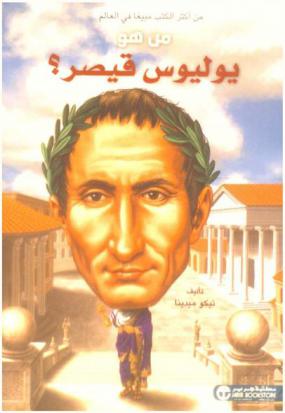
من هو يوليوس قيصر ؟
يتناول هذه الكتاب ويحكي عن قصة العالم العبقري يوليوس قيصر ويتناول الكتاب من أين هو وبم يفكر والمحطات التي كانت في حياته وهي قصة حياة العظماء الذين كانوا روادا في السياسة والثقافة والإبداع الفني والاختراع أولئك الذين أضاؤوا للإنسانية دروب الحياة، ويعد هذا الكتاب للشباب والفتيان وغير المتخصصين الذين ينشدون المعرفة من القراء الآخرين البالغين.
BOOK

Rome and the spirit of Caesar
This book is a thorough examination and fresh interpretation of Shakespeare's presentation of the final throes of republican Rome's decay and demise and the rise of Caesarism. Speech by speech and line by line, it brings out Shakespeare's understanding of the political substance and the historical significance of republican Rome's collapse.
eBook
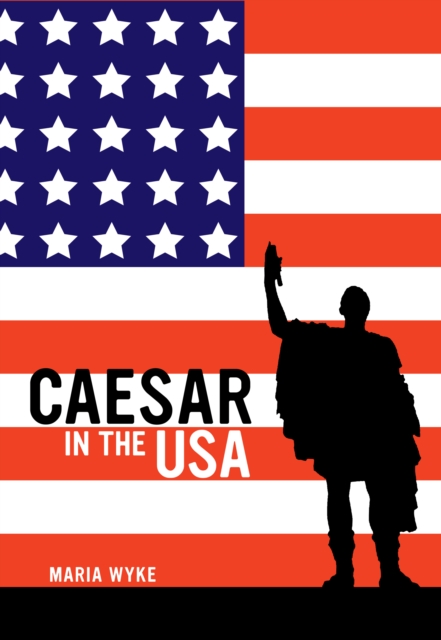
Caesar in the USA
The figure of Julius Caesar has loomed large in the United States since its very beginning, admired and evoked as a gateway to knowledge of politics, war, and even national life. In this lively and perceptive book, the first to examine Caesar's place in modern American culture, Maria Wyke investigates how his use has intensified in periods of political crisis, when the occurrence of assassination, war, dictatorship, totalitarianism or empire appears to give him fresh relevance. Her fascinating discussion shows how—from the Latin classroom to the Shakespearean stage, from cinema, television and the comic book to the internet—Caesar is mobilized in the U.S. as a resource for acculturation into the American present, as a prediction of America’s future, or as a mode of commercial profit and great entertainment.
eBook

Rome and Rhetoric
Renaissance plays and poetry in England were saturated with the formal rhetorical twists that Latin education made familiar to audiences and readers. Yet a formally educated man like Ben Jonson was unable to make these ornaments come to life in his two classical Roman plays. Garry Wills, focusing his attention onJulius Caesar, here demonstrates how Shakespeare so wonderfully made these ancient devices vivid, giving his characters their own personal styles of Roman speech.
In four chapters, devoted to four of the play's main characters, Wills shows how Caesar, Brutus, Antony, and Cassius each has his own take on the rhetorical ornaments that Elizabethans learned in school. Shakespeare also makes Rome present and animate by casting his troupe of experienced players to make their strengths shine through the historical facts that Plutarch supplied him with. The result is that the Rome English-speaking people carry about in their minds is the Rome that Shakespeare created for them. And that is even true, Wills affirms, for today's classical scholars with access to the original Roman sources.
eBook
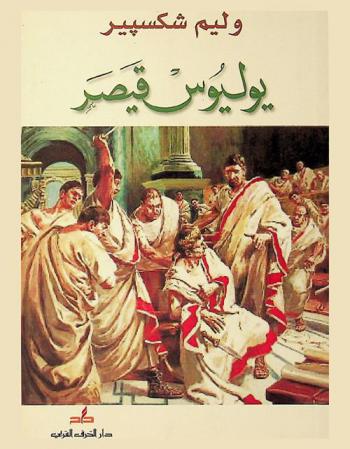
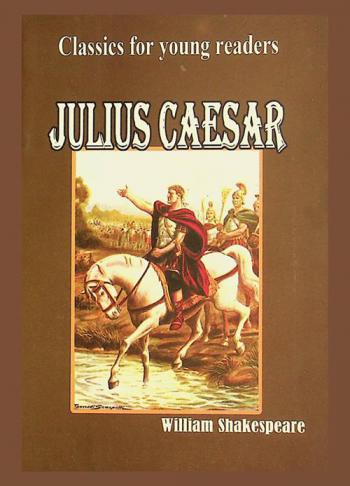
يوليوس قيصر : مأساة في خمس فصول
\"يوليوس قيصر\" مسرحية تراجيدية فهي قصة الفشل التعيس إذ إن البطل يفشل لأنه غير جدير بتحمل المهمة الملقاة على عاتقه ويفشل أيضا لأن المهمة نفسها كانت غير ممكنة وهي محاولة تحسين دولة الرومان باقتراف جريمة ضد الإنسانية فكان لا بد لها من الفشل وربما كتب \"شكسبير\" هذه المسرحية عام 1601 وقد اتقن تطبيق الوقائع التاريخية وأعطى وصفا دقيقا وصحيحا للأشخاص الواردين في المسرحية وتعتبر المسرحية صورة صادقة عن آخر آيام \"يوليوس قيصر\".
Book

Crossing the Rubicon
A dramatic account of the fateful year leading to the ultimate crisis of the Roman Republic and the rise of Caesar's autocracy When the Senate ordered Julius Caesar, conqueror of Gaul, to disband his troops, he instead marched his soldiers across the Rubicon River, in violation of Roman law. The Senate turned to its proconsul, Pompey the Great, for help. But Pompey's response was unexpected: he commanded magistrates and senators to abandon Rome-a city that, until then, had always been defended. The consequences were the ultimate crisis of the Roman Republic and the rise of Caesar's autocracy. In this new history, Luca Fezzi argues that Pompey's actions sealed the Republic's fate. Drawing on a wide range of primary sources, including Cicero's extensive letters, Fezzi shows how Pompey's decision shocked the Roman people, severely weakened the city, and set in motion a chain of events that allowed Caesar to take power. Seamlessly translated by Richard Dixon, this book casts fresh light on the dramatic events of this crucial moment in ancient Roman history.
eBook