
Catalogue Search | MBRL


Are you sure you want to remove the book from the shelf?

{{itemTitle}}
25
result(s) for
"Caesarius"
Sort by:
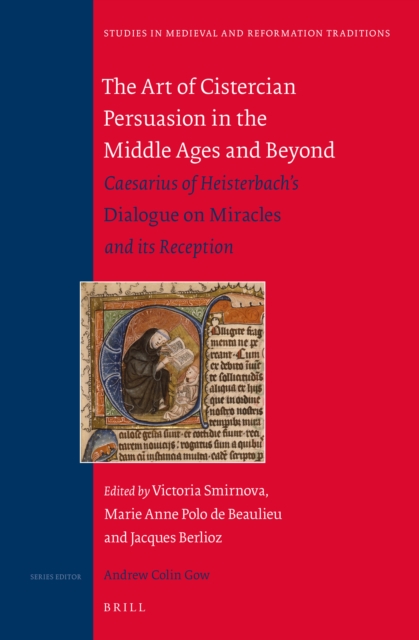
The Art of Cistercian Persuasion in the Middle Ages and Beyond
The articles in this collection offer an in-depth analysis of the Dialogus Miraculorum by the Cistercian Caesarius of Heisterbach (thirteenth century) and provide an insight into the theory and practice of Cistercian persuasion and Caesarius's narrative theology.
eBook

Community, Authority, Rule: Re-Thinking Normative Texts in Early Western Monasticism
Focusing on concepts of community, authority and rule, this study re-thinks the traditional chronology and understanding of early western monastic rules. Beginning with the monastic programmes offered by early writers (Basil in Rufinus’ translation, Augustine, Jerome and Cassian), it questions the idea that the first western monastic rules emerged in the fifth century. It places the emergence of rules in the sixth century, highlighting the radical difference between their ideas of authority and community and those of the earlier texts whose words they often used, above all in the ‘abbatial turn’ that begins with the Rule of Benedict. Texts conventionally classified as early western rules for communal monasteries are re-identified as rules compiled in the seventh century for monasteries and satellite dependencies. Some are also interpreted as providing validation for the newer style of ‘Benedictine–Columbanian’ monasticism and use of the Rule of Benedict by means of a spurious early monastic provenance.
Journal Article

Proving Woman
Around the year 1215, female mystics and their sacramental devotion were among orthodoxy's most sophisticated weapons in the fight against heresy. Holy women's claims to be in direct communication with God placed them in positions of unprecedented influence. Yet by the end of the Middle Ages female mystics were frequently mistrusted, derided, and in danger of their lives. The witch hunts were just around the corner.
While studies of sanctity and heresy tend to be undertaken separately,Proving Womanbrings these two avenues of inquiry together by associating the downward trajectory of holy women with medieval society's progressive reliance on the inquisitional procedure. Inquisition was soon used for resolving most questions of proof. It was employed for distinguishing saints and heretics; it underwrote the new emphasis on confession in both sacramental and judicial spheres; and it heralded the reintroduction of torture as a mechanism for extracting proof through confession.
As women were progressively subjected to this screening, they became ensnared in the interlocking web of proofs. No aspect of female spirituality remained untouched. Since inquisition determined the need for tangible proofs, it even may have fostered the kind of excruciating illnesses and extraordinary bodily changes associated with female spirituality. In turn, the physical suffering of holy women became tacit support for all kinds of earthly suffering, even validating temporal mechanisms of justice in their most aggressive forms. The widespread adoption of inquisitional mechanisms for assessing female spirituality eventuated in a growing confusion between the saintly and heretical and the ultimate criminalization of female religious expression.
eBook


Saints and Their Miracles in Late Antique Gaul
Saints' cults, with their focus on miraculous healings and pilgrimages, were not only a distinctive feature of Christian religion in fifth-and sixth-century Gaul but also a vital force in political and social life. Here Raymond Van Dam uses accounts of miracles performed by SS. Martin, Julian, and Hilary to provide a vivid and comprehensive depiction of some of the most influential saints' cults. Viewed within the context of ongoing tensions between paganism and Christianity and between Frankish kings and bishops, these cults tell much about the struggle for authority, the forming of communities, and the concept of sin and redemption in late Roman Gaul.
Van Dam begins by describing the origins of the three cults, and discusses the career of Bishop Gregory of Tours, who benefited from the support of various patron saints and in turn promoted their cults. He then treats the political and religious dimensions of healing miracles--including their relation to Catholic theology and their use by bishops to challenge royal authority--and of pilgrimages to saints' shrines. The miracle stories, collected mainly by Gregory of Tours, appear in their first complete English translations.
eBook

NAVIGATING THE VAST TRADITION OF ST. AUGUSTINE’S SERMONS
The study of St. Augustine’s sermons has developed, over the last three decades, into a dynamic part of the field of patristics. Still, this category of Augustine’s oeuvre presents a number of challenges that complicate significant progress for several promising avenues of research into Augustine’s preaching. This article first offers a status quaestionis on Augustinian sermon studies since the year 2000. In a second part, the author addresses the issues scholars of Augustine’s preaching face: (a) access to a reliable text, (b) the size, dispersal and uneven identification of the corpus, (c) the problem of authentic versus inauthentic, (d) the distance between patristic sermon studies and medieval sermon studies. Finally, the article reviews resources – both existing and still in development – that can help scholars harness the full potential of the rich corpus of sermons attributed to the Bishop of Hippo: (a) the updated critical text of the sermons in Brepols’ Library of Latin Texts; (b) existing tools to make sense of the different versions of (pseudo-)Augustine’s sermons such as Gryson’s Répertoire général des auteurs ecclésiastiques latins de l’Antiquité et du Haut Moyen Âge and Machielsen’s Clavis Patristica Pseudepigraphorum Medii Aevi; (c) a recently started project to create a digital network of medieval manuscripts that transmit patristic sermon collections (PASSIM).
Journal Article
Saints and their miracles in late antique Gaul
Saints' cults, with their focus on miraculous healings and pilgrimages, were not only a distinctive feature of Christian religion in fifth-and sixth-century Gaul but also a vital force in political and social life. Here Raymond Van Dam uses accounts of miracles performed by SS. Martin, Julian, and Hilary to provide a vivid and comprehensive depiction of some of the most influential saints' cults. Viewed within the context of ongoing tensions between paganism and Christianity and between Frankish kings and bishops, these cults tell much about the struggle for authority, the forming of communities, and the concept of sin and redemption in late Roman Gaul.Van Dam begins by describing the origins of the three cults, and discusses the career of Bishop Gregory of Tours, who benefited from the support of various patron saints and in turn promoted their cults. He then treats the political and religious dimensions of healing miracles--including their relation to Catholic theology and their use by bishops to challenge royal authority--and of pilgrimages to saints' shrines. The miracle stories, collected mainly by Gregory of Tours, appear in their first complete English translations.
eBook

Weisse Frauen und unaussprechliche Schmerzen
Written between 1219 and 1223, the exempla collection Dialogus Miraculorum by the Cistercian Caesarius von Heisterbach is in many respects related to the genre of contemporary legends. Both minor forms of narrative definitely show similarities, not only concerning formal aspects, such as references to reliable witnesses or prior circulation in oral tradition, but also in the choice of topics. In this respect, evocation and confirmation of real fears is of particular importance; in both types of text, stimulating such fears serves both instruction and entertainment. [PUBLICATION ABSTRACT]
Journal Article
The Stone That Transports Itself: A Comparative Study of Song of Songs Rabbah (1,4) and The Dialogue on Miracles (8,63) by Caesarius of Heisterbach
The Jewish story about Rabbi Hanina ben Dosa and his donation to the temple appears in Song of Songs Rabbah, an exegetic Midrash of the sixth century, and in the later Ecclesiastes Rabbah. According to this tale, Rabbi Hanina was so poor that he was unable to provide the standard festival offerings to the temple, as was customary on the pilgrimage to Jerusalem. Instead, he managed to find a heavy stone which he chiseled and brought along with him. The narrative function of bringing weighty stones to holy places also appears in one of the exempla of Dialogus miraculorum which was written by Caesarius of Heisterbach in the thirteenth century. The protagonist of this tale, in apprehension of the gravity of his sins, decided to bring heavy stones to the local Church of the Apostles. On the approaching Day of Judgment, so he hoped, these stones would add to the weight of his good deeds and outweigh his sins. Literary materials and narrative functions tend to circulate across cultural and temporal boundaries, thus making it possible to view different stories that share these features as manifesting one single phenomenon. Their common narrative function expresses a similar, JudeoChristian consciousness of the categories of stone and holy place. The individual cultural settings of these stories, however, establish different interrelations between these classifications.
Journal Article
