
Catalogue Search | MBRL


Are you sure you want to remove the book from the shelf?

{{itemTitle}}
734
result(s) for
"Caiman"
Sort by:

Systematics and Biogeography of Crocodylians from the Miocene of Panama
Despite the fact that fossil crocodylians have been recovered from the Panama Canal Zone starting with initial excavations in 1912, detailed studies have been lacking. Recent excavations of the canal have resulted in new discoveries of many vertebrate fossils, including the first known Miocene crocodylian skulls from Central America. These fossil skulls from the early-middle Miocene represent two new taxa with distinct morphology that is shared with extinct and extant caimans (Caimaninae). A cladistic analysis of 32 alligatorid and three outgroup taxa, scored for 75 characters, resulted in 1210 equally most parsimonious cladograms, all of which suggest that Culebrasuchus mesoamericanus, gen. et sp. nov., is the sister taxon to all previously known Caimaninae. Additionally, the analysis suggests that Centenariosuchus gilmorei, gen. et sp. nov., is the sister taxon to a caimanine clade that includes Purussaurus from the Miocene of South America. In fact, teeth very similar to those of Purussaurus have also been recovered from the Panama Canal. Given these South American affinities, we suggest that these early caimanines dispersed across saltwater. This is a potentially surprising result, because all extant alligatorids lack the salt glands that would have been necessary for the marine dispersal required to reach Central America during the Miocene. Unlike Miocene mammals that all have North American affinities, the Miocene crocodylians of Panama represent a 'melting pot' with taxa of disparate origins living together at the southern extreme of Central America.
Journal Article

Evaluation of Stage-Dependent Genotoxic Effect of Roundup super( registered ) (Glyphosate) on Caiman latirostris Embryos
The agricultural expansion over the past decades, along with the associated increase in the use of pesticides, represents a high risk for many wild species. Caiman latirostris is a South American caiman with many features that make it highly vulnerable to pesticide exposure. Considering previous finding on the genotoxicity of the glyphosate-based formulation Roundup super( registered ) in this species, the aim of this study was to evaluate the possible stage-dependent effect of this compound on C. latirostris embryos through the Comet assay (CA), micronuclei (MN), and nuclear abnormalities (NA) tests. Caiman eggs were exposed to three effective concentrations of Roundup registered (750, 1250, 1750 mu g/egg) in three different stages of the incubation period (total duration 70 plus or minus 3 days at 31 plus or minus 2 degree C) of approximately 23 days each. A statistically significant difference in DNA damage determined by the CA was found between groups exposed to different concentrations of RU (p < 0.05) and the negative control, but no difference was observed among the three stages of exposure within any treatment (p > 0.05). There was no differences in the MN or NA frequencies between the different groups and the negative control (p > 0.05), nor among the different stages within each treatment. The results obtained in this study indicate that RU produce DNA damage on C. latirostris embryos independently of the developmental stage where the exposure occurs, implying an important risk for the species during all its period of development, when pesticide application is at maximum rate.
Journal Article

Influence of incubation temperature and embryonic motility on the growth of members of Caiman yacare (Daudin, 1802)
Abstract This study aimed to evaluate whether skeletal development of the Pantanal Caiman (Caiman yacare) is similarly influenced by temperature variation and controlled increases in embryo motility. All eggs were incubated at 90% humidity and 29 °C for the first 45 days. Thereafter, the incubation temperature was either maintained at 29 °C and embryos were treated with 4-aminopyridine (4-AP) on days 46, 47, 48, and 49 (Group I, 29 °C 4-AP, n = 15); maintained at 29 °C (n = 14; Group II); or at 33 °C (n = 14, Group III). Embryonic movement was measured using an Egg Buddy® digital monitor on days 30, 35, 42, 49, 56, and 60, at which point embryos were euthanized and samples were collected for analysis. No differences were observed between groups with varying incubation temperatures. In contrast, embryonic motility was greater in embryos treated with 4-AP (P < 0.001) on day 49, and this was associated with higher proportions of snout-vent and hand lengths. This study demonstrates for the first time that pharmacologically induced increases in embryo motility result in phenotypic changes to the proportion of elements during prenatal ontogeny, thereby effectively altering the adaptation of the species to specific environments. Resumo Este estudo objetivou avaliar os efeitos da temperatura e motilidade embrionária sobre o desenvolvimento esquelético de jacaré-do-pantanal (Caiman yacare). Os ovos foram incubados com 90% de umidade e empregou-se a temperatura de 29°C por 45 dias. Após, para a incubação do Grupo I a temperatura continuou em 29°C, mas associou-se à injeção de 4-aminopiridina (29°C-4AP, n = 15) aplicada nos dias 46, 47, 48 e 49, do Grupo II permaneceu em 29°C (n = 14) e do Grupo III elevou-se para 33°C (n = 14). A movimentação foi mensurada através do monitor digital Egg Buddy® nos dias 30, 35, 42, 49, 56 e 60 dias. Aos 60 dias, os embriões foram eutanasiados e coletadas amostras embrionárias. Na análise estatística não foram observadas diferenças entre os grupos para o fator temperatura sobre a motilidade embrionária no desenvolvimento esquelético. Em contraste, a motilidade evidenciou diferença estatística no dia 49 para o Grupo I (P < 0,001) e apresentou maiores proporções de nariz e mão. Esses dados demonstraram pela primeira vez que o aumento na motilidade, induzidos farmacologicamente resultam em divergências fenotípicas na proporção de segmentos anatômicos durante a ontogenia pré-natal, podendo alterar efetivamente a adaptação dos animais em ambientes específicos.
Journal Article

Not one but two: examining the genetic origin and characterization of the non-native spectacled caiman (Caiman crocodilus) in Florida
The US state of Florida is home to an alarmingly large number of invasive species, many of which have proven detrimental to native ecosystems. Biological invasions of reptiles in particular have been a major concern in recent years. The spectacled caiman (
Caiman crocodilus
) was first introduced from Latin America to Florida in the 1950’s. Given there are now established breeding populations across southern Florida, there are ongoing efforts to control them. Therefore, there is a need to understand this species’ natural history and introduction pathways. Previous studies have cited the Caribbean Coastal region of Colombia as a primary, and possibly exclusive, origin of
C. crocodilus
in Florida, and the species was identified as belonging to the
C. c. fuscus
molecular lineage. However, previous genetic sampling has been limited and may have been biased by small sample sizes and limited geographic scale. We collected 27 genetic samples from caimans captured in Florida, and sequenced the mitochondrial genes, Cytochrome oxidase I (
COI
) and Cytochrome B (
CytB
) for comparison with homologous gene fragments available for the species at GenBank. We found genetic evidence for multiple introduction events and the taxonomic classification of the Florida caimans as two distinct molecular lineages (
C. c. fuscus
and
C. c. crocodilus
) originating from at least two different regions: the Magdalena River Basin in Colombia and the Upper Branco River Basin in northern Brazil. This study helps to elucidate the genetic history of Florida caimans and provides valuable insight for population management of the species in Florida.
Journal Article

Unexpected morphological variability in the eggshells of the South American caimans Caiman latirostris and Caiman yacare
Eggshell morphology is a valuable indicator of the local conditions within the nests of modern crocodilians and birds. In contrast to these latter, the anatomical structure of the eggshells of most crocodilian species is practically unknown. Here, we provide the first characterization of crocodilian eggshells, using x-ray micro-CT scans. We studied eggshells of
Caiman latirostris
and
Caiman yacare
from various developmental stages that coincide with the beginning of embryonic ossification. The new 3D renderings revealed complex ornamentation, unique among crocodilians, and amphora-shaped pore canals, some of which converge in single pore openings. We also documented a high density of pore canals with a gas diffusion capacity 45 times higher than the average predicted for modern avian eggshells. The external ornamentation and the thickness of the compact layer of the eggshells (i.e. excluding ornamentation) showed ontogenetic and interspecific differences that could be related to nesting materials and nesting areas selected by each species. The shell features described here evidence a greater structural complexity than previously recognized in phylogenetically close, sympatric crocodilian species. Further comprehensive morphological analyses on other modern and fossil crocodilian eggshells using micro-CT technology will shed new light on the evolution of reproductive strategies in this intriguing archosaur clade.
Journal Article

Tears for a crocodile
Burton offers insights about crocodile's tears. The idea that crocodiles cry in order to catch sympathetic humans goes back a long way. But while crocodile tears forever became a metaphor for hypocrisy, by the early 1700s the idea that crocodiles actually cried was already fading, and in 1924 it was roundly declared a myth during a reading of George Lindsay Johnson's ophthalmological research at the Royal Society in London. Scientists reported the filming of captive crocodilians indeed producing lunchtime tears. Of the two common caimans (Caiman crocodilus), two Yacare caimans (Caiman yacare), and three American alligators (Alligator mississippiensis) examined, all but one Yacare and one common caiman produced moisture and even bubbles in their eyes just before, during, or after they ate.
Journal Article

Genetic Characterization of Caiman crocodilus (Crocodilia: Alligatoridae) on Gorgona Island, Colombia
This study examines the genetic variation and structure of the spectacled caiman (Caiman crocodilus) on Gorgona Island, Colombia, compared to continental populations. We analyzed 178 partial Cytochrome b gene sequences, most of which were obtained from GenBank, and identified 23 haplogroups, with five of these specifically found on the Island. Phylogenetic analysis using maximum likelihood placed C. crocodilus, including the Gorgona Island population, in a distinct monophyletic group. Genetic structure analysis identified two main clusters, with Gorgona Island caimans primarily assigned to the Trans-Andean cluster. The haplogroup network illustrates the two major groups, with a maximum of 12 mutational steps between them. Additionally, Tajima’s D statistic suggests an excess of rare alleles in the spectacled caiman. Genetic differentiation across regions suggests historical isolation, likely shaped by geographical barriers and limited gene flow. The distinct genetic patterns of island populations highlight their disparity in terms of evolutionary dynamics and conservation importance. Further genomic analysis is recommended to explore demographic history. Conservation strategies should prioritize the maintenance of genetic diversity to mitigate the effects of isolation, while also incorporating insights from the species’ biogeographic history. Our findings highlight the unique contribution of the small population in Gorgona Island to the species’ spatial genetic structure.
Journal Article
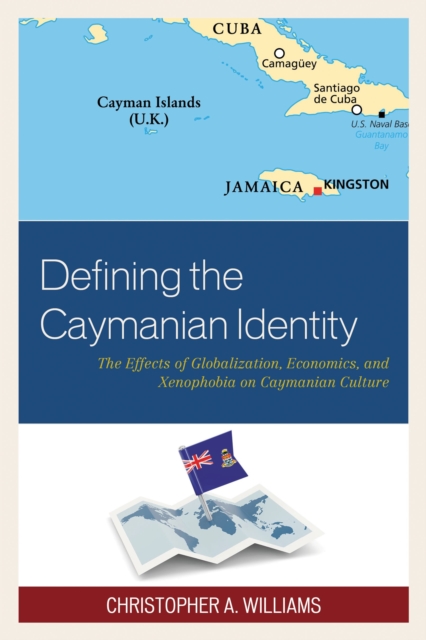
Defining the Caymanian identity
This book analyzes the schisms throughout the Cayman Islands to identify who or what is considered a Caymanian. Caymanian traditions have all but been eclipsed, often due to overpowering cultural sensibilities. Williams investigates the pervasive effects of globalization, multiculturalism, economics, and xenophobia on indigenous Caymanian culture.
eBook

A draft genome sequence of the common, or spectacled caiman Caiman crocodilus version 1; peer review: 2 not approved
The common, or spectacled, caiman
Caiman crocodilus is an abundant, widely distributed Neotropical crocodilian exhibiting notable morphological and molecular diversification. The species also accounts by far for the largest share of crocodilian hides on the global market, with the C. crocodilus hide trade alone valued at about US$86.5 million per year. We obtained 239,911,946 paired-end reads comprising approximately 72 G bases using Illumina
TM sequencing of tissue sampled from a single
Caiman crocodilus individual. These reads were de-novo assembled and progressively aligned against the genomes of increasingly related crocodilians; liftoff was used to annotate the draft
C. crocodilus genome assembly based on an
Alligator mississipiensis (a confamilial species) annotation. The draft assembly has been submitted to the National Center for Biotechnology Information and both assembly and annotation are currently available for review at
doi.org/10.5281/zenodo.4755063
Journal Article

Eggshell structure in Caiman latirostris eggs improves embryo survival during nest inundation
Egg inundation often results in poor hatching success in crocodylians. However, how tolerant eggs are to submergence, and/or how eggshell ultrastructure may affect embryo survival when inundated, are not well understood. In this study, our objective was to determine if embryo survival in Caiman latirostris is affected by eggshell surface roughness, when eggs are submerged under water. Tolerance to inundation was tested early (day 30) versus late (day 60) in development, using eight clutches (four per time treatments), subdivided into four groups: (N = 9 per clutch per treatment; 9 × 4 = 36 eggs per group). ‘Rough’ eggshell represented the natural, unmodified eggshell surface structure. ‘Smooth’ eggshell surface structure was created by mechanically sanding the natural rough surface to remove surface columnar elements and secondary layer features, e.g. irregularities that result in ‘roughness’. When inundated by submerging eggs under water for 10 h at day 30, ‘smooth’ eggshell structure resulted in more than twice as many dead embryos (16 versus 6, smooth versus rough; N = 36), and fewer than half as many healthy embryos (6 versus 13, smooth versus rough, respectively; N = 36). By contrast, at day 60, inundation resulted in very low hatching success, regardless of eggshell surface structure. Only two hatchlings survived the inundation, notably in the untreated group with intact, rough eggshells. Inundation produced a high rate of malformations (58% at day 30), but did not affect hatchling size. Our results indicate that eggshell roughness enhances embryo survival when eggs are inundated early in development, but not late in development. Apparently, the natural surface ‘roughness’ entraps air bubbles at the eggshell surface during inundation, thereby facilitating gas exchange through the eggshell even when the egg is submerged under water.
Journal Article