
Catalogue Search | MBRL


Are you sure you want to remove the book from the shelf?

{{itemTitle}}
184
result(s) for
"Cainites"
Sort by:
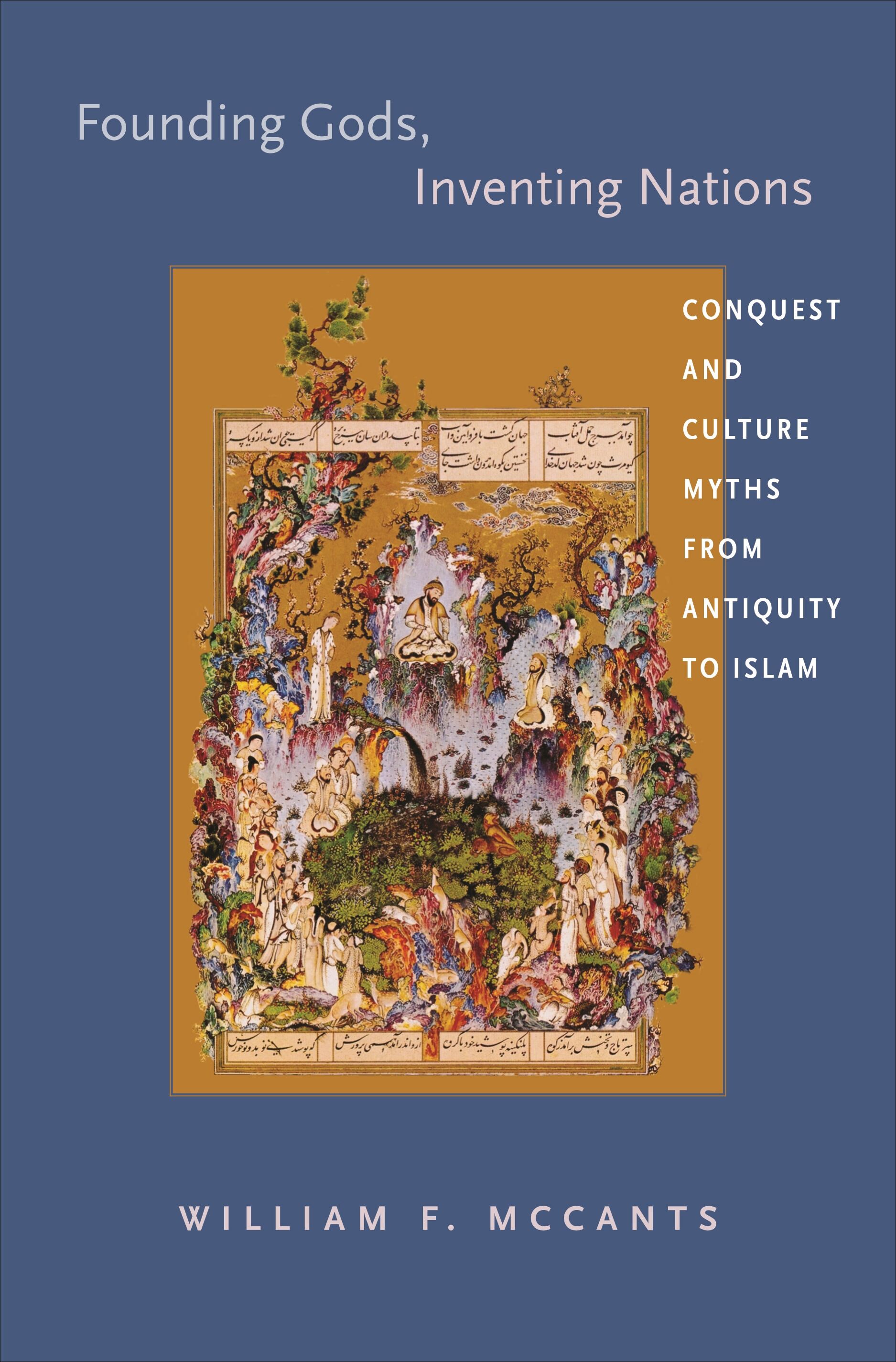
Founding gods, inventing nations
From the dawn of writing in Sumer to the sunset of the Islamic empire, Founding Gods, Inventing Nations traces four thousand years of speculation on the origins of civilization. Investigating a vast range of primary sources, some of which are translated here for the first time, and focusing on the dynamic influence of the Greek, Roman, and Arab conquests of the Near East, William McCants looks at the ways the conquerors and those they conquered reshaped their myths of civilization's origins in response to the social and political consequences of empire.
eBook

Rethinking \Gnosticism\
Most anyone interested in such topics as creation mythology, Jungian theory, or the idea of \"secret teachings\" in ancient Judaism and Christianity has found \"gnosticism\" compelling. Yet the term \"gnosticism,\" which often connotes a single rebellious movement against the prevailing religions of late antiquity, gives the false impression of a monolithic religious phenomenon. Here Michael Williams challenges the validity of the widely invoked category of ancient \"gnosticism\" and the ways it has been described. Presenting such famous writings and movements as theApocryphon of Johnand Valentinian Christianity, Williams uncovers the similarities and differences among some major traditions widely categorized as gnostic. He provides an eloquent, systematic argument for a more accurate way to discuss these interpretive approaches.
The modern construct \"gnosticism\" is not justified by any ancient self-definition, and many of the most commonly cited religious features that supposedly define gnosticism phenomenologically turn out to be questionable. Exploring the sample sets of \"gnostic\" teachings, Williams refutes generalizations concerning asceticism and libertinism, attitudes toward the body and the created world, and alleged features of protest, parasitism, and elitism. He sketches a fresh model for understanding ancient innovations on more \"mainstream\" Judaism and Christianity, a model that is informed by modern research on dynamics in new religious movements and is freed from the false stereotypes from which the category \"gnosticism\" has been constructed.
eBook

Caïn et Abel: de la Bible à la peinture du xixe siècle
Cet article se propose d'examiner, dans un premier temps, le mythe littéraire de Cain dont les différents mythėmes se rencontrent beaucoup plus dans sa representation en peinture que dans ses réécritures littéraires. Dans un second temps, l'article entreprend d'étudier les choix picturaux de la representation de l'épisode biblique de Cain et Abel dans quatre tableaux issus de quatre courants artistiques différents du xixe siėcle, afin de voir comment chaque courant artistique et chaque peintre s'approprie et, par la suite, transpose en peinture l'épisode des frėres ennemis.
Journal Article