
Catalogue Search | MBRL


Are you sure you want to remove the book from the shelf?

{{itemTitle}}
193
result(s) for
"Cake decorating"
Sort by:


Coordination of Price Promotions in Complementary Categories
In this paper, I investigate the outcome of a price competition between two firms, each producing two complementary products. Specifically, I study each firm's decision to coordinate price promotions of its products. Consumers are divided into loyals, who purchase both products from their preferred firm, and heterogeneous switchers, who choose between four possible bundles or buy a product in a single category. The switchers are willing to pay some price premium in order to purchase two complementary products that share the same brand name and are produced by the same firm, because they believe that these products are a better match than two complementary products with different brand names. I find that each firm predominantly promotes its complementary products together. This finding is correlationally supported by data in the shampoo and conditioner and in the cake mix and cake frosting categories.
This paper was accepted by Pradeep Chintagunta, marketing.
Journal Article

Maggie Austin cake : artistry and technique
\"A former ballerina, Maggie Austin turned to baking and sugar art when an injury ended her dancing career--and has since become one of today's most sought-after cake artists. Within these pages, she reveals the methods behind her ethereal designs, with a \"theme and variations\" organization that shows how mastering any single technique can open the door to endless creativity, no matter how large or small the project. Learn how to shape fondant ribbons, sculpt textured surfaces, paint by hand, make rice-paper leaves and feathers, and more, plus the basics of working with fondant and gum paste and a few of Maggie's favorite recipes to get you started. Each technique is broken down into clear instructions and illustrated with step-by-step photos. Whether a single sugar blossom, a batch of hand-painted cookies, or a multitiered cake festooned with ruffles and blooms, there's inspiration for bakers and crafters of all stripes.\" -- From back cover.
Book
Consumers' Price Sensitivities Across Complementary Categories
In this paper, we examine the pattern of correlation among consumer price sensitivities for customer purchase incidence decisions across complementary product categories. We use a hierarchical Bayesian multivariate probit model to uncover this pattern. We estimated this model using purchase incidence data for six categories involving three pairs of complementary products.
Our results show a new and interesting pattern of correlation among price parameters of complementary products. For example, we find that the correlation of own-price sensitivities of complementary products is negative. These results are consistent across the three complementary pairs of products. We also investigate the reason for this counterintuitive result.
Finally, we present some managerial implications of our model. We show how our model can be used for cross-category targeting decisions by retailers. We find that compared to nontargeted discounting, the average profitability gain from customized discounting across the three category pairs is only 1.29% when complementarity is ignored, but this gain improves to 8.26% when full complementarity is taken into account. We also investigate whether ignoring the complex pattern of correlation has implications for managerial actions regarding targeting and optimal discounting. We find that retailers can make misleading inferences about the impact of targeted discounts when they ignore cross-category effects in modeling.
Journal Article


The \Shopping Basket\: A Model for Multicategory Purchase Incidence Decisions
Consumers make multicategory decisions in a variety of contexts such as choice of multiple categories during a shopping trip or mail-order purchasing. The choice of one category may affect the selection of another category due to the complementary nature (e.g., cake mix and cake frosting) of the two categories. Alternatively, two categories may co-occur in a shopping basket not because they are complementary but because of similar purchase cycles (e.g., beer and diapers) or because of a host of other unobserved factors. While complementarity gives managers some control over consumers' buying behavior (e.g., a change in the price of cake mix could change the purchase probability of cake frosting), co-occurrence or co-incidence is less controllable. Other factors that may affect multi-category choice may be (unobserved) household preferences or (observed) household demographics. We also argue that not accounting for these three factors simultaneously could lead to erroneous inferences. We then develop a conceptual framework that incorporates complementarity, co-incidence and heterogeneity (both observed and unobserved) as the factors that could lead to multi-category choice.
We then translate this framework into a model of multi-category choice. Our model is based on random utility theory and allows for simultaneous, interdependent choice of many items. This model, the multi variate probit model, is implemented in a Hierarchical Bayes framework. The hierarchy consists of three levels. The first level captures the choice of items for the shopping basket during a shopping trip. The second level captures differences across households and the third level specifies the priors for the unknown parameters. We generalize some recent advances in Markov chain Monte Carlo methods in order to estimate the model. Specifically, we use a substitution sampler which incorporates techniques such as the Metropolis Hit-and-Run algorithm and the Gibbs Sampler.
The model is estimated on four categories (cake mix, cake frosting, fabric detergent and fabric softener) using multicategory panel data. The results disentangle the complementarity and co-incidence effects. The complementarity results show that pricing and promotional changes in one category affect purchase incidence in related product categories. In general, the cross-price and cross-promotion effects are smaller than the own-price and own-promotions effects. The cross-effects are also asymmetric across pairs of categories, i.e., related category pairs may be characterized as having a \"primary\" and a \"secondary\" category. Thus these results provide a more complete description of the effects of promotional changes by examining them both within and across categories. The co-incidence results show the extent of the relationship between categories that arises from uncontrollable and unobserved factors. These results are useful since they provide insights into a general structure of dependence relationships across categories. The heterogeneity results show that observed demographic factors such as family size influence the intrinsic category preference of households. Larger family sizes also tend to make households more price sensitive for both the primary and secondary categories. We find that price sensitivities across categories are not highly correlated at the household level. We also find some evidence that intrinsic preferences for cake mix and cake frosting are more closely related than preferences for fabric detergent and fabric softener.
We compare our model with a series of null models using both estimation and holdout samples. We show that both complementarity and co-incidence play a significant role in predicting multicategory choice. We also show how many single-category models used in conjunction may not be good predictors of joint choice.
Our results are likely to be of interest to retailers and manufacturers trying to optimize pricing and promotion strategies across many categories as well as in designing micromarketing strategies. We illustrate some of these benefits by carrying out an analysis which shows that the \"true\" impact of complementarity and co-incidence on profitability is significant in a retail setting. Our model can also be applied to other domains. The combination of item interdependence and individual household level estimates may be of particular interest to database marketers in building customized \"cross-selling\" strategies in the direct mail and financial service industries.
Journal Article
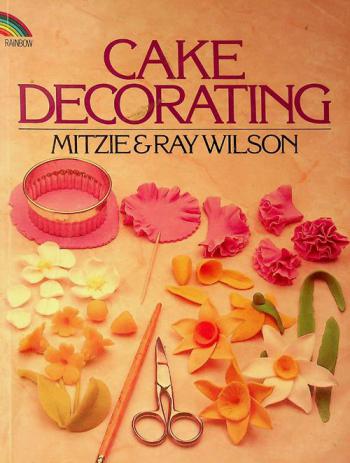
Cake decorating
Simple step-by-step instructions for creating specialty cakes including color photographs of how they should look.
Book

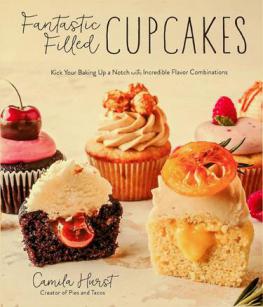
Fantastic filled cupcakes : kick your baking up a notch with incredible flavor combinations
The creator of the dessert blog Pies & Tacos offers 60 decadent cupcake recipes, each with a unique, surprise filling including White Chocolate Macadamia & Caramel Fudge Cupcakes and Chocolate Coconut Macaroon Cupcakes.
Book

Let's Cut the Cake
Measurement is an important component of K-grade 12 mathematics curricula. The concepts of area and perimeter of polygons are first introduced in third grade and serve as the basis for teaching in the upper grades. Without a strong understanding of measurement, students will struggle to meaningfully grasp three-dimensional measurement concepts (e.g., volume) and will later make connections between area and more complex concepts, such as integration, which requires finding areas under curved surfaces. This article describes how elementary school teachers explored a task that encouraged them to consider area and perimeter simultaneously. Studies (e.g., Reinke 1997; Menon 1998) show that teachers, similarly to students, also struggle to develop robust understandings of measurement. So, although this task was implemented with teachers, the discussion offers insight into how upper elementary school students might approach this task and gives suggestions on effective ways to implement the task.
Journal Article