
Catalogue Search | MBRL


Are you sure you want to remove the book from the shelf?

{{itemTitle}}
41
result(s) for
"Calderón de la Barca, Pedro, 1600-1681 -- Criticism and interpretation"
Sort by:
Reason and the Passions in the 'Comedias' of Calderon
Introduction In 1675, six years before the death of Calderon, Benedict de Spinoza began to circulate cautiously among his friends and colleagues in the Netherlands the manuscripts of what was to be published posthumously as the Ethics.
eBook

Hercules and the King of Portugal : icons of masculinity and nation in Calderón's Spain
\"Scrutinizes ways that gender performances of two male icons of the early modern Iberian Peninsula are structured to express enduring nationhood, in theater and other genres\"-- Provided by publisher.
Book


Calderón
Although Pedro Calderón de la Barca was one of the greatest and most prolific playwrights of Spain's Golden Age, most of his nonallegoricalcomedias-- 118 in all -- have remained unknown. Robert ter Horst presents here the first full-length study of these works, a sustained, meditative analysis dealing with more than 80 plays, conveying a sense of the whole of Calderón's secular theater.
To approach so vast a body of literature, Mr. ter Horst examines the meaning and function in Calderón of three broad subjects -- myth, honor, and history -- the warp threads across which the playwright weaves a subtle tapestry of contrasts, dualities, and conflicts: the private person versus the public person, the inner realm versus the outer, masculine against feminine, poet against prince.
The Calderón who emerges is a consciously consummate artist whose lifelong study was the passions of the human mind and body. In addition, he is seen as a synthesizer of his Spanish literary heritage and especially as a brilliant adapter of Cervantes' insights to the stage. Robert ter Horst's profound and far-ranging analysis sheds light on many fine works previously neglected and finds new depths in such supreme achievements asNo hay cosa como callar, El segundo Escipión,andLa vida es suefio.
eBook

Staging Marriage in Early Modern Spain
Staging Marriage in Early Modern Spain examines selected dramatic works where the vicissitudes of matrimony play center stage. Various aspects of conjugal relations including courtship, divorce, and widowhood take on particular relevance in the Spanish comedia in light of the intense debates raging over the \"seventh sacrament\" in early modern Europe. The institution of matrimony is subject to unprecedented scrutiny during this period and provides a rich source of material for playwrights such as Lope de Vega, Miguel de Cervantes, and Pedro Calderón de la Barca. Taking the decrees on marriage of the Council of Trent (1563) as a point of departure, Carrión examines the conjugal bond within a literary and historical framework, offering close readings of dramatic works, religious decrees, and moral treatises where the conjugal bond plays a central role. She identifies in works such as Lope's Peribáñez y el Comendador de Ocaña, Cervantes' El juez de los divorcios, and Calderón's El medico de su honra the emergence of more modern perspectives on marriage. One of the central questions this study raises is the degree to which the dramatic works of early modern Spain conform to the morality espoused by the treatises that defined marriage at the time. While the tone of prescriptive discourses contrasts with the lyrical voices of the Spanish stage, both reveal a number of inherent-and compelling-contradictions in their views of the conjugal bond.
eBook

Calderón : the secular plays
Although Pedro Calderón de la Barca was one of the greatest and most prolific playwrights of Spain's Golden Age, most of his nonallegorical comedias --118 in all--have remained unknown.
eBook
Calderón y el Barroco
Amadei-Pulice examines the conflict between Lope's dramatic formula (comedia) and the new polytechnic formula that in the hands of Calderon merged dramatic poetry with visual and auditory effects (comedia de teatro). The author places the Spanish baroque theater within the wider context of a revolution in the theory of representation, signs, and meanings that took place at the beginning of the seventeenth century and marked the appearance of a new dramatic style: the stile rappresentativo. Special attention is given to the techniques and applications of perspectival scenery, stagecraft, optics, and the creation of visual and sound effects contributed by the Florentine melodramma. The highlighting of Italian dramatic theory and practice reveals that Calderon was an innovator and creator of a new concept in theater.
eBook
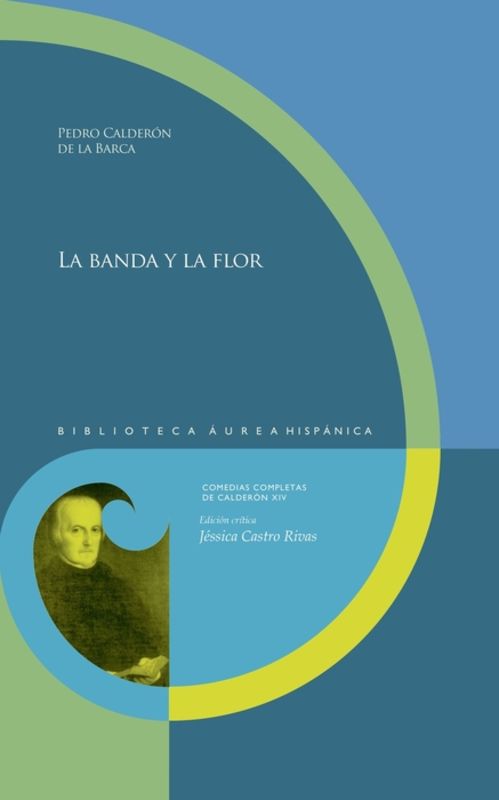
La banda y la flor
Esta investigación contiene el estudio literario de la comedia, la anotación filológica y la edición crítica de la misma. En cuanto al estudio literario, incluye un análisis del momento histórico que da origen a la obra, algunas notas acerca de la recepción de La banda y la flor en España y en el resto de Europa, una introducción al subgénero palatino –al que pertenece la comedia– y la delimitación de las características distintivas aportadas por Calderón. Asimismo, se analiza la estructura métrica; los principales temas, tales como el amor, los celos y la amistad; la construcción de los personajes; la importancia de la simbología de los colores azul y verde, y también de la banda y la flor como elementos representativos de ciertos personajes, entre otros aspectos. [Texto de la editorial].
eBook