
Catalogue Search | MBRL


Are you sure you want to remove the book from the shelf?

{{itemTitle}}
26
result(s) for
"Calligraphy, Turkish."
Sort by:

Islamic art and visualities of war from the Ottoman Empire to the Turkish Republic
This article explores how Islamic art was produced and used in Turkey within the context of modern warfare during World War I, the War of Independence, and the nascent Republic – a subject still relatively understudied in Turkish history, as well as in international cultural histories of modern warfare and histories of modern art in the Middle East. Drawing on previously overlooked visual and textual sources such as calligraphic panels, miniature paintings, war posters, and religious timetables produced during the years 1914–1924, we examine the ways in which Islamic arts were articulated with the experience of war through both individual actions and official policies, revealing how Ottoman artists tried to make sense of war and how Islamic genres and motifs were appropriated, and sometimes subverted, in the service of the nationalist cause. We show that far from exhibiting a sharp discontinuity, the transition from Ottoman–Islamic to Republican–nationalist artistic content was gradual, involving the reappropriation and repurposing of Islamic motifs and techniques in a manner that reflected the religious mindset of the elites and masses in the early twentieth century.
Journal Article

Onarımdan Sanata: XVIII. Yüzyıl Osmanlı Kitap Sanatlarında Vassale Tekniği
Osmanlı sanatçıları tarafından, zamanla bozulan nüshalardan çıkarmak suretiyle ya da müzayedelerde satışa sunulan hat ve minyatürleri bir şekilde temin edip, daha fazla yok olmalarının önüne geçmek amacıyla uygulanan onarım işlemine vassale tekniği, bu tekniği uygulayan sanatçıya da vassal adı verilmiştir. XVII. yüzyılda Kalender Paşa tarafından hazırlanan I. Ahmed Albümü ile öne çıkan vassalecilik, XVIII. yüzyılda gelişerek devam etmiş, özellikle koleksiyoner Mehmed Emin Efendi ve adı bilinmeyen vassallar tarafından onarım tekniği olarak uygulanmıştır. Ancak onarım işlemi olarak başlayan bu teknik, Kalender Paşa ile birlikte sanata dönüşmüş ve başta murakkalar olmak üzere çok sayıda resimli nüshalar hazırlanmıştır. Bu makalede, XVIII. yüzyılda Osmanlı kitap sanatlarında karşılaşılan farklı bir şekilde uygulanması nedeniyle, önemli bir yere sahip vassale tekniğinin incelenmesi amaçlanmaktadır. Bu kapsamda, söz konusu yüzyıllarda karşılaşılan ve kitapları onarmak amacıyla kullanılan vassale tekniğinin yüzyıllara bağlı olarak sanatçılar ve koleksiyonerler tarafından uygulanış biçimi, Osmanlı kitap sanatları içinde önemli bir yeri olan murakka ve resimli elyazmaları üzerinden seçilen örnekler ışığında incelenmiştir. Araştırma kapsamında ulaşılan örnekler arasından seçilen nüshalar; “Topkapı Sarayı Müzesi Kütüphanesi B.408 numaralı I. Ahmed Albümü, H.1115 numaralı Hamse-i Nizami, H.2155 numaralı Albüm, H.2135 numaralı Murakka ve İstanbul Üniversitesi Nadir Eserler Kütüphanesi Türkçe Yazmalar Koleksiyonu 06131, 06132, 06133 numaralı Şehnâme Tercümesi” adlı koleksiyonlarda yer almaktadır.
Journal Article

Turkish Language Teacher Metaphors of Pre-service Teachers According to Their Perceptions
The aim of this study is to determine the pre-service teachers' perceptions related to teacher / Turkish language teacher concepts through metaphors. The study group consists of first and fourth grade undergraduate students from Department of Turkish Language Teaching of Faculty of Education of Ağrı province and graduate students from Turkish Language Education in 2018-2019 academic years. The research data was collected with open ended questions. With the questions as “How do you think the concept teacher can be expressed with different words? Why?” related to teacher concept, “What is the first reaction and the first sentence you hear from the people when you tell them that you are a Turkish language teacher/study in the department of Turkish Language Teaching?” related to Turkish language teacher concept, and “What are the three words that you think of when Turkish language teacher is mentioned?” related to Turkish language teacher concept, preferability levels of the metaphors were determined with frequency, percentage, arithmetic mean and standard deviation; and t test was used to determine the difference between gender and views of the participants according to grade. According to the results obtained from the study, it was determined that the participants presented both positive and negative metaphors related to the questions. While a high number of positive metaphors such as educator / instructor, leading / guide / leader and father / mother, compassion, laborer, friend, honest, self-sacrificing, hope are produced, negative metaphors such as Hope killer / hangman and expropriator are also produced. Of the metaphors produced about the Turkish language teacher, the first four came out as silver-tongued/ calligraphic, grammar, book and poet / poem. In addition, metaphors like Unemployed and With Poor Turkish/Short-tempered were also produced.
Journal Article
Shah tahmasp album : from the royal Ottoman treasury
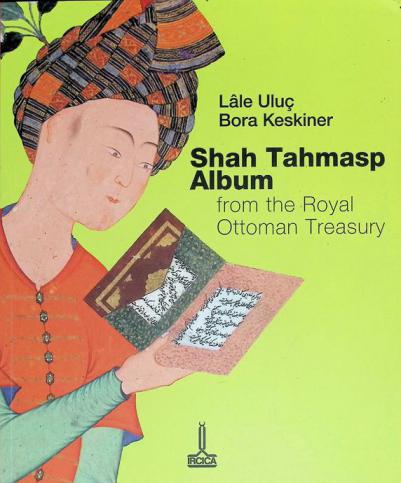
This volume provides a comprehensive study of the Shah Tahmasp Album, tracing its provenance from the Safavid court to the Ottoman Royal Treasury. It features scholarly analysis of its miniatures and calligraphy, exploring the artistic synthesis between Persian and Ottoman traditions and the role of the album in 16th-century diplomatic history.
BOOK

The Hair on My Head Is Shining : Qur'anic Imagery of the Curl in Classical Azeri-Turkish Ṣūfī Poetry
Two main tendencies can be observed in the intertextual use of the Qur'anic text in the depiction of facial features in classical Azeri-Turkish Ṣūfī poetry: first, features of divine beauty are compared with the writing of the Qur'an, its suras and ayas, and second, these features are juxtaposed with images drawn from Qur'anic narratives such as the account of Moses' encounter with the sorcerers or the story of Joseph. Research on the impact of the Qur'an on Azeri-Turkish Ṣūfī poetry has until now mainly focused on the first tendency, particularly on revealing the secret meanings of symbols by using the numerical abjad system, whereas the second aspect – that of symbolic images derived from Qur'anic stories – remains relatively unexplored. With this in mind, this article will examine Qur'anic images utilised in the depiction of the face, specifically the influence of Qur'anic narratives upon the variations of Ṣūfī symbolism of the curl in medieval Turkish Ṣūfī poetry, with special reference to poetry in the Azeri vernacular. Although attention will be restricted mainly to Qur'anic stories, some consideration will also be given to pure Ḥurūfī trends.
Journal Article

Un ancien régime typographique: Culture manuscrite, société graphique et ponctuation turque ottomane
Un ancien régime typographique: Culture manuscrite, société graphique et ponctuation turque ottomaneLa présente étude substitue une analyse technique et graphique des opérations typographiques à l’approche politique et culturelle qui met habituellement l’accent sur les obstacles opposés à l’apparition de l’imprimerie dans l’Empire ottoman. Au-delà d’une démarche historiographique centrée sur les échecs de la modernisation culturelle, un examen combiné des caractères typographiques et des signes de ponctuation invite à proposer une histoire conjuguée de l’imprimé et du manuscrit. Celle-ci, tournée vers l’étude des vitalités textuelles, met au jour des convergences entre les productions calligraphiques, les expérimentations de la typographie et les progrès de la lithographie. Elle relie le travail du typographe aux actions de la main, les activités de l’éditeur aux productions de l’auteur, l’impression des matrices aux inscriptions de la plume. La ponctuation est un terreau d’innovation qui propose, au fil de ses modalisations, de nouvelles insertions, créations et hybridations contribuant au développement de la société graphique ottomane : les gens de l’écrit (scribes, copistes, lettrés, mais aussi éditeurs, typographes et imprimeurs) produisent des textes en fonction d’une culture manuscrite, de contraintes techniques et des caractères propres à la langue turque ottomane. Dès lors, une approche technique de l’ensemble des formes de production écrite permet d’ouvrir un nouveau chantier : celui d’une histoire croisée de la langue et des textes.
Journal Article

Şair bir Osmanlı münşîi: Okçuzâde Mehmed Şâhî
Bilim, sanat ve edebiyata bütüncül bir bakış açısıyla yaklaşan Osmanlı aydınları, çok yönlü
yetişmişler ve çeşitli sahalarda kalem oynatmışlardır. Bir matematik bilgininin felsefe alanında
eserler yazdığı, bir hadis âliminin tarihî kitaplar kaleme aldığı, bir devlet adamının hüsn-i hatla
meşgul olduğu yahut bir şeyhülislamın divan tertip ettiği müteaddit defa görülmüştür. Fakat
modern araştırmacının ihtisaslaşmaya dayalı bilim anlayışından olsa gerek, bu şahsiyetler
genelde belirli yönleriyle ön plana çıkmış ve bazı meziyetleri gölgede kalmıştır. XVI. yüzyılın
sonları ile XVII. yüzyılın başlarında, Osmanlı Devleti’nin başkenti İstanbul’da yetişen Okçuzâde
Mehmed Şâhî de hezâr-fen diye nitelendirilen bu şahsiyetlerden biridir. Devletin önemli
kademelerinde görevlerde bulunan Mehmed Şâhî, sanat ve edebiyatla da ilgilenmiş, süslü
nesirle kaleme aldığı inşâ türündeki eserleriyle tanınmıştır. Bu yönüyle haklı şöhret kazanan
Mehmed Şâhî, aynı zamanda şairdir. Nitekim genç yaşlarda kaleme aldığı şiirlerle bazı tezkire
yazarlarının dikkatini çekmiş, tezkirelerde şiirlerine yer verilmiştir. Şuarâ tezkirelerinin
yanında bazı klâsik eserlerle kendisine ait mensur eserlerde de beyit, dörtlük ve kıtaları
bulunmaktadır. Bu makalede, şairin söz konusu kaynaklardaki şiirleri, bir araya getirilmiş ve
bunların değerlendirmesi yapılmıştır.
Journal Article