
Catalogue Search | MBRL


Are you sure you want to remove the book from the shelf?

{{itemTitle}}
173
result(s) for
"Caloric content"
Sort by:

Why calories count : from science to politics
\"Calories--too few or too many--are the source of health problems affecting billions of people in today's globalized world. Although calories are essential to human health and survival, they cannot be seen, smelled, or tasted. They are also hard to understand. In Why Calories Count, Marion Nestle and Malden Nesheim explain in clear and accessible language what calories are and how they work, both biologically and politically. As they take readers through the issues that are fundamental to our understanding of diet and food, weight gain, loss, and obesity, Nestle and Nesheim sort through a great deal of the misinformation put forth by food manufacturers and diet program promoters. They elucidate the political stakes and show how federal and corporate policies have come together to create an \"eat more\" environment. Finally, having armed readers with the necessary information to interpret food labels, evaluate diet claims, and understand evidence as presented in popular media, the authors offer some candid advice: Get organized. Eat less. Eat better. Move more. Get political\"--Provided by publisher.
Book

Life Histories of the Dobe !Kung
Life Histories of the Dobe !Kung re-examines an important anthropological data set for the Dobe !Kung, the well-known \"Bushmen\" of the Kalahari Desert, collected by Nancy Howell and colleagues. Using life history analysis, Howell reinterprets this rich material to address the question of how these hunter-gatherers maintain their notably good health from childhood through old age in the Kalahari's harsh environment. She divides the population into life history stages that correlate with estimated chronological ages and demonstrates how and why they survive, even thrive, on a modest allotment of calories. She describes how surplus food is produced and distributed, and she considers both the motives for the generous sharing she has observed among the Dobe !Kung and some evolutionary implications of that behavior.
eBook
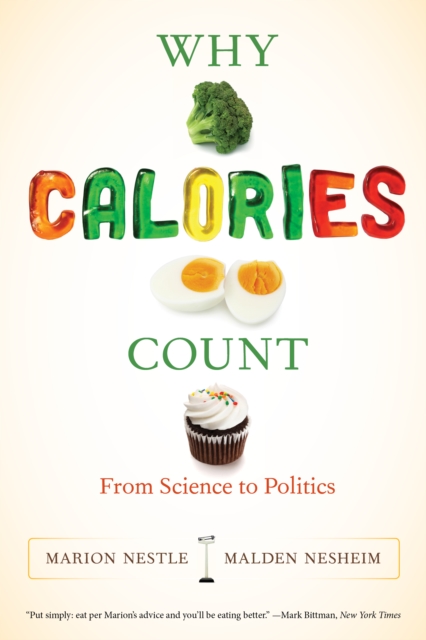
Why calories count
Calories—too few or too many—are the source of health problems affecting billions of people in today's globalized world. Although calories are essential to human health and survival, they cannot be seen, smelled, or tasted. They are also hard to understand. In Why Calories Count, Marion Nestle and Malden Nesheim explain in clear and accessible language what calories are and how they work, both biologically and politically. As they take readers through the issues that are fundamental to our understanding of diet and food, weight gain, loss, and obesity, Nestle and Nesheim sort through a great deal of the misinformation put forth by food manufacturers and diet program promoters. They elucidate the political stakes and show how federal and corporate policies have come together to create an \"eat more\" environment. Finally, having armed readers with the necessary information to interpret food labels, evaluate diet claims, and understand evidence as presented in popular media, the authors offer some candid advice: Get organized. Eat less. Eat better. Move more. Get political.
eBook
A Quantitative Review and Meta-Models of the Variability and Factors Affecting Oral Drug Absorption—Part I: Gastrointestinal pH
This study aimed to conduct a quantitative meta-analysis for the values of, and variability in, gastrointestinal (GI) pH in the different GI segments; characterize the effect of food on the values and variability in these parameters; and present quantitative meta-models of distributions of GI pH to help inform models of oral drug absorption. The literature was systemically reviewed for the values of, and the variability in, GI pH under fed and fasted conditions. The GI tract was categorized into the following 10 distinct regions: stomach (proximal, mid-distal), duodenum (proximal, mid-distal), jejunum and ileum (proximal, mid, and distal small intestine), and colon (ascending, transverse, and descending colon). Meta-analysis used the “metafor” package of the R language. The time course of postprandial stomach pH was modeled using NONMEM. Food significantly influenced the estimated meta-mean stomach and duodenal pH but had no significant influence on small intestinal and colonic pH. The time course of postprandial pH was described using an exponential model. Increased meal caloric content increased the extent and duration of postprandial gastric pH buffering. The different parts of the small intestine had significantly different pH. Colonic pH was significantly different for descending but not for ascending and transverse colon. Knowledge of GI pH is important for the formulation design of the pH-dependent dosage forms and in understanding the dissolution and absorption of orally administered drugs. The meta-models of GI pH may also be used as part of semi-physiological pharmacokinetic models to characterize the effect of GI pH on the in vivo drug release and pharmacokinetics.
Journal Article

Do Gray Whales Count Calories? Comparing Energetic Values of Gray Whale Prey Across Two Different Feeding Grounds in the Eastern North Pacific
Predators must consume enough prey to support costly events, such as reproduction. Meeting high energetic requirements is particularly challenging for migrating baleen whales as their feeding seasons are typically restricted to a limited temporal window and marine prey are notoriously patchy. We assessed the energetic value of the six most common nearshore zooplankton species collected within the Oregon, United States range of the Pacific Coast Feeding Group (PCFG) gray whale ( Eschrichtius robustus ) feeding grounds, and compared these results to the energetic value of the predominant amphipod species fed on by Eastern North Pacific (ENP) gray whales in the Arctic. Energetic values of Oregon zooplankton differed significantly between species (Kruskal–Wallis χ 2 = 123.38, df = 5, p < 0.0001), with Dungeness crab ( Cancer magister ) megalopae displaying the highest mean caloric content of all tested species (4.21 ± 1.27 kJ g – 1 ). This value, as well as the mean energetic value of the mysid Neomysis rayii (2.42 ± 1.06 kJ g – 1 ), are higher than the mean caloric content of Ampelisca macrocephala , the predominant Arctic amphipod. Extrapolations of these results to daily energetic requirements of gray whales indicate that lactating and pregnant gray whales feeding in the PCFG range would require between 0.7–1.03 and 0.22–0.33 metric tons of prey less per day if they fed on Dungeness crab megalopae or N. rayii , respectively, than a whale feeding on A. macrocephala in the Arctic. Yet, these results do not account for differences in availability of these prey species to foraging gray whales. We therefore suggest that other factors, such as prey density, energetic costs of feeding, or natal philopatry and foraging site fidelity play a role in the differences in population sizes between the PCFG and ENP gray whales. Climate change is implicated in causing reduced body condition and increased mortality of both PCFG and ENP gray whales due to decreased prey availability and abundance. Therefore, improved understanding of prey dynamics in response to environmental variability in both regions is critical.
Journal Article

Application of polychaetes in (de)coupled integrated aquaculture: production of a high quality marine resource
Capitella sp. and Ophryotrocha craigsmithi received a diet of salmon feces to evaluate their potential to convert fish waste into valuable marine products, e.g. ingredients for fish feed formulation. Production rate and body composition (focusing on fatty acid [FA] profiles) were determined for polychaetes fed fresh, acid-preserved or oven-dried salmon feces to evaluate their application in (de)coupled integrated multi-trophic aquaculture (IMTA) systems. Coupled production refers to direct integration of fish and polychaetes within the same (eco)system, while in decoupled production, units can be spatially or functionally separated. For decoupled production, preservation of fish waste is recommended. Although diets contained relatively low polyunsaturated FA (PUFA) levels (5-9% of total FAs), both species were rich in PUFAs (>30% of total FAs) and contained the essential FAs for fish. Feeding Capitella sp. the acid-preserved diet enriched its FA profile. Accumulation of PUFAs, de novo synthesis and/or transfer via bacterial biomass could have played a role in the upregulation of PUFA content. Amino acid profiles indicated that these polychaetes contained the amino acids essential for fish. Highest growth for both species was observed when fed fresh feces, whereas preserved diets resulted in negative growth rates for O. craigsmithi, suggesting an important role of microbes in polychaete diets. Our results indicate that both species are potential valuable marine products. Given growth rates with different diets, O. craigsmithi seems more suitable for integration in coupled systems, while Capitella sp. is interesting for both coupled and decoupled integrated systems.
Journal Article

Food’s visually perceived fat content affects discrimination speed in an orthogonal spatial task
Choosing what to eat is a complex activity for humans. Determining a food’s pleasantness requires us to combine information about what is available at a given time with knowledge of the food’s palatability, texture, fat content, and other nutritional information. It has been suggested that humans may have an implicit knowledge of a food’s fat content based on its appearance; Toepel et al. (Neuroimage 44:967–974,
2009
) reported visual-evoked potential modulations after participants viewed images of high-energy, high-fat food (HF), as compared to viewing low-fat food (LF). In the present study, we investigated whether there are any immediate behavioural consequences of these modulations for human performance. HF, LF, or non-food (NF) images were used to exogenously direct participants’ attention to either the left or the right. Next, participants made speeded elevation discrimination responses (up vs. down) to visual targets presented either above or below the midline (and at one of three stimulus onset asynchronies: 150, 300, or 450 ms). Participants responded significantly more rapidly following the presentation of a HF image than following the presentation of either LF or NF images, despite the fact that the identity of the images was entirely task-irrelevant. Similar results were found when comparing response speeds following images of high-carbohydrate (HC) food items to low-carbohydrate (LC) food items. These results support the view that people rapidly process (i.e. within a few hundred milliseconds) the fat/carbohydrate/energy value or, perhaps more generally, the pleasantness of food. Potentially as a result of HF/HC food items being more pleasant and thus having a higher incentive value, it seems as though seeing these foods results in a response readiness, or an overall alerting effect, in the human brain.
Journal Article

Rapid estimation of the energy content of composite foods: The application of the Calorie Answer
The estimation of calories in foods is central in the maintenance of body weight and energy regulation. Conventional laboratory analysis using bomb calorimetry to determine calorie content is expensive and time-consuming. There is a need to explore alternative techniques for calorie estimation that requires less processing and resources. The potential of using near infrared spectroscopy for calorie measurements with Calorie Answer was evaluated in this study. The caloric content of 105 different foods was measured, and compared against values reported on nutrition labels. The average percentage relative standard deviation for triplicate measurements was 1.7% for all foods. The percentage difference between stated and measured calories was modest, at 4.0% for all foods. Stated and measured calorie contents were significantly and highly correlated (R2=0.98, p<0.001). The use of near infrared spectroscopy, using Calorie Answer, is a rapid, reproducible and cost-effective way of measuring calorie content in a diverse range of foods. Its application in many parts of Asia Pacific and other emerging nations will generate much needed information on the calorie content of complex foods consumed by people living in these regions.
Journal Article

Energy allocation and feeding ecology of juvenile chum salmon (Oncorhynchus keta) during transition from freshwater to saltwater
Pacific salmon (Oncorhynchus spp.) populations near their northern range extent in the Arctic-Yukon-Kuskokwim region of Alaska have undergone major changes in population trajectory and illuminated the lack of basic information on juvenile ecology. This study fills information gaps on the early life history of chum salmon at northern latitudes. Energy allocation was examined in the context of distribution, feeding intensity, and diet during a critical life history period for a single cohort of juvenile chum salmon (O. keta) as they transition from freshwater to saltwater in Kuskokwim Bay from mid-May to early June. Juvenile chum salmon were primarily captured in the river mouth and plume. Energy density (kJ g−1 dry mass) was related to fork length, timing (day-of-year), and capture location in a general additive model. The smallest fish had slightly higher energy densities, but the change in energy density with fish size was minimal and consistent with allocating energy toward somatic growth rather than lipid storage. Fish captured earlier had higher energy density, likely reflecting the presence of residual yolk lipids during early migration. Fish captured in the river mouth and plume had higher energy densities. Feeding intensity was highest among small fish captured later within the river plume. Diet was dominated by surface prey (insects and calanoid copepods) rather than epibenthic harpacticoid copepods as commonly observed. These results provide the first data on energy allocation of juvenile chum salmon during a critical life history phase and suggest that somatic growth is prioritized over storing lipid at saltwater entry.
Journal Article

Assessment of Feedstock Quality of Poplars (Populus L.) Using Selected Pellet-Quality Parameters
Wood pellet is an important biomass-based source of cleaner and renewable energy with a growing global demand. Populus spp. (poplars) are fast-growing trees with high productivity potential in the southeastern US. Selected pellet-quality parameters were examined as a proxy for assessing if the feedstock quality of poplar stem wood was affected by stand location (Coastal, Piedmont, Mountains of North Carolina, clone “140”), stand age (five vs. seven years, clone-“140”), clones (“140”, “176”, “230”, “185”, “356”) and stem sections (clone-“356”) by examining sulfur, ash, volatile-matter, fixed-carbon, gross caloric, carbon, hydrogen, and nitrogen contents of moisture-free samples. Location-study samples significantly varied (p≤0.027) in ash (0.6–0.9 wt%), and gross caloric (19.75–19.89 MJ/kg) contents and study clones significantly differed (p≤0.0271) in ash (means: 0.75–0.97 wt%), volatile-matter (means: 80.5–82.7 wt%), fixed-carbon (means: 16.5–18.7 wt%) and hydrogen (means: 4.19–4.78 wt%) contents. The only other significant variations were hydrogen (mean: 4.19–4.67 wt%) content with stand age (p≤0.009) and gross caloric values (19.5–19.9 MJ/kg) among stem sections (p = 0.0003). This study showed that poplars have stem-wood quality suitable for pellet production and most of the studied feedstock samples had ash, nitrogen, sulfur, and caloric (at 10% moisture content) contents that would meet the ENplus pellet-quality standards. Results from this study can be used for facilitating decisions about managing poplar stands for sustainable pellet feedstock production in the southeastern US, including selecting optimum rotation length, pellet-suitable clones, and sites.
Journal Article