
Catalogue Search | MBRL


Are you sure you want to remove the book from the shelf?

{{itemTitle}}
69
result(s) for
"Calvin, Jean,-1509-1564"
Sort by:


Calvinism and the Making of the European Mind
Calvinism and the Making of the European Mind traces the interplay between Calvinism's transformative spirituality and the rise of modern Europe. How did the Reformed tradition affect the sciences, economic practices, views on religious toleration and the constitution of European polities?.
eBook


The Two Reformations
In this last collection of his vital, controversial, and accessible writings, Heiko A. Oberman seeks to liberate and broaden our understanding of the European Reformation, from its origins in medieval philosophy and theology through the Puritan settlers who brought Calvin's vision to the New World. Ranging over many topics, Oberman finds fascinating connections between aspects of the Reformation and twentieth-century history and thought-most notably the connection to Nazism and the Holocaust. He revisits his earlier work on the history of anti-Semitism, rejects the notion of an unbroken line from Luther to Hitler to the Holocaust, and offers a new perspective on the Christian legacy of anti-Semitism and its murderous result in the twentieth century.Oberman demonstrates how the simplifications and rigidities of modern historiography have obscured the existential spirits of such great figures as Luther and Calvin. He explores the debt of both Luther and Calvin to medieval religious thought and the impact of diverse features of \"the long fifteenth century\"-including the Black Death, nominalism, humanism, and the Conciliar Movement-on the Reformation.
eBook
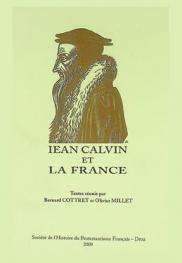

Sober, Strict, and Scriptural: Collective Memories of John Calvin, 1800-2000
Calvinism's influence and reputation have received ample scholarly attention. But how John Calvin himself - his person, character, and deeds - was remembered, commemorated, and memorialized, is a question few historians have addressed. Focussing on the nineteenth and twentieth centuries, this volume aims to open up the subject with chapters on Calvin's monumentalization in statues and museums, his appearance in novels, children's books, and travel writing, his iconic function for Hungarian nationalists and Presbyterian missionaries to China, his reputation among Mormons and freethinkers, and his rivalry with Michael Servetus in French Protestant memory. The result is a fresh contribution to the field of religious memory studies and an invitation to further comparative research.Contributors include: R. Bryan Bademan, Patrick Cabanel, R. Scott Clark, Thomas J. Davis, Stephen S. Francis, Joe B. Fulton, Botond Gaál, Stefan Laube, Johan de Niet, Herman Paul, James Rigney, Michèle Sacquin, Jonathan Seitz, Robert Vosloo, Bart Wallet, and Valentine Zuber.
eBook


The concept of equity in Calvin's ethics
Ever since Calvin wrote his Institutes of the Christian Religion, admonishing the reader that \"it would not be difficult for him to determine what he ought especially to seek in Scriptures, and to what end he ought to relate its contents,\" scholars have endeavoured to identify a doctrine or theme at the heart of his theology. In his landmark book The Concept of Equity in Calvin's Ethics, Guenther Haas concludes that the concept of equity is the theme of central importance in Calvin's social ethic, in a similar way that union with Christ lies at the heart of his theology.
Haas provides, in Part One, a brief survey of the development of the concept of equity from Aristotle to the scholastics, and as it was used by Calvin's contemporaries. Haas also examines the influences on Calvin's thinking before and after his conversion to Protestantism, with special attention paid to those influences that employed the concept of equity.
In the heart of this study, Part Two, \"Equity in Calvin's Ethics,\" Haas presents a thorough exposition and analysis of the extensive role the concept of equity plays in Calvin's ethics, demonstrating that Calvin's approach to ethics is not restricted to meditation of Scripture text.
This book will force a re-examination of approaches to Calvin studies that have not appreciated the historical context and background of Calvin's thought. The Concept of Equity in Calvin's Ethics establishes that the Protestant tradition in Christian ethics, founded by Calvin, has a distinctive and vital contribution to make to Christian ethics, as well as to the broader discussion of social ethics as they are practised today.
eBook

Erasmus and Calvin on the foolishness of God : reason and emotion in the Christian philosophy
\"What did Paul mean when he wrote that the foolishness of God is wiser than human wisdom? Through close analysis of the sixteenth-century reception of Paul's discourses of folly, this book examines the role of the New Testament in the development of what Erasmus and John Calvin refer to as the \"Christian philosophy.\" Erasmus and Calvin on the Foolishness of God reveals the importance of Pauline rhetoric in the development of humanist critiques of scholasticism while charting the formation of a specifically affective approach to religious epistemology and theological method. As the first book-length examination of Calvin's indebtedness to Erasmus, which also considers the participation of Bullinger, Pellikan, and Melanchthon in an Erasmian exegetical milieu, it is a case-study in the complicated cross-confessional exchange of ideas in the sixteenth century. Kirk Essary examines assumptions about the very nature of theology in the sixteenth century, how it was understood by leading humanist reformers, and how ideas about philosophy and rhetoric were received, appropriated, and shared in a complex intellectual and religious context.\"-- Provided by publisher.
BOOK

The Theater of God's Glory
A theological framework for the liturgical arts rooted in John Calvin Both detractors and supporters of John Calvin have deemed him an enemy of the physical body, a pessimist toward creation, and a negative influence on the liturgical arts.But, says W.David O.Taylor, that only tells half of the story.
eBook