
Catalogue Search | MBRL


Are you sure you want to remove the book from the shelf?

{{itemTitle}}
35
result(s) for
"Cambodia History 1975-1979."
Sort by:


Archiving the Unspeakable
Roughly 1.7 million people died in Cambodia from untreated disease, starvation, and execution during the Khmer Rouge reign of less than four years in the late 1970s. The regime’s brutality has come to be symbolized by the multitude of black-and-white mug shots of prisoners taken at the notorious Tuol Sleng prison, where thousands of “enemies of the state” were tortured before being sent to the Killing Fields. In
Archiving the Unspeakable , Michelle Caswell traces the social life of these photographic records through the lens of archival studies and elucidates how, paradoxically, they have become agents of silence and witnessing, human rights and injustice as they are deployed at various moments in time and space. From their creation as Khmer Rouge administrative records to their transformation beginning in 1979 into museum displays, archival collections, and databases, the mug shots are key components in an ongoing drama of unimaginable human suffering. Winner, Waldo Gifford Leland Award, Society of American Archivists Longlist, ICAS Book Prize, International Convention of Asia Scholars
eBook


Cambodia 1975-1978
One of the most devastating periods in twentieth-century history was the rule of Pol Pot and the Khmer Rouge over Cambodia. From April 1975 to the beginning of the Vietnamese occupation in late December 1978, the country underwent perhaps the most violent and far-reaching of all modern revolutions. These six essays search for what can be explained in the ultimately inexplicable evils perpetrated by the Khmer Rouge. Accompanying them is a photo essay that provides shocking visual evidence of the tragedy of Cambodia's autogenocide. \"The most important examination of the subject so far... Without in any way denying the horror and brutality of the Khmers Rouges, the essays adopt a principle of detached analysis which makes their conclusion far more significant and convincing than the superficial images emanating from the television or cinema screen.\" --Ralph Smith, The Times Literary Supplement \"A book that belongs on the shelf of every scholar interested in Cambodia, revolution, or communism... Answers to questions such as `What effect did Khmer society have on the reign of the Khmer Rouge?' focus on understanding, rather than merely describing.\" --Randall Scott Clemons, Perspectives on Political Science
eBook


War, Genocide, and Justice
In the three years, eight months, and twenty days of the Khmer Rouge's deadly reign over Cambodia, an estimated 1.7 million Cambodians perished as a result of forced labor, execution, starvation, and disease. Despite the passage of more than thirty years, two regime shifts, and a contested U.N. intervention, only one former Khmer Rouge official has been successfully tried and sentenced for crimes against humanity in an international court of law to date. It is against this background of war, genocide, and denied justice that Cathy J. Schlund-Vials explores the work of 1.5-generation Cambodian American artists and writers.
Drawing on what James Young labels \"memory work\"-the collected articulation of large-scale human loss-War, Genocide, and Justiceinvestigates the remembrance work of Cambodian American cultural producers through film, memoir, and music. Schlund-Vials includes interviews with artists such as Anida Yoeu Ali, praCh Ly, Sambath Hy, and Socheata Poeuv. Alongside the enduring legacy of the Killing Fields and post-9/11 deportations of Cambodian American youth, artists potently reimagine alternative sites for memorialization, reclamation, and justice. Traversing borders, these artists generate forms of genocidal remembrance that combat amnesic politics and revise citizenship practices in the United States and Cambodia.
Engaged in politicized acts of resistance, individually produced and communally consumed, Cambodian American memory work represents a significant and previously unexamined site of Asian American critique.
eBook

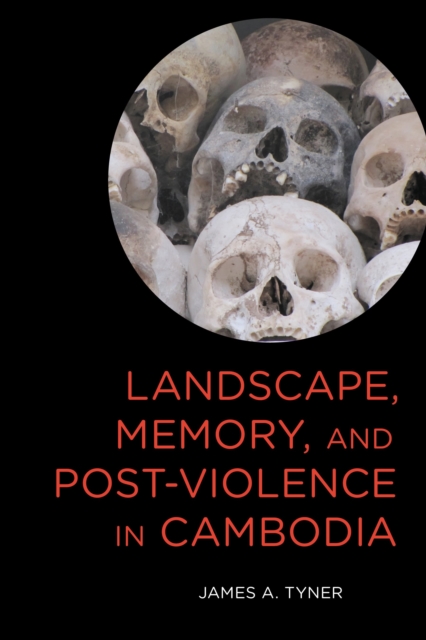
Landscape, memory, and post-violence in Cambodia
Between 1975 and 1979 the Khmer Rouge regime in Cambodia enacted a program of organized mass violence that resulted in the deaths of approximately one quarter of the country’s population. Over two million people died from torture, execution, disease and famine. From the commodification of the ‘killing fields’ of Choeung Ek to the hundreds of unmarked mass graves scattered across the country, violence continues to shape the Cambodian landscape.
Landscape, Memory, and Post-Violence in Cambodia explores the on-going memorialization of violence. As part of a broader engagement with war, violence and critical heritage studies, it explores how a legacy of organized mass violence becomes part of a cultural heritage and, in the process, how this heritage is ‘produced’. Existing literature has addressed explicitly the impact of war and armed conflict on cultural heritage through the destruction of heritage sites. This book inverts this concern by exploring what happens when sites of ‘heritage violence’ are under threat. It argues that the selective memorialization of Cambodia’s violent heritage negates the everyday lived experiences of millions of Cambodians and diminishes the efforts to bring about social justice and reconciliation. In doing so, it develops a grounded conceptual understanding of post-violence in conflict zones internationally.
eBook

In the shadow of the banyan
Her life of privilege in Cambodia shattered by the outbreak of civil war on the streets of Phnom Penh, young Raami endures four years of loss, starvation, and brutal forced labor while clinging to memories of the legends and poems told to her by her father.
BOOK

Facing the Khmer Rouge
As a child growing up in Cambodia, Ronnie Yimsut played among the ruins of the Angkor Wat temples, surrounded by a close-knit community. As the Khmer Rouge gained power and began its genocidal reign of terror, his life became a nightmare. In this stunning memoir, Yimsut describes how, in the wake of death and destruction, he decides to live.
Escaping the turmoil of Cambodia, he makes a perilous journey through the jungle into Thailand, only to be sent to a notorious Thai prison. Fortunately, he is able to reach a refugee camp and ultimately migrate to the United States, where he attended the University of Oregon and became an influential leader in the community of Cambodian immigrants.Facing the Khmer Rougeshows Ronnie Yimsut's personal quest to rehabilitate himself, make a new life in America, and then return to Cambodia to help rebuild the land of his birth.
eBook