
Catalogue Search | MBRL


Are you sure you want to remove the book from the shelf?

{{itemTitle}}
1,128
result(s) for
"Cambodia during the Vietnam War"
Sort by:

Khmer nationalist : Sơn Ngọc Thành, the CIA, and the transformation of Cambodia
Khmer Nationalist is a political history of Cambodia from World War II until 1975, examining the central role of Sõn Ng?c Thành. It is a story of nationalistic independence movements, political intrigue, coup attempts, war, and American intelligence. The rise of Cambodian nationalism, the brief period of Japanese dominance, the fight for independence from France, and the establishment of ties with the United States that kept Sihanouk on edge until his downfall—in all of these, as Matthew Jagel shows, Thành was fundamental.
Khmer Nationalist reveals how Cambodian nationalism grew during the twilight of French colonialism and faced new geopolitical challenges during the Cold War. Thành's story brings greater understanding to the end of French colonialism in Cambodia, nationalism in post-colonial societies, Cold War realities for countries caught between competing powers, and how the United States responded while the Vietnam War intensified.
eBook
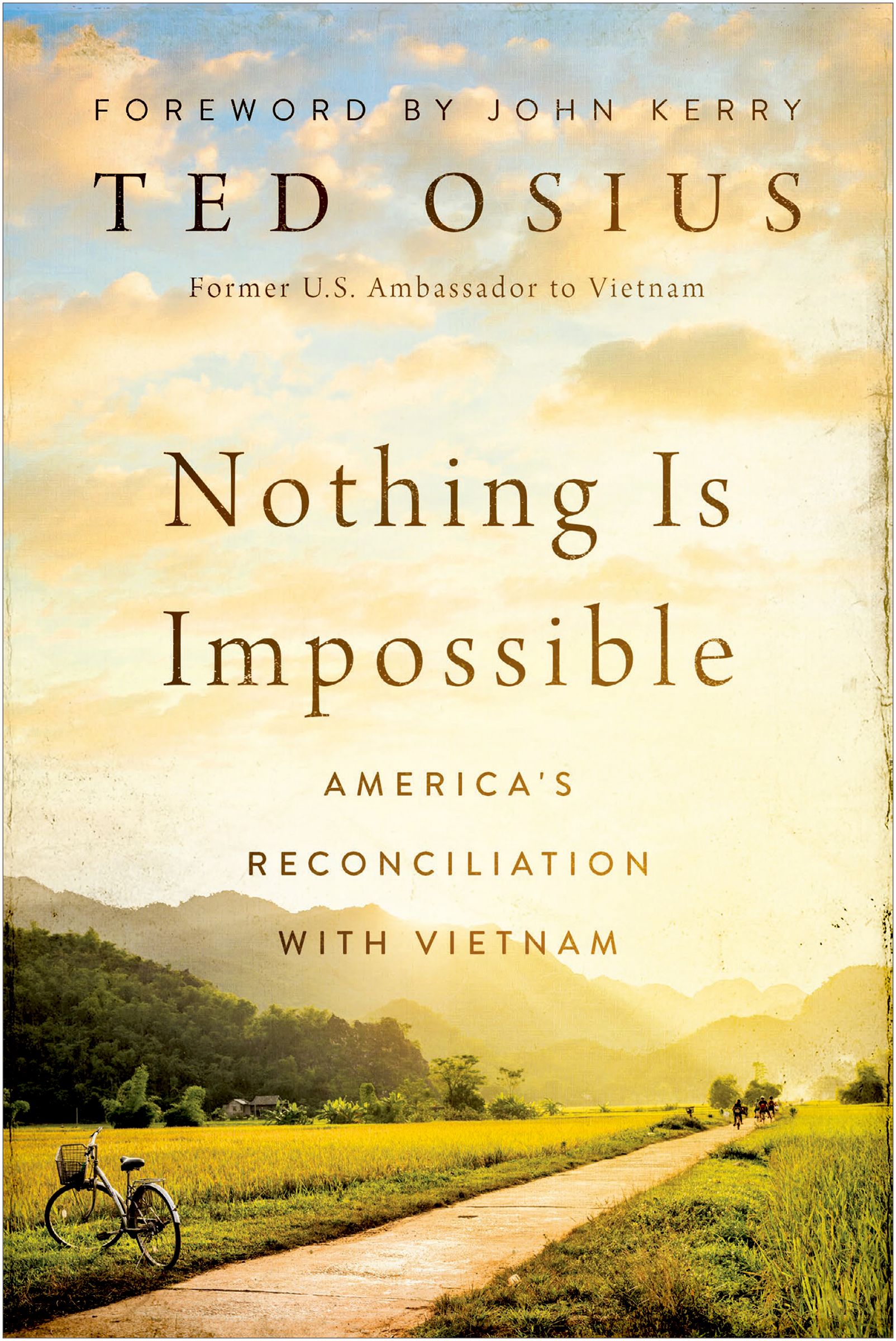
Nothing is Impossible
Today Vietnam is one of America's strongest international partners, with a thriving economy and a population that welcomes American visitors. How that relationship was formed is a twenty-year story of daring diplomacy and a careful thawing of tensions between the two countries after a lengthy war that cost nearly 60,000 American and more than two million Vietnamese lives. Ted Osius, former ambassador during the Obama administration, offers a vivid account, starting in the 1990s, of the various forms of diplomacy that made this reconciliation possible. He considers the leaders who put aside past traumas to work on creating a brighter future, including senators John McCain and John Kerry, two Vietnam veterans and ideological opponents who set aside their differences for a greater cause, and Pete Peterson-the former POW who became the first U.S. ambassador to a new Vietnam. Osius also draws upon his own experiences working first-hand with various Vietnamese leaders and traveling the country on bicycle to spotlight the ordinary Vietnamese people who have helped bring about their nation's extraordinary renaissance. With a foreword by former Secretary of State John Kerry, Nothing Is Impossible tells an inspiring story of how international diplomacy can create a better world.
eBook

Why did they kill? : Cambodia in the shadow of genocide
Of all the horrors human beings perpetrate, genocide stands near the top of the list. Its toll is staggering: well over 100 million dead worldwide. Why Did They Kill? is one of the first anthropological attempts to analyze the origins of genocide. In it, Alexander Hinton focuses on the devastation that took place in Cambodia from April 1975 to January 1979 under the Khmer Rouge in order to explore why mass murder happens and what motivates perpetrators to kill. Basing his analysis on years of investigative work in Cambodia, Hinton finds parallels between the Khmer Rouge and the Nazi regimes. Policies in Cambodia resulted in the deaths of over 1.7 million of that country's 8 million inhabitants—almost a quarter of the population--who perished from starvation, overwork, illness, malnutrition, and execution. Hinton considers this violence in light of a number of dynamics, including the ways in which difference is manufactured, how identity and meaning are constructed, and how emotionally resonant forms of cultural knowledge are incorporated into genocidal ideologies.
eBook

Cambodia 1975-1978
One of the most devastating periods in twentieth-century history was the rule of Pol Pot and the Khmer Rouge over Cambodia. From April 1975 to the beginning of the Vietnamese occupation in late December 1978, the country underwent perhaps the most violent and far-reaching of all modern revolutions. These six essays search for what can be explained in the ultimately inexplicable evils perpetrated by the Khmer Rouge. Accompanying them is a photo essay that provides shocking visual evidence of the tragedy of Cambodia's autogenocide. \"The most important examination of the subject so far... Without in any way denying the horror and brutality of the Khmers Rouges, the essays adopt a principle of detached analysis which makes their conclusion far more significant and convincing than the superficial images emanating from the television or cinema screen.\" --Ralph Smith, The Times Literary Supplement \"A book that belongs on the shelf of every scholar interested in Cambodia, revolution, or communism... Answers to questions such as `What effect did Khmer society have on the reign of the Khmer Rouge?' focus on understanding, rather than merely describing.\" --Randall Scott Clemons, Perspectives on Political Science
eBook

The Impacts of Hydropower Dams in the Mekong River Basin: A Review
The Mekong River, well known for its aquatic biodiversity, is important to the social, physical, and economic health of millions living in China, Myanmar, Laos, Thailand, Cambodia, and Vietnam. This paper explores the social and environmental impacts of several Mekong basin hydropower dams and groupings of dams and the geographies of their impacts. Specifically, we examined the 3S (Sesan, Sekong Srepok) river system in northeastern Cambodia, the Central Highlands of Vietnam, and southern Laos; the Khone Falls area in southern Laos; the lower Mun River Basin in northeastern Thailand; and the upper Mekong River in Yunnan Province, China, northeastern Myanmar, northern Laos, and northern Thailand. Evidence shows that these dams and groupings of dams are affecting fish migrations, river hydrology, and sediment transfers. Such changes are negatively impacting riparian communities up to 1000 km away. Because many communities depend on the river and its resources for their food and livelihood, changes to the river have impacted, and will continue to negatively impact, food and economic security. While social and environmental impact assessments have been carried out for these projects, greater consideration of the scale and cumulative impacts of dams is necessary.
Journal Article
Against All Odds
This paper tells the inside story of how Singapore's diplomats lobbied for ASEAN's interests in various international fora at a critical time in the region's history. The lessons learnt are still relevant today.
eBook

Vietnam and China, 1938-1954
Pondering the origins of U.S. involvement in Vietnam, Professor Chen turns to the Indochinese war (1946-1954), the Vietnamese Communist movement under Ho Chi Minh (1944-1945), and even earlier to Ho's activities in the late 1930's. He examines the questions: Did the Sino-Vietnamese relationship after World War II assist or hinder the Vietminh Communists? Why was the Vietminh able to obtain Chinese military aid without inviting massive Chinese intervention, as happened in Korea? What was the Soviet position on the Indochinese war and what was it at the Geneva Conference of 1954? Is there any difference between Vietnam's relations with the weak Nationalist China in the 1940's and those with powerful Communist regime in the 1950's? Finally, Professor Chen compares the position of the United States, North Vietnam, Britain, Communist China, and the Soviet Union in 1954 and 1968.
Originally published in 1969.
The Princeton Legacy Library uses the latest print-on-demand technology to again make available previously out-of-print books from the distinguished backlist of Princeton University Press. These editions preserve the original texts of these important books while presenting them in durable paperback and hardcover editions. The goal of the Princeton Legacy Library is to vastly increase access to the rich scholarly heritage found in the thousands of books published by Princeton University Press since its founding in 1905.
eBook

Tourism and Nation Building at the War Remnants Museum in Ho Chi Minh City, Vietnam
Using evidence from what is probably Vietnam's most visited tourism site, the War Remnants Museum in Ho Chi Minh City, this article explores the presentation of the \"American War\" in the construction of nationhood. The article has three objectives. First, I illustrate how nation-building in a postcolonial and postimperial context is generated through tourism, specifying how the Communist Party communicates Vietnam to lay international tourist audiences. Tourism's political instrumentality for the party is highlighted here. Second, I show how the United States is imaginatively constructed to shape Vietnam's identity. Finally, I use the conclusion to reflect on the implications for the \"Asian Century\" when considering Vietnam's multifaceted connections to the United States and the West.
Journal Article

The farmer’s battlefield: traditional ecological knowledge and unexploded bombs in Cambodia
What role does traditional ecological knowledge play in the lives of smallholder farmers in post-conflict communities as they cope with the destructive impacts of war? In many cases, military weapons, such as unexploded bombs, are left behind in the surrounding landscape, forcing farmers to adapt their livelihood practices to the increased risk of death and injury. We analyze trends in the local production of knowledge in Ratanak Kiri province, Cambodia, an area heavily bombarded by the US Air Force during the Vietnam War. We argue that the system of traditional ecological knowledge has adapted to include basic information on bomb identification, location, and management strategies. This factual approach gives individuals the flexibility to generate their own views on whether they perceive unexploded ordnance as a violent hazard and/or an economic commodity. In a relatively short 50-year time period, the body of knowledge has been quickly accumulated and culturally transmitted to family and neighbors. Our findings suggest that traditional ecological knowledge should not be reduced to a static and ancient form of collective memory. We call for the expansion of the concept of traditional ecological knowledge to include short-term and dynamic processes of knowledge generation.
Journal Article

Non-Interference versus Self-Determination
Using the Indonesian annexation of East Timor in 1975 and Vietnam's occupation of Cambodia between 1978 and 1989 as case studies, this article examines how ASEAN understood the principles of non-intervention and non-interference as juxtaposed against the right to self-determination in the 1970s. As ASEAN's first \"crises\" in its formative years, they illustrate how the bloc's initial norm-making processes evolved as individual member states attempted to make their case for or against intervention. The article contends that ASEAN's principles of non-intervention and non-interference are non-static and adaptive. It also suggests that while ASEAN's normative framework may have been sufficiently accommodative of its members' different standards and approaches towards protecting sovereignty, the right to self-determination and independence in the past, it is questionable whether the adherence to non-interference would be sufficient for the grouping to address the present crisis in Myanmar and future challenges.
Journal Article